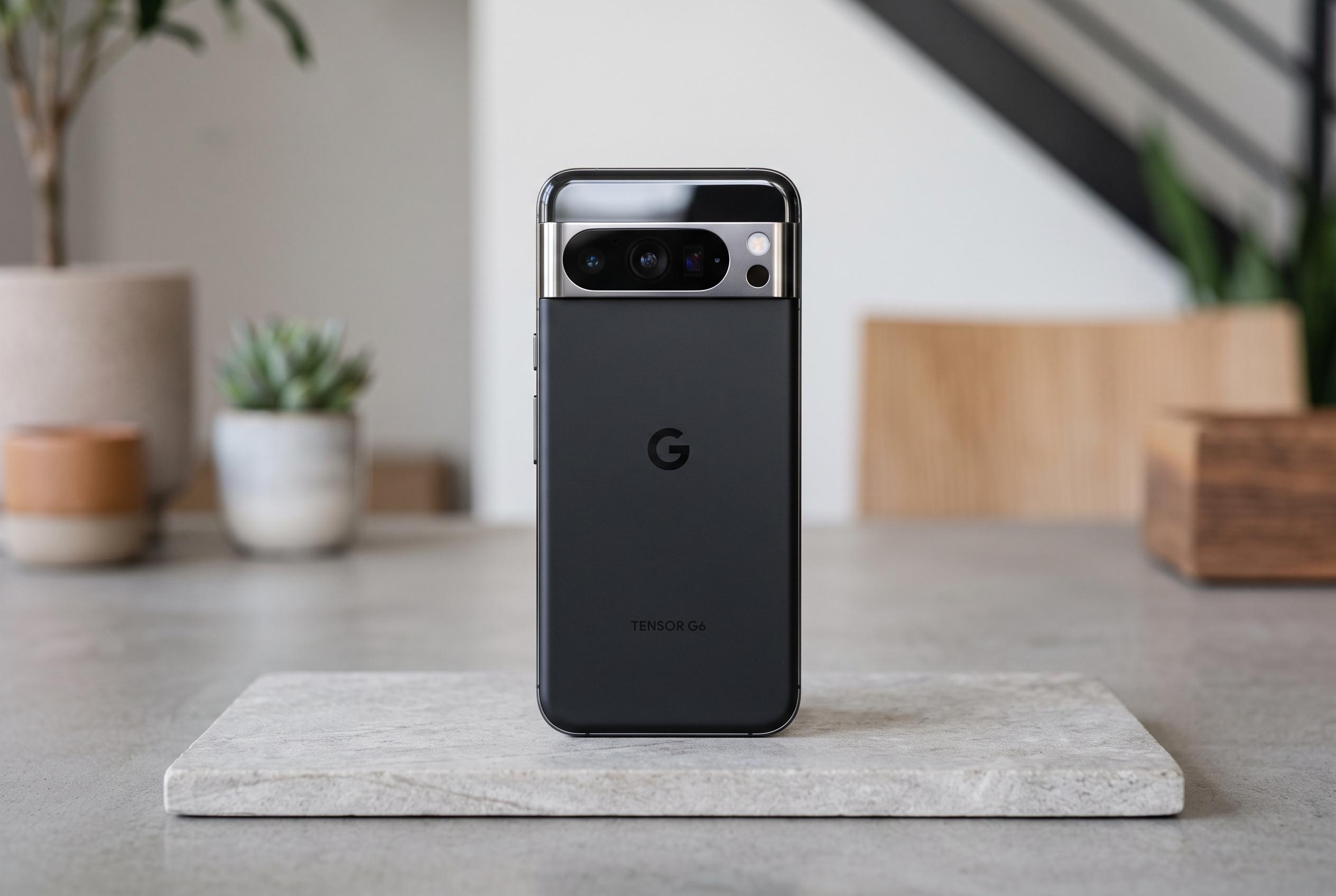

Google unveils the Pixel 11 range featuring the new Tensor G6 chip, prioritising artificial intelligence, power efficiency, and enhanced device security over raw performance, marking a notable evolution in the company’s chip strategy.
Google’s Pixel 11 range marks another clear shift in the company’s chip strategy, with the new Tensor G6 appearing designed less as a brute-force rival to Qualcomm and Apple and more as a platform for artificial intelligence, power efficiency and device security. Android Authority’s deep dive suggests that is not an accident: the processor brings a newer CPU layout, a different GPU, a fresh modem and Google’s first Titan security update in about five years, but few signs that it is meant to dominate benchmark tables.
The Pixel 11 family was announced on 12 August 2026 and, according to Android Central, includes four models: the Pixel 11, Pixel 11 Pro, Pixel 11 Pro XL and Pixel 11 Pro Fold. All are said to use Tensor G6, while the Pro models add hardware AV1 video encoding. Other launch coverage from What Hi-Fi reported Android 17 and Gemini features such as improved voice-to-text and AI photo editing, underlining Google’s emphasis on software-led upgrades rather than raw silicon muscle.
On paper, Tensor G6 is a mixed bag. Android Authority notes that Google has moved to a seven-core CPU, cutting one middle-performance core from last year’s eight-core arrangement. The chip uses one Arm C1-Ultra core at 4.11GHz, four C1-Pro cores at 3.38GHz and two more C1-Pro cores at 2.65GHz. Google says that should translate into 25% faster web browsing and 15% quicker app launches, while also improving energy efficiency by up to 20%. That implies a modest uplift in everyday use, but not a dramatic leap in multi-core performance.
The biggest advertised gains come from the fifth-generation Tensor Processing Unit. Google claims up to 50% more on-device AI number-crunching, and says the new chip can be as much as 3.5 times faster in some AI workloads when software and model changes are included. That is a workload-specific claim rather than a standard benchmark, but it does point to where Google wants the product judged. The new Titan M3 security processor also adds a more robust trust layer, with RISC-V-based hardware and post-quantum secure boot intended to protect sensitive data such as certificates for SIMs and payment cards.
There are, however, reasons for caution. Android Authority says the GPU has shifted to an older PowerVR CXT part, which looks unlikely to represent a major gaming upgrade despite a higher clock speed. Tom’s Guide also reported that Tensor G6 is built on TSMC’s 3nm process rather than the 2nm rumoured earlier, which keeps it technologically current but not class-leading. In practice, that means Tensor G6 looks set to remain a specialist chip: stronger in AI, security and efficiency, but still trailing the best flagships on conventional CPU and gaming performance.
Disclaimer: This content is intended for informational purposes only. Readers are advised to exercise their own judgement, conduct due diligence, or consult a qualified expert before acting on any information provided.