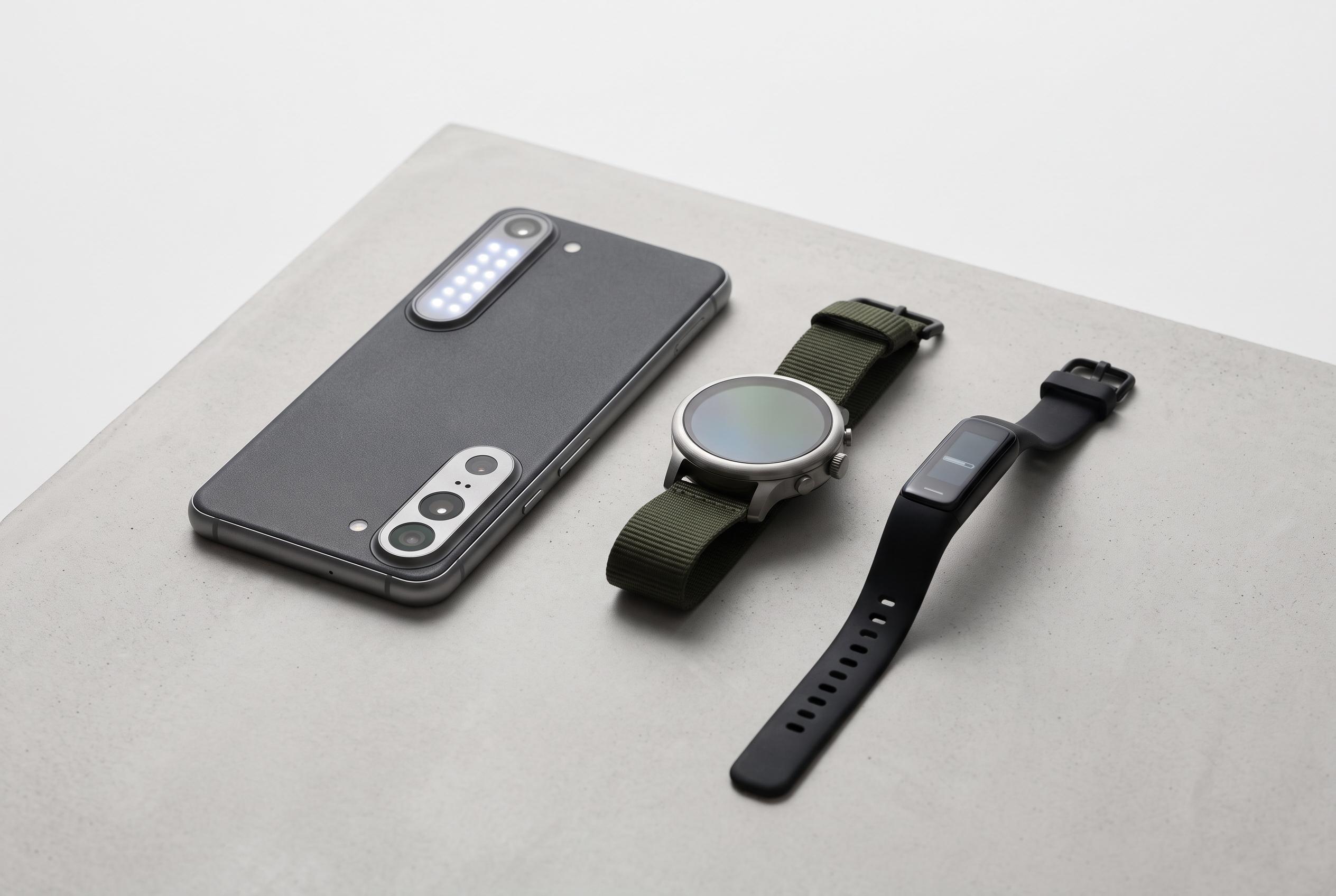

Google’s latest flagship introduces new AI-driven features such as the HiLight LED array and Gemini integration, while also showcasing updates to its smartwatch, tracker, and hardware experiments, reflecting a broader industry shift towards smarter, more connected devices.
Google’s latest flagship launch dominated the week’s tech news, but the broader picture was just as telling: a mix of product refinement, more aggressive AI labelling, and increasingly ambitious hardware experiments. At its Made by Google 2026 event, the company unveiled the Pixel 11 line, with a new “HiLight” LED array built into the camera module to surface alerts from selected contacts and signal when Gemini is active. The standard memory configuration has also become more conservative, with 12GB of RAM rather than 16GB, a change that suggests rising component costs are now shaping premium phone design as much as feature ambition.
Google also used the same event to refresh its smartwatch and accessories strategy. The Pixel Watch 5 keeps the familiar teardrop form but adds more accurate GPS, a redesigned Health app with an AI coach, tighter Gemini integration and new Health Guardian functions. The most notable of these include Breathing Emergency Detection, which can alert emergency services and contacts if it detects a sustained blood oxygen drop, and Insulin Resistance Trends, aimed at helping users monitor blood sugar management. Separately, Google’s new Pixel Tag tracker, a 12g rival to Apple’s AirTag, is due in November with UWB support, water resistance and pricing pitched to compete directly with Apple’s accessory.
Outside Google’s ecosystem, Honor drew attention with a phone that appears designed as much for spectacle as for imaging. TechRadar’s hands-on report said the Robot Phone pairs a conventional handset with an unfolding gimbal-like camera arm, making it resemble a compact stabilised camera as much as a smartphone. The company’s assistant, YOYO, can also use the moving mechanism to express itself physically, though the review framed that as more novelty than necessity. Still, the hardware suggests handset makers are still searching for ways to differentiate cameras after years of incremental upgrades.
Wearables were another strong theme. TechRadar’s review of Garmin’s Fenix 8 Pro microLED described it as a premium multisport watch built for serious outdoor use, with a 4,500-nit display, durable titanium construction and support for a wide range of activities in harsh conditions. Tom’s Guide reported that the Pro model adds LTE and satellite connectivity, alongside SOS features and full mapping tools, while still offering respectable battery life for its class. The trade-off is price: the microLED version sits at the very top of the market, making it a specialist product rather than a mainstream one.
Spotify, meanwhile, is finally responding more directly to the spread of AI-generated music. According to MusicRadar and What Hi-Fi?, the company plans to introduce an AI Persona badge from mid-September, marking artist profiles that appear to represent AI-generated identities. The badge will be paired with a quieter but important policy change: such artists will be excluded from personalised recommendations by default unless users choose to follow them. Spotify is also reviewing profiles with large audiences, allowing artists to self-identify or appeal, but the focus remains on artist identity rather than individual tracks. That distinction matters, because it shows Spotify is aiming first at transparency, not a hard ban.
Disclaimer: This content is intended for informational purposes only. Readers are advised to exercise their own judgement, conduct due diligence, or consult a qualified expert before acting on any information provided.