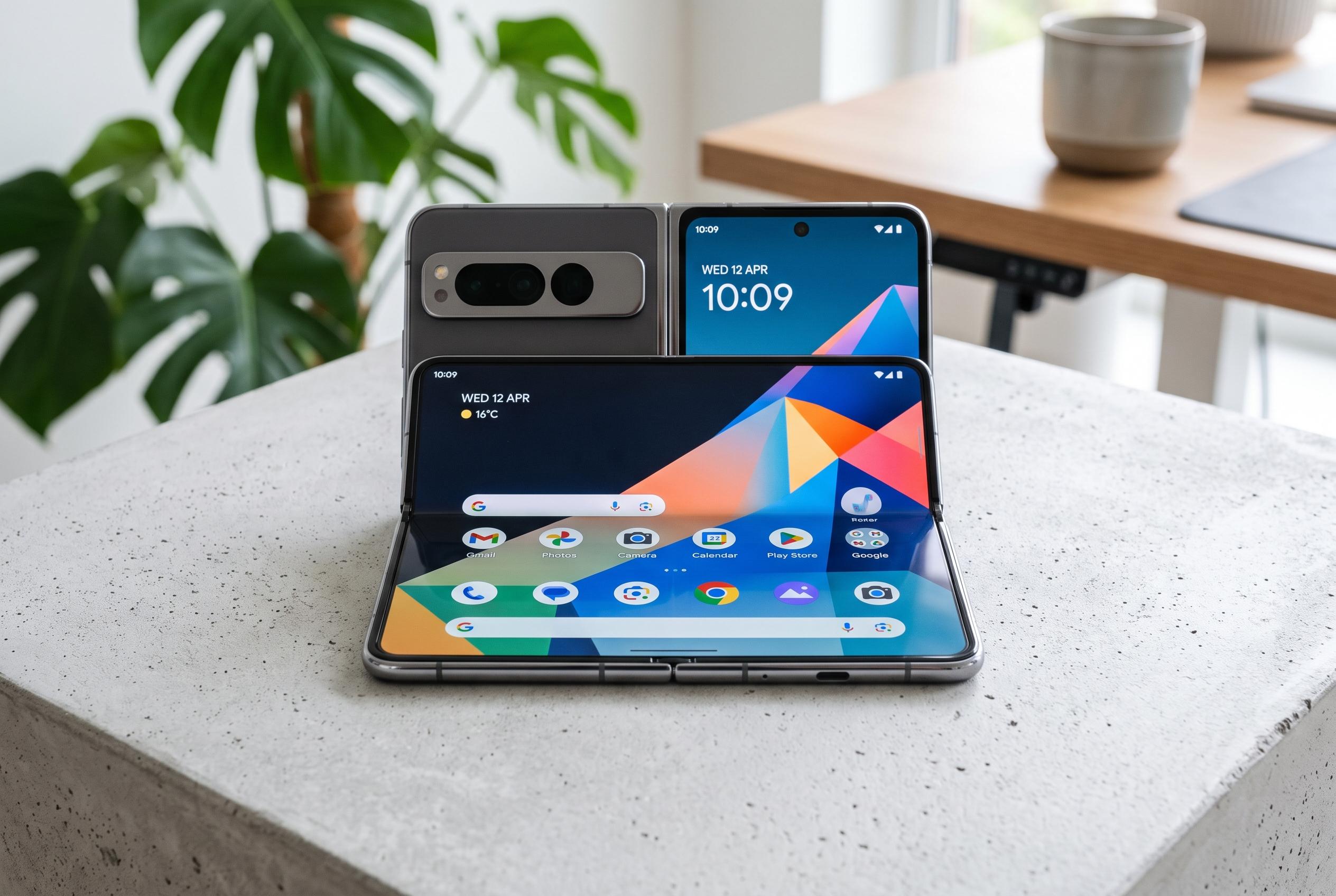

Google’s latest Pixel line, featuring the new Pixel 11 Pro Fold, is pushing foldables into mainstream territory, setting the stage for Apple’s upcoming ultra-premium foldable, which is expected to arrive in 2026 and challenge the evolving premium smartphone landscape.
Google’s latest Pixel line has put foldable phones back at the centre of the smartphone market, and the timing is awkward for Apple. According to Axios, the launch includes a new foldable handset and other devices built around Google’s Tensor G6 processor, which the company says improves power efficiency, web browsing and app loading speeds. The move comes as component costs rise across the industry and Apple is expected to unveil its next iPhone range within weeks.
The device drawing the most attention is the Pixel 11 Pro Fold. Reports from Android Central say it is expected to arrive with a thinner, lighter design, an improved main camera and a more efficient chip built on a 2nm process. That matters because foldables have long appealed mainly to early adopters willing to accept compromises in weight, durability and price. Google is now trying to present the category as a mainstream upgrade rather than a specialist purchase.
Apple, meanwhile, is still preparing its own entry. MacRumors has repeatedly reported that the company is expected to launch its first foldable iPhone as part of the iPhone 18 Pro family, with a book-style design, a display of about 5.5 inches when closed and 7.8 inches when opened. Other details from the same reporting include a titanium and aluminium frame, Touch ID rather than Face ID, an A20 chip and a price above $2,000.
That pricing would place Apple’s foldable firmly in the ultra-premium bracket, even by the standards of the current market. MacRumors has also said Apple could begin producing the device in late 2025 for a fall 2026 release, while analyst Ming-Chi Kuo has suggested a 2026 launch followed by a foldable iPad in 2028. If those timelines hold, Google will have a meaningful head start in showing buyers what a mature foldable can look like.
For consumers, the competition is likely to matter more than the branding. A stronger rivalry should push hardware makers to improve hinges, reduce crease visibility, refine software for larger inner screens and justify high prices with more useful features. Foldables are no longer being sold only as novelties. They are increasingly being positioned as the next serious premium form factor, and Google appears intent on making that case before Apple arrives.
Disclaimer: This content is intended for informational purposes only. Readers are advised to exercise their own judgement, conduct due diligence, or consult a qualified expert before acting on any information provided.