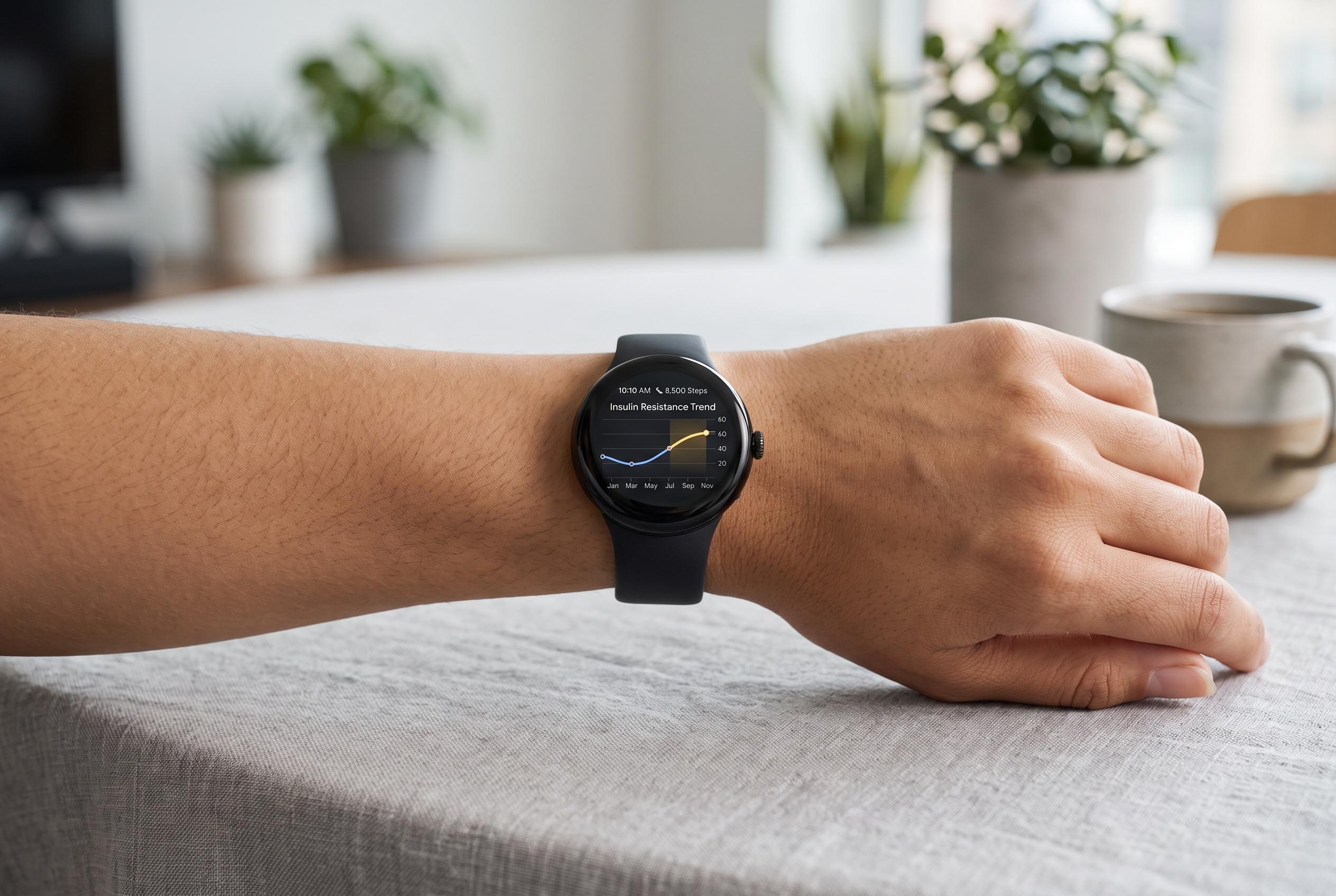

Google’s new insulin resistance trend feature on Pixel Watch signals a shift towards non-invasive, predictive metabolic health monitoring, expanding the smart wearable health ecosystem without direct blood measurement.
Google has added a new metabolic-health feature to its Pixel Watch line, signalling a broader push by consumer tech companies into blood sugar-related tracking. At Made by Google 2026, the company unveiled Insulin Resistance Trends as part of four Health Guardian tools for eligible Pixel Watches and Fitbit Air devices. The feature is designed to identify whether a user’s insulin resistance appears to be moving up or down over time, using signals the watch already collects rather than direct blood testing.
The company said the system draws on heart-rate data, sleep patterns and daily movement, then compares those signals across several weeks to estimate a trend. That matters because insulin resistance can develop before standard glucose tests show a problem. The National Institute of Diabetes and Digestive and Kidney Diseases has said the condition may emerge before blood sugar levels rise, while research published in Nature has indicated that wearable data can help detect it from physiological patterns.
Crucially, the feature is not limited to the newest hardware. Google said Pixel Watch 3 and later models, along with Fitbit Air, are due to receive Insulin Resistance Trends in September, so buyers will not need Pixel Watch 5 to use it. That places the feature in a fast-developing category where companies are trying to add useful health insight without claiming full glucose measurement, which remains outside the capabilities of mainstream smartwatches. Samsung, for example, has used an AGEs Index to offer metabolic-health context rather than a direct blood sugar reading, according to TechRepublic’s separate reporting on the sector.
The new tool also fits into a wider ecosystem that already links wearable devices to glucose-related data. Google’s Health Connect platform can ingest continuous glucose monitor readings, giving users a way to combine actual glucose measurements with the watch’s trend analysis. Even so, the watch does not measure glucose directly, and a trend warning should not be treated as a basis for changing treatment. For people already tracking blood sugar, the feature may serve as an early prompt to review other health data and raise persistent concerns with a clinician.
Disclaimer: This content is intended for informational purposes only. Readers are advised to exercise their own judgement, conduct due diligence, or consult a qualified expert before acting on any information provided.