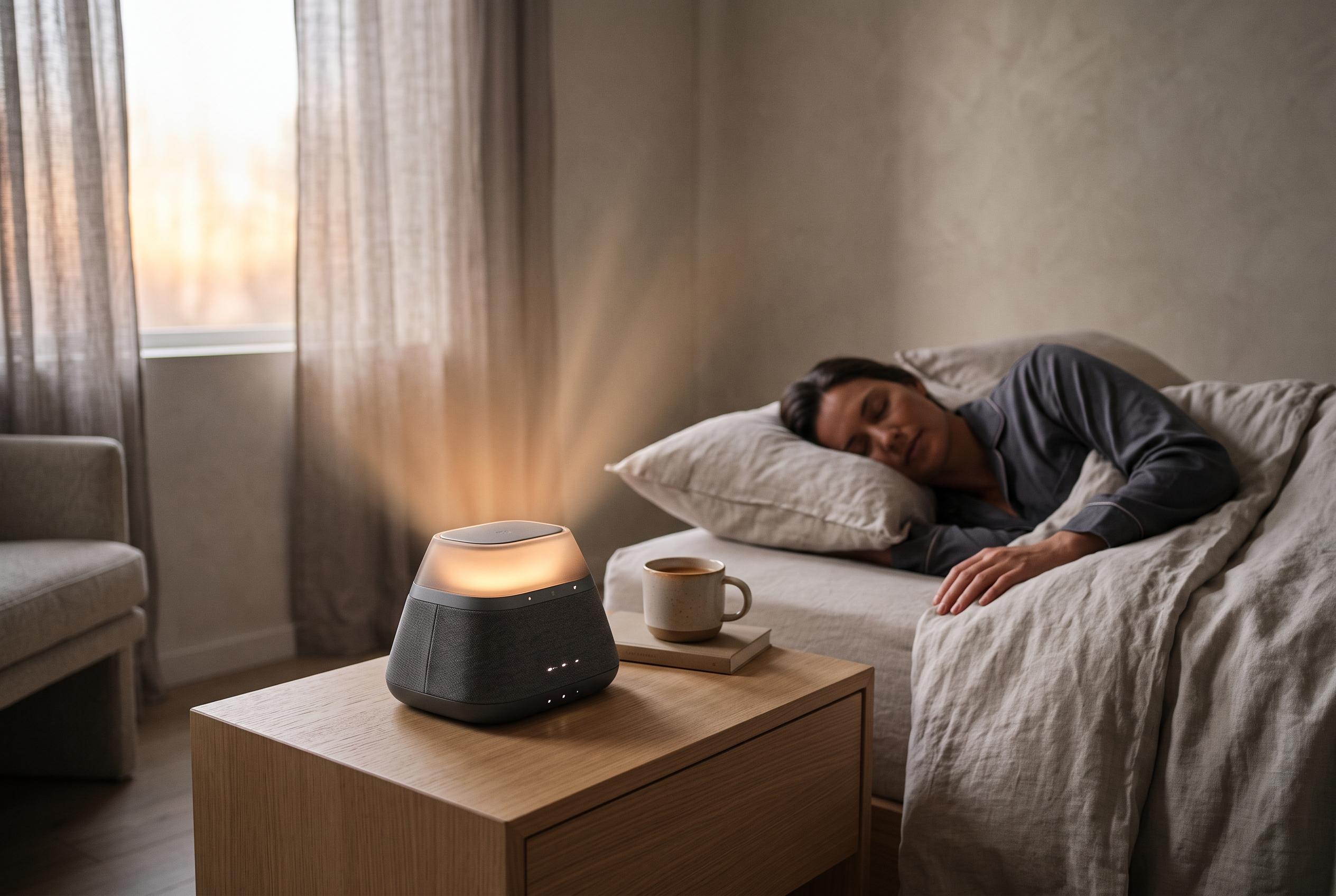

Hatch’s new Sleep Clock combines a contactless sleep tracker with a sunrise alarm in a sleek, room-friendly design, targeting users seeking simplicity over detailed health analytics.
Hatch’s Sleep Clock aims to do two jobs at once: wake users gently with light, then track sleep without a wearable. Tom’s Guide says the result is a polished bedside device that is easier to live with than many dedicated trackers, even if it does not offer the depth that data-heavy users will expect. Forbes and Esquire also describe it as a non-intrusive way to monitor sleep, with the appeal lying in simplicity rather than clinical-level detail.
The device sits at the premium end of the market at $249.99. Tom’s Guide notes that this places it well above Hatch’s regular Restore 3 sunrise clock, but below some combinations of separate alarm and tracking products. The Sleep Clock includes a 30-day Hatch+ trial, while the basic sleep tracking and sunrise functions work without a subscription. According to Tom’s Guide, that makes the pricing easier to justify than it first appears, although the warranty and trial period are short for the category.
Design is one of the Sleep Clock’s strengths. Tom’s Guide describes it as understated and room-friendly, with a half-moon shape, fabric front and a restrained control layout. Setup is more involved than a standard alarm clock, because the unit has to be positioned carefully above the mattress and pointed towards the chest for the contactless sensors to work properly. That practical requirement makes it less plug-and-play than a simple sunrise lamp.
The tracking itself uses ultra-low-power radio signals to infer breathing patterns and sleep stages, according to Hatch and Tom’s Guide. In testing, the device broadly matched the sleep window recorded by a wearable such as the Oura Ring 5, but it was less convincing on finer distinctions between deep, REM and lighter sleep. Forbes also reported occasional inaccuracies in sleep duration, which underlines the Sleep Clock’s limits as a precision health tool. Even so, the absence of a chargeable band or clip is a real advantage for users who dislike sleeping with hardware attached.
What the Sleep Clock does best is reduce friction. Tom’s Guide says it can flag time spent in bed scrolling, encourage a steadier wind-down routine and provide clear, easy-to-read graphs without overwhelming the user. The sunrise alarm remains the central attraction, and Tom’s Guide’s wider guide to the best sunrise alarm clocks argues that this category can support circadian rhythm, mood and morning alertness. For people who want gentle guidance rather than exhaustive data, the Sleep Clock looks like a sensible compromise. For serious fitness or recovery tracking, a dedicated wearable is still the better choice.
Disclaimer: This content is intended for informational purposes only. Readers are advised to exercise their own judgement, conduct due diligence, or consult a qualified expert before acting on any information provided.