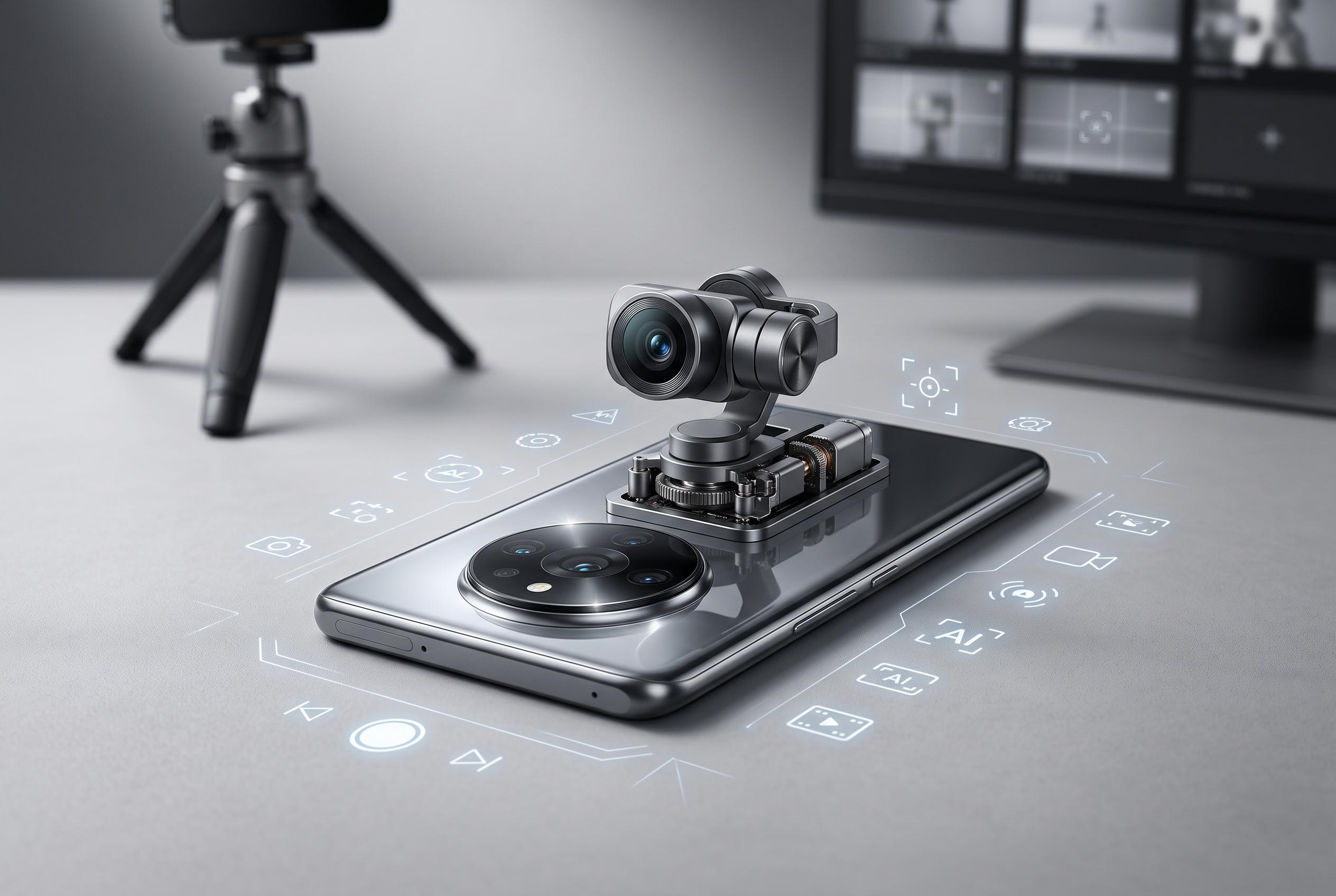

Honor introduces its innovative Robot Phone in China, featuring a motorised gimbal camera, cinematic imaging capabilities, and AI-driven software, targeted at creators and enthusiasts rather than mass consumers.
Honor has put its Robot Phone on sale in China, turning a long-teased concept into a very real, very unusual premium handset. For now, the device appears to be limited to its home market, although the company is likely to watch demand closely before deciding whether to widen availability.
The headline feature is the motorised camera assembly built into the rear of the phone. According to Android Central and TechRadar, the system uses a 4DoF or three-axis gimbal mechanism designed to physically follow subjects and stabilise video in a way a normal smartphone camera cannot. Honor says the mechanism was developed through 60 manufacturing processes, uses more than 100 precision parts and is backed by more than 100 patents. The company also claims the module is much smaller than conventional gimbals while being considerably stronger.
Honor has leaned heavily on its partnership with ARRI, the German cinema equipment maker, to make the Robot Phone more than a novelty. TechRadar reported that the phone uses a dedicated Honor Imaging Chip H1 because the Snapdragon 8 Elite Gen 5 alone was not considered sufficient for pro-level video processing. That chip supports ARRI LogC3, ARRI Wide Gamut 3 and other colour-science tools, with the aim of bringing a more cinematic workflow into a handset. The rear camera array itself is unusually ambitious, combining a 200MP main camera, a 200MP periscope telephoto lens and a 50MP ultrawide camera.
The software is built around Honor’s YOYO system, which adds gesture control, voice-based subject localisation and automatic tracking for recording. Honor says the phone can move its camera to frame people or objects without manual input, and it also offers an agent-style mode for carrying out multi-step tasks across apps. That makes the Robot Phone as much an AI showcase as a camera device, even if early coverage suggests the imaging hardware is still the main selling point.
On specifications, the phone is firmly in flagship territory. Honor has paired it with Qualcomm’s Snapdragon 8 Elite Gen 5, a 7,060mAh silicon-carbon battery, 120W wired charging and 50W wireless charging. The display is a 6.3-inch LTPO OLED panel with a 1-120Hz adaptive refresh rate, 6,800 nits peak brightness and 4,320Hz PWM dimming. Chinese pricing starts at RMB 9,999 for the 12GB/512GB model and rises to RMB 12,999 for the 16GB/1TB version. Several reports place the launch date in mid-August, although they differ slightly on the exact day the phone reaches buyers.
Early hands-on reports suggest the Robot Phone is less a mass-market product than a statement of intent. Reviewers described it as technically impressive but clearly aimed at creators and enthusiasts rather than mainstream buyers, with its physical camera hardware doing most of the work in defining the experience. Whether that is enough to justify a wider release will depend on how Chinese consumers respond first.
Disclaimer: This content is intended for informational purposes only. Readers are advised to exercise their own judgement, conduct due diligence, or consult a qualified expert before acting on any information provided.