
Honor launches its first commercial Robot Phone in China, featuring a 200MP gimbal-mounted camera co-engineered with ARRI, aiming to redefine mobile filmmaking and content creation.
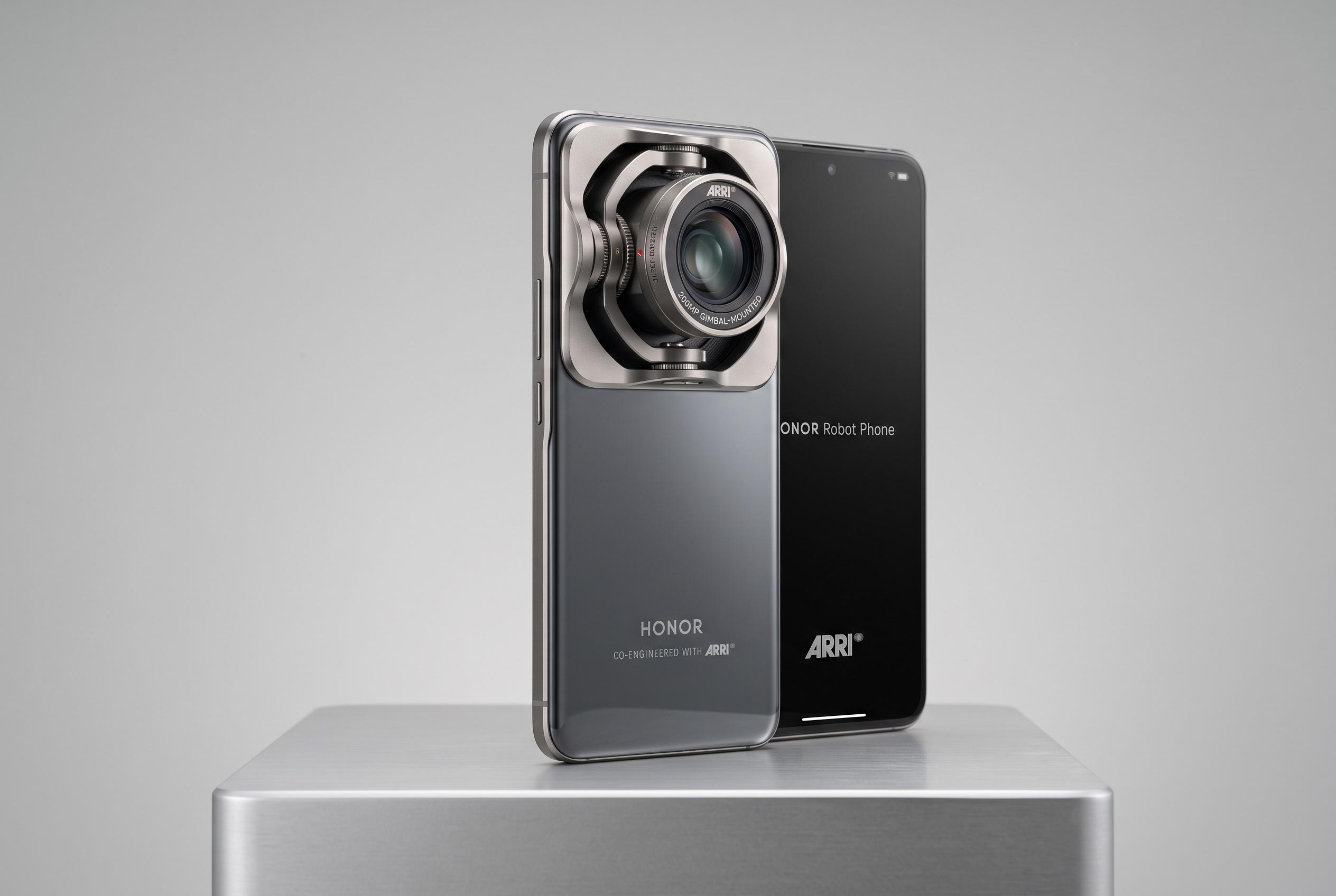
HONOR has turned its Robot Phone from a concept shown at MWC 2026 into a commercial product in China, pairing a 200MP gimbal-mounted main camera with ARRI LogC3, ARRI Wide Gamut 3 and selectable ARRI Looks. According to the launch coverage, it is the first device to carry ARRI’s “co-engineered with ARRI” designation and the first shipping result of the firms’ Cinematic Imaging Partnership. Chinese pricing starts at ¥9,999, or about $1,480, with sales due to begin on August 18. The device is being positioned less as a conventional smartphone camera than as a mobile production tool.
What ARRI has licensed is image science and workflow rather than optics or sensor design. Reporting from Y.M. Cinema says the phone includes a dedicated cinema interface with manual exposure and monitoring controls, while HONOR claims the imaging chain processes 14-bit 4:4:4 internally before outputting 10-bit LogC3 and 4:2:2 video. The choice of LogC3, rather than the newer LogC4 used on the ALEXA 35, appears pragmatic: it is widely supported in post-production software and already familiar to colourists working with ARRI pipelines.
The hardware is the more unusual part. HONOR says the rear camera sits on a Titanium Agile Gimbal, a four-degree-of-freedom motorised arm that deploys from the body and offers mechanical stabilisation rather than relying only on digital cropping. Gizmochina reported that the gimbal motor weighs 2.6g and sits within a camera system built around a 1/1.28-inch 200MP main sensor with an f/1.6 aperture, a 50MP ultra-wide camera and a 200MP periscope telephoto lens. Technode also noted that the gimbal assembly is designed to be markedly smaller than mainstream alternatives.
The company’s claims on image quality are ambitious. HONOR says the main camera can deliver up to 14 stops of dynamic range and an 8dB improvement in video signal-to-noise ratio through AI noise reduction, but those figures should be treated cautiously until independent testing is available. The comparison matters because dedicated pocket gimbal cameras now compete directly with this category, and some of them use larger sensors. The Robot Phone may offer a more integrated workflow, but it is still a heavy handset at 248g.
ARRI’s strategic logic is easier to understand than the imaging claim itself. The company is building out content creation as a third business alongside motion picture and live entertainment, and the HONOR deal extends its licensing model into smartphones, following other camera brands that have placed their names on mobile devices. The two companies have also formed a joint imaging technology lab focused on sensor-level optics, dynamic range and workflows from capture to post. Launch demonstrations in Hengdian, China, featured cinematographer Claudio Miranda and ARRI image science director Harald Brendel, although those events were clearly promotional rather than independent tests.
For now, the Robot Phone is a China-first release in Silver and Grey, running MagicOS 10 on Android 16 with a 6.3-inch LTPO OLED screen, a 7,060mAh silicon-carbon battery and 120W wired charging. Whether ARRI LogC3 on a phone is genuinely useful in professional work will depend on how faithfully the device matches the established ARRI pipeline in real grading sessions. The concept is unusual, but it is also the first time one of cinema’s most influential colour systems has shipped inside a consumer phone.
Disclaimer: This content is intended for informational purposes only. Readers are advised to exercise their own judgement, conduct due diligence, or consult a qualified expert before acting on any information provided.