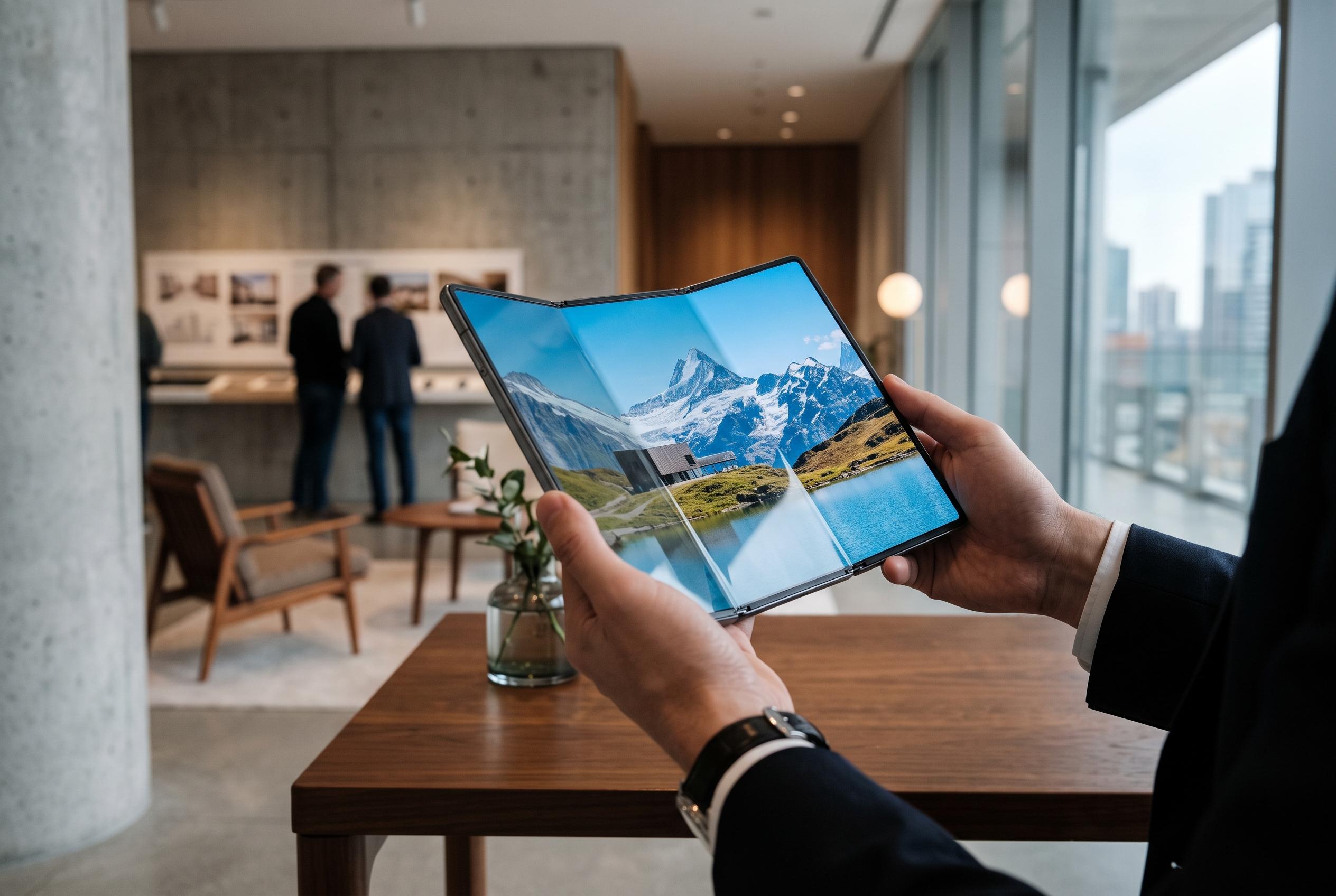

Huawei is set to unveil its redesigned Mate XT 2 on September 7 in China, aiming to demonstrate that tri-fold smartphones can become practical premium devices rather than just showpieces, backed by a new structural design and HarmonyOS 7 ecosystem.
Huawei is preparing to use its 7 September product launch in China to answer a more important question than where to watch the stream: whether a tri-fold handset can become a more practical premium phone rather than a showcase device. Huawei’s own support pages say the event, titled “HarmonyOS 7 | HUAWEI Mate XT 2 and All-Scenario New Product Launch”, is scheduled to begin at 14:30 China time, and pre-launch reporting indicates that the Mate XT 2 will be presented as the headline hardware announcement alongside the new software release. (consumer.huawei.com)
The clearest shift is mechanical. Notebookcheck reported that Huawei has abandoned the exposed Z-shaped layout used on the original Mate XT in favour of an inward-folding G-shaped arrangement, bringing both outer sections over the centre panel so the flexible display is hidden when the device is shut. That redesign appears to be paired with a separate cover display for everyday use, a pill-shaped cut-out on the front, and an octagonal rear camera island framed in metal. TechNode separately reported that Huawei has described the phone as using a “new structural design” intended to improve weight distribution across all three folding sections. (notebookcheck.net)
Huawei has also moved well beyond teaser status. TechNode said reservations opened on 31 August at 10:08 a.m. China time, signalling that the device had entered the commercial pre-launch phase a week before its unveiling. Android Authority reported that pre-orders showed 16GB of RAM and at least two standard storage tiers, 512GB and 1TB, with a purple 1TB edition fitted with a privacy screen. Pricing, however, was still absent from the Vmall listing, which suggests Huawei was willing to reveal the industrial design and sales channels before disclosing the cost of what is likely to remain a very expensive flagship. (technode.com)
Not everything circulating ahead of the launch is official. When Huawei first announced the event on 25 August, TechNode noted that the company had not yet confirmed the phone’s full specifications or even whether “Mate XT 2” would be the final retail name. That naming issue now appears largely resolved, because Huawei has since published a support page under the title “HUAWEI Mate XT 2 | ULTIMATE DESIGN”. Beyond that, much of the remaining specification sheet is still in the realm of leaks. Gizmochina said pre-launch chatter had pointed to a Kirin 9050 Pro processor, a redesigned hinge aimed at reducing the crease, and possible use of UFG glass, while Notebookcheck said earlier rumours had also mentioned a battery of around 6,000mAh and camera upgrades. Huawei itself has not confirmed those details. (technode.com)
The benchmark for the new model is demanding. Huawei’s official specification page for the first Mate XT lists a 6.4-inch screen when closed, 7.9 inches with one section opened and 10.2 inches when fully unfolded, alongside a quoted weight of about 298g, a 5,600mAh battery, 66W wired charging and 50W wireless charging. The same page says the original device was 3.6mm thick at its thinnest unfolded point. Gizmochina, citing market reports, said that first-generation model had sold more than 400,000 units despite its premium positioning. That matters because the Mate XT 2 now has to show not just novelty, but measurable gains in durability, protection and day-to-day usability. (consumer.huawei.com)
Software is the second half of the story. Huawei introduced HarmonyOS 7 at its developer conference in June, describing the platform as a step deeper into agent-style AI, with Huawei also announcing HarmonyOS Spatial Computing and updated security under its Star Shield architecture. A current Huawei support page says HarmonyOS 6 devices had passed 80 million by 20 August, and that HarmonyOS had become China’s second-largest smartphone operating system, with more than 400,000 apps and services available in AppGallery and more than 11 million registered developers. For the Mate XT 2, those ecosystem claims will be tested on a device that has to resize apps and windows cleanly across three physical states rather than one screen or a conventional book-style fold. (huawei.com)
The launch is also unlikely to be about one handset alone. Huawei and outside reports both describe the 7 September presentation as an “All-scenario” event, the company’s usual shorthand for a wider consumer hardware line-up. The Tech Outlook reported that FreeBuds 7 were expected to appear on the same stage, while separate reports have suggested the Mate 90 series may follow later in September at another event rather than being folded into this one. Huawei’s support material directs viewers to its mainland consumer website and Vmall store for the livestream, reinforcing that this is first and foremost a China launch; Android Authority noted there was still no indication of a US release, and Huawei has not outlined any broader international timetable. (thetechoutlook.com)
That leaves Monday’s event with a clear burden of proof. Huawei has already shown that it can build a tri-fold phone and attract attention for it. The harder task is to demonstrate that a second-generation design can solve the exposed-screen compromises of the first model, integrate a complex form factor cleanly with HarmonyOS 7, and justify its place as something more than an engineering statement. Until Huawei publishes final pricing and the full specification sheet, the Mate XT 2 remains a high-profile promise rather than a settled product. (consumer.huawei.com)
Disclaimer: This content is intended for informational purposes only. Readers are advised to exercise their own judgement, conduct due diligence, or consult a qualified expert before acting on any information provided.