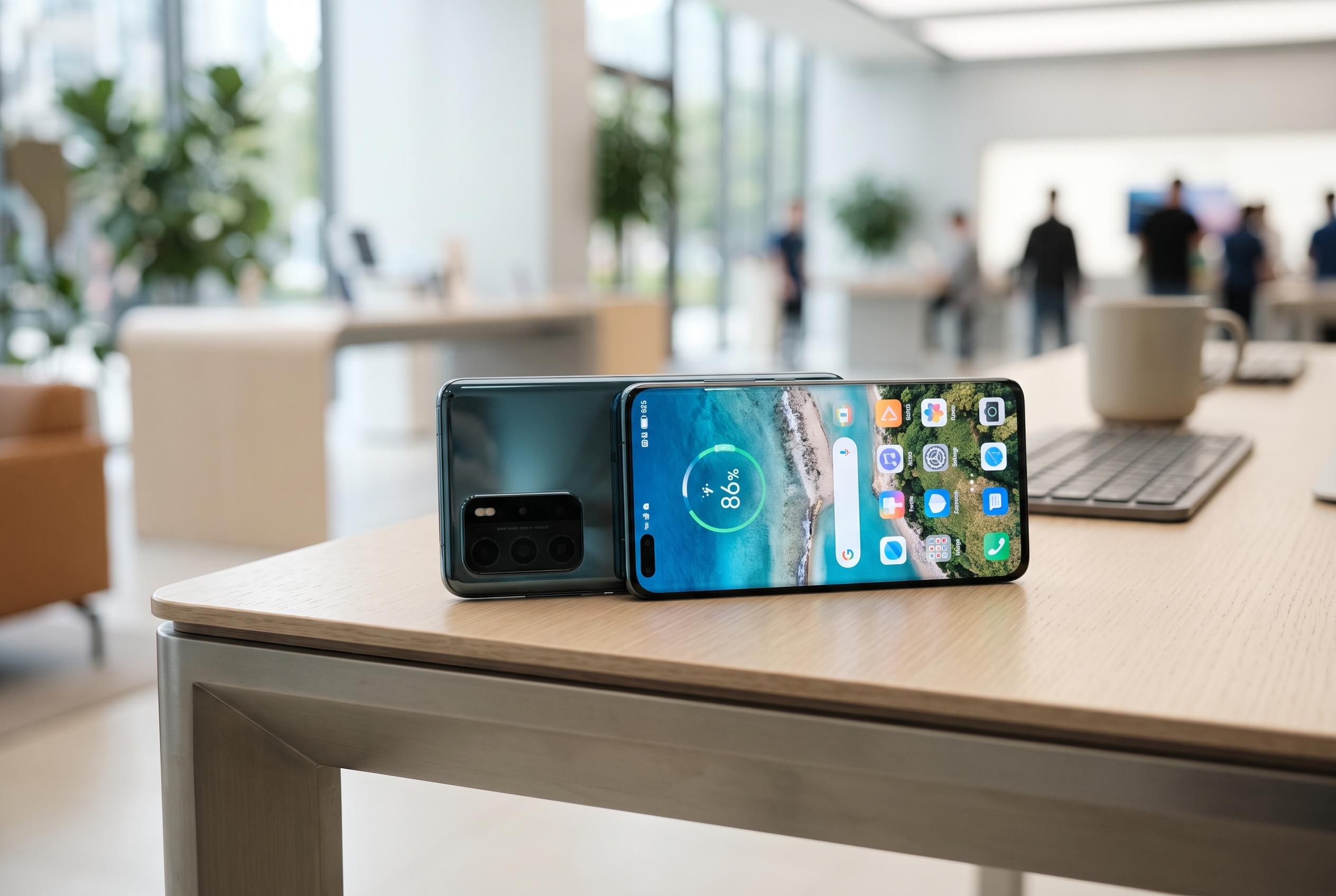

Huawei unveils its global Nova 16 series at Munich, featuring a high-capacity 7,000mAh battery, 5G, and advanced camera tech, while balancing regional hardware compromises and software restrictions.
Huawei’s international version of the Nova 16 has arrived with fewer cuts than some pre-launch reports had suggested. Before the Munich event, Notebookcheck had raised the possibility that Huawei might trim battery capacity or even remove 5G from the export model. Instead, the phones launched with 7,000mAh batteries, 100W wired charging and 5G intact, with European pricing later reported at €599 for the nova 16s and €749 for the nova 16s Pro.
The handsets were not unveiled in isolation. Huawei placed them inside its 2 September product showcase in Munich, an event the company presented as its “Innovative Product Launch” and which Android Authority said took place at IFA 2026. Huawei’s official event page lists the nova 16s Pro and nova 16s alongside the Watch GT 7 Pro, Watch 6 Pro, Watch D3, MatePad Pro 12, Watch GT 7, Watch 6 and FreeBuds Neo. In a pre-event release carried by PR Newswire, Huawei framed the line-up under its “Chase the Wild” campaign and said the Watch 6 series was returning to Europe after a “year-long hiatus”, while the Watch D3 had recently secured CE-MDR certification there.
For the phones themselves, the Pro model is the clearer attempt to stand out. Android Authority said it pairs a 6.84-inch OLED display with LTPO adaptive refresh from 1Hz to 120Hz, a 2,856 x 1,320 resolution and brightness of up to 6,000 nits. Its camera hardware is unusually ambitious for a mid-range line: a 200MP main sensor, a 50MP RYYB periscope telephoto with 3.7x optical zoom and a 50MP ultrawide. Notebookcheck’s earlier preview had already pointed to the same 1/1.28-inch main sensor size and IP65 rating, and the launched specification appears to have matched those expectations closely.
Huawei’s own marketing around the range has leaned heavily on imaging rather than outright computing power. In the pre-launch material distributed by PR Newswire, the company said the nova 16s series was coming to the global market with “upgraded features and enhanced portrait photography”. That is consistent with the Pro’s hardware mix as described by Android Authority, which also highlighted the 50MP front camera and Huawei’s focus on colour handling and portrait tools. The message is fairly clear: Huawei wants the Pro to be read less as a conventional value handset and more as a camera-led device positioned below its flagship families.
The standard nova 16s is the more interesting phone strategically, because it shows where Huawei has chosen to compromise for export markets. Xiaomiui reported that both global phones follow the naming pattern of the Chinese Nova 16 range, but with an extra “s” added for overseas release. It also said the international nova 16s drops to a Kirin 8020 chip, while the Pro keeps the Kirin 9010S. Android Authority reported the same change and added that the regular model still carries a 6.68-inch OLED display at 2,800 x 1,280, a 120Hz refresh rate, a 50MP main camera, a 50MP RYYB periscope telephoto at 3.3x optical zoom and a 50MP selfie camera. Unlike the Pro, it does without an ultrawide rear camera.
Software is where the reporting becomes less tidy. Android Authority and PhoneArena both described the nova 16s pair as running HarmonyOS 6.0. Xiaomiui, however, said the global devices use EMUI 16.0, while the Chinese models run HarmonyOS 6.1. What is not in dispute is the broader commercial context. Android Authority noted that US restrictions had cut Huawei off from Google’s Android ecosystem, and Notebookcheck likewise linked potential export changes to continuing US sanctions. For buyers outside China, that software and services position remains as important as the hardware list.
The pricing story also shifted as launch-day coverage gave way to fuller regional detail. When PhoneArena wrote about the phones on 2 September, it said Huawei had not yet officially confirmed pricing or availability, though it noted that the Nova 14 Pro had launched in Europe at €599 last year and that the Nova 15 Pro never made it to the Western Hemisphere. By 3 September, Android Authority was reporting a four-tier European structure: €599 and €699 for the 256GB and 512GB nova 16s, and €749 and €849 for the equivalent Pro variants. It added that availability would vary by market, suggesting Huawei is still relying on a selective regional rollout rather than a broad simultaneous release.
Taken together, the launch says as much about Huawei’s overseas strategy as it does about two individual phones. The company used Munich to present an ecosystem push spanning watches, tablets, audio products and smartphones, rather than staging a standalone handset return. The pre-launch fear that the export Nova might lose major hardware features proved misplaced, but the standard model’s chip downgrade shows Huawei is still differentiating its global offer carefully. For prospective buyers, that leaves a simple conclusion: the nova 16s Pro is the statement device, while the cheaper model carries the sharper trade-offs.
Disclaimer: This content is intended for informational purposes only. Readers are advised to exercise their own judgement, conduct due diligence, or consult a qualified expert before acting on any information provided.