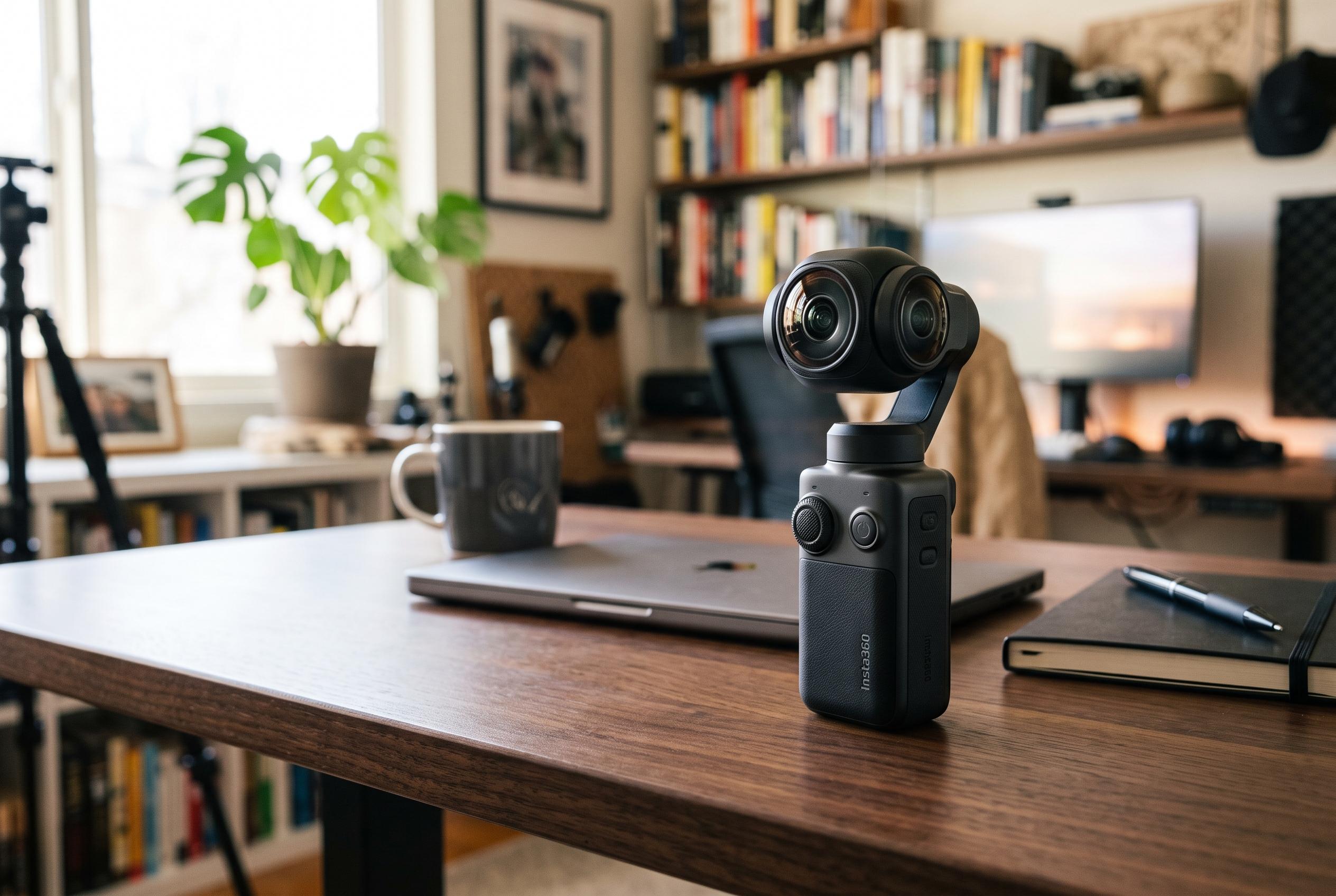

Insta360 has launched the Luna Ultra, a flagship pocket gimbal camera featuring dual cameras, professional video capabilities, and detachable remote control, challenging established players like DJI with a more versatile device aimed at creators and mobile filmmakers.
Insta360’s Luna Ultra has given the pocket gimbal camera market its first serious jolt in years. The device was officially announced on 10 June 2026 as the company’s first entry in a category long defined by DJI’s Osmo Pocket line, and DPReview reported that the timetable appeared to have been disrupted when retailer listings surfaced early and at least one unit was sold before the embargo lifted. In its own launch material, Insta360 presented the camera as a flagship tool for creators who want a more capable step up from phone video without moving to a larger system. (dpreview.com)
The technical argument for the Luna Ultra is straightforward: two cameras where the established formula usually offered one. Leica and Insta360 say it combines a 1-inch, 20mm-equivalent f/1.8 main camera with a 60mm-equivalent f/2.0 telephoto built around a 1/1.3-inch sensor. That gives the device five focal lengths, 3x true optical zoom, 6x lossless in-sensor zoom and up to 12x total magnification. It also records 8K at 30fps with Dolby Vision and 10-bit I-Log, while Leica says the system reaches up to 14 stops of dynamic range and supports ACES and integrated timecode for more advanced post-production work. (dpreview.com)
What makes the Luna Ultra more than a specification sheet is that several reviewers found the first-generation design unexpectedly mature. TechRadar described Insta360’s debut in this segment as a polished effort, while PetaPixel went further, calling it “the best vlogging camera I have ever used”. The strongest point of agreement is the detachable 2-inch OLED control module, which doubles as screen, remote and microphone. TechRadar and PetaPixel both said it works at up to 20 metres, making it far easier for one person to frame, steer and record a shot without relying entirely on a phone. (techradar.com)
That remote matters because the other major differentiator is zoom. Engadget drew a clear distinction between the marketing claim of 12x zoom and the optical reality: the Luna Ultra delivers 3x optical reach, then moves through in-sensor and digital enlargement beyond that. Even so, reviewers said the longer lens changes what this type of camera can do, making portraiture, close-ups and tighter travel shots more plausible than on the fixed-wide pocket gimbal template. Engadget also noted that the detachable module can pan, tilt and zoom from over 60 feet away, turning the camera into a small unattended rig for solo presenters. (engadget.com)
The compromises are also fairly consistent across reviews. The Luna Ultra is larger and dearer than the single-lens Pocket models it is challenging, with launch pricing starting at $769.99 in the US and £649.99 in the UK. Engadget highlighted the limited 47GB of built-in storage for a camera that shoots 8K, while PetaPixel said the tiny display makes checking focus difficult and that a phone remains the easier way to set exposure, not least because the histogram appears only in the app. TechRadar likewise found the body bulkier than DJI’s equivalent and the microSD cover awkward. (techradar.com)
Battery life and heat look more nuanced than the headline claims suggest. Engadget said the 1,550mAh battery is rated for roughly four hours, but PetaPixel reported closer to two hours in mixed real-world use with plenty of 8K and slow-motion capture. In controlled indoor testing, that reviewer recorded 2 hours and 47 minutes at 4K/24p without an overheating warning, whereas 4K/120p ran for nearly 44 minutes before heat stopped recording. TechRadar similarly said the camera became warm in demanding modes and showed lag when jumping from 12x back to 1x zoom, suggesting that performance depends heavily on which of its more power-hungry features are being used. (engadget.com)
There are also clear signs that Insta360 is aiming beyond casual holiday clips. TechRadar highlighted 32-bit float audio, a feature more commonly associated with dedicated sound equipment because it can preserve heavily varying levels without clipping. Leica’s press material adds professional colour and synchronisation tools, including ACES support and timecode, while Insta360 said the camera was built for “everyday creators and mobile filmmakers”. Those details do not erase the premium price, but they do explain why the company is presenting the Luna Ultra as a compact production tool rather than merely a polished phone alternative. (techradar.com)
The broader significance of the Luna Ultra is that it has made a predictable category look competitive again. DPReview cast it as a direct challenge to DJI’s long-running Pocket franchise, and the early reviews broadly suggest that the dual-lens design and detachable controller give Insta360 more than a me-too product. The launch has also unfolded against a legal backdrop: PetaPixel referred to alleged intellectual property theft, while TechRadar noted that DJI had filed patent claims and Insta360 had responded with a countersuit. For buyers, the practical question is whether those extra optics, remote-working advantages and pro video features justify the premium. For the market, the more immediate conclusion is simpler: DJI no longer has this segment to itself. (dpreview.com)
Disclaimer: This content is intended for informational purposes only. Readers are advised to exercise their own judgement, conduct due diligence, or consult a qualified expert before acting on any information provided.