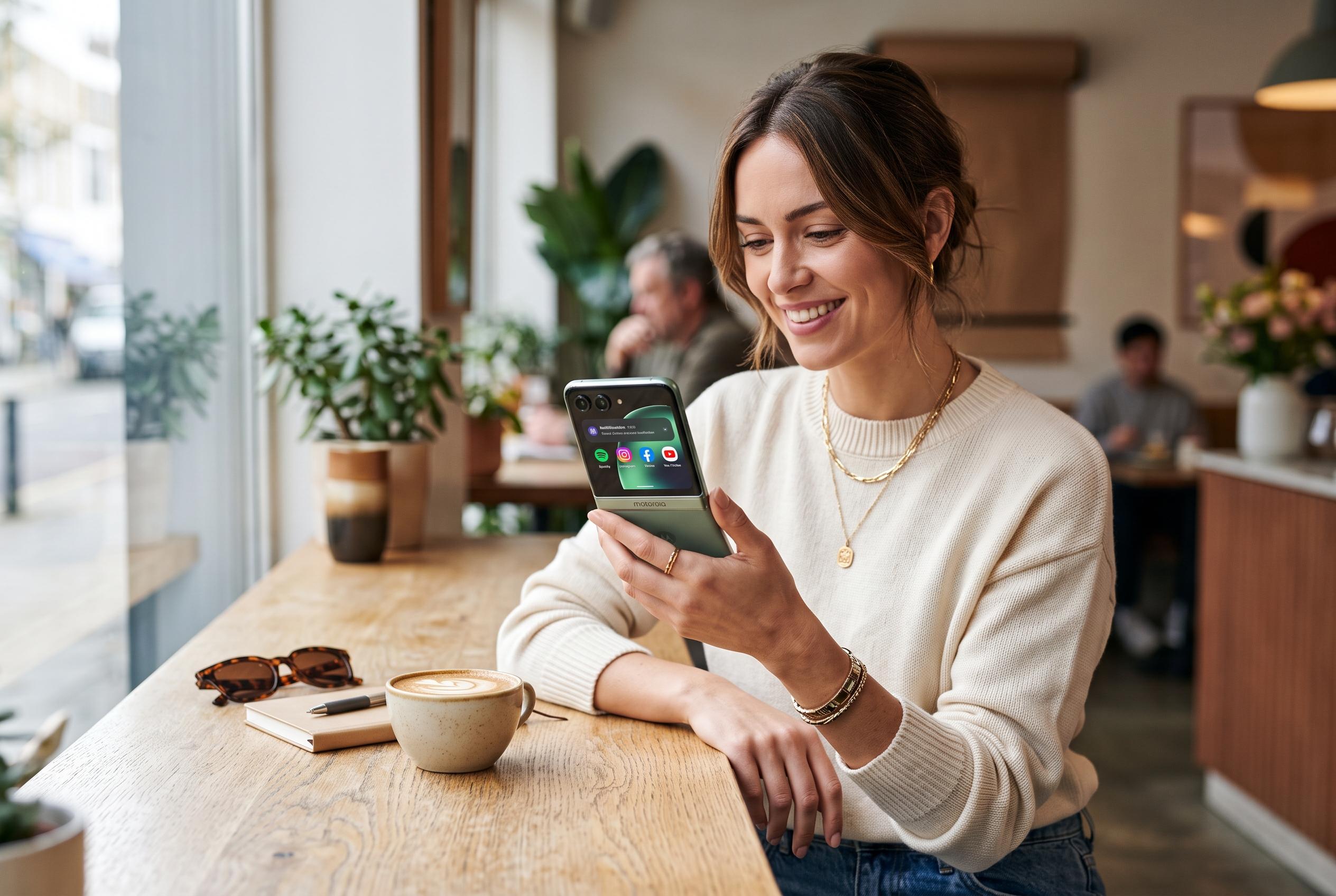

Motorola leverages Lollapalooza to redefine the Razr as a chic yet functional smartphone, blending fashion with modern tech in a bid to appeal to style-conscious consumers seeking compact, versatile devices.
Motorola is trying to recast the Razr as more than a nostalgic flip phone. At Lollapalooza in Chicago, the company used one of the city’s biggest cultural events to present the 2026 Razr family as both a fashion object and a practical handset, while leaning on the idea that foldables can satisfy people who want less distraction without giving up modern smartphone features. The strategy builds on the Razr’s history as one of the most recognisable mobile devices of the early 2000s, when the original clamshell model sold 130 million units, according to Motorola.
The brand’s most visible stunt was the Razr Wheel, a Ferris wheel built in partnership with Live Nation and installed at Grant Park for the festival. Maria Jose Martin, Motorola’s North America marketing director, told Rolling Stone that the company saw Lollapalooza as a natural fit because of its Chicago roots and because the Razr is meant to stand for individuality and self-expression. That message was reinforced across the festival site, where Motorola branding was prominent and Razr devices were visible in attendees’ hands.
In practice, the 2026 Razr appears to be aimed at users who want a compact handset that still behaves like a full smartphone. Review testing from Rolling Stone found that it was easy to use one-handed when folded, whether for navigation, payments through Google Wallet or quick music playback. The camera also proved useful in festival conditions, with support for different folded and unfolded shooting positions, while custom wallpapers, fonts and AI-assisted photo tools are designed to make the device feel more personal. Motorola’s Pantone-backed colour choices, including Violet Ice, Bright White, Sporting Green and Hematite, turn the phone itself into part of the styling.
The hardware story is equally important. The model reviewed by Rolling Stone includes 256GB of storage and more than 36 hours of battery life, with fast top-ups that the publication described as taking about 15 minutes for a useful charge. That lines up with other recent coverage of Motorola’s Razr range, which has highlighted larger batteries, quicker charging and improved cameras across the 2026 family. Android Central and PhoneArena both said the base Razr remains one of the stronger value choices among flip phones, while T3 described the more expensive Razr Fold as a premium alternative with 16GB of RAM, 512GB of storage, stylus support and a 6,000mAh battery.
The wider picture is that Motorola is using cultural marketing to support a product line that has become more technically credible. Android Central’s testing of the Razr Ultra 2026 suggested that a premium-sounding chip name does not automatically translate into better real-world performance, particularly in smaller devices that must manage heat well. That matters because Motorola is selling the Razr not just as a throwback, but as a modern compromise: a pocketable device that can still handle camera work, payments, navigation and entertainment without forcing the owner into a larger slab-style phone.
Disclaimer: This content is intended for informational purposes only. Readers are advised to exercise their own judgement, conduct due diligence, or consult a qualified expert before acting on any information provided.