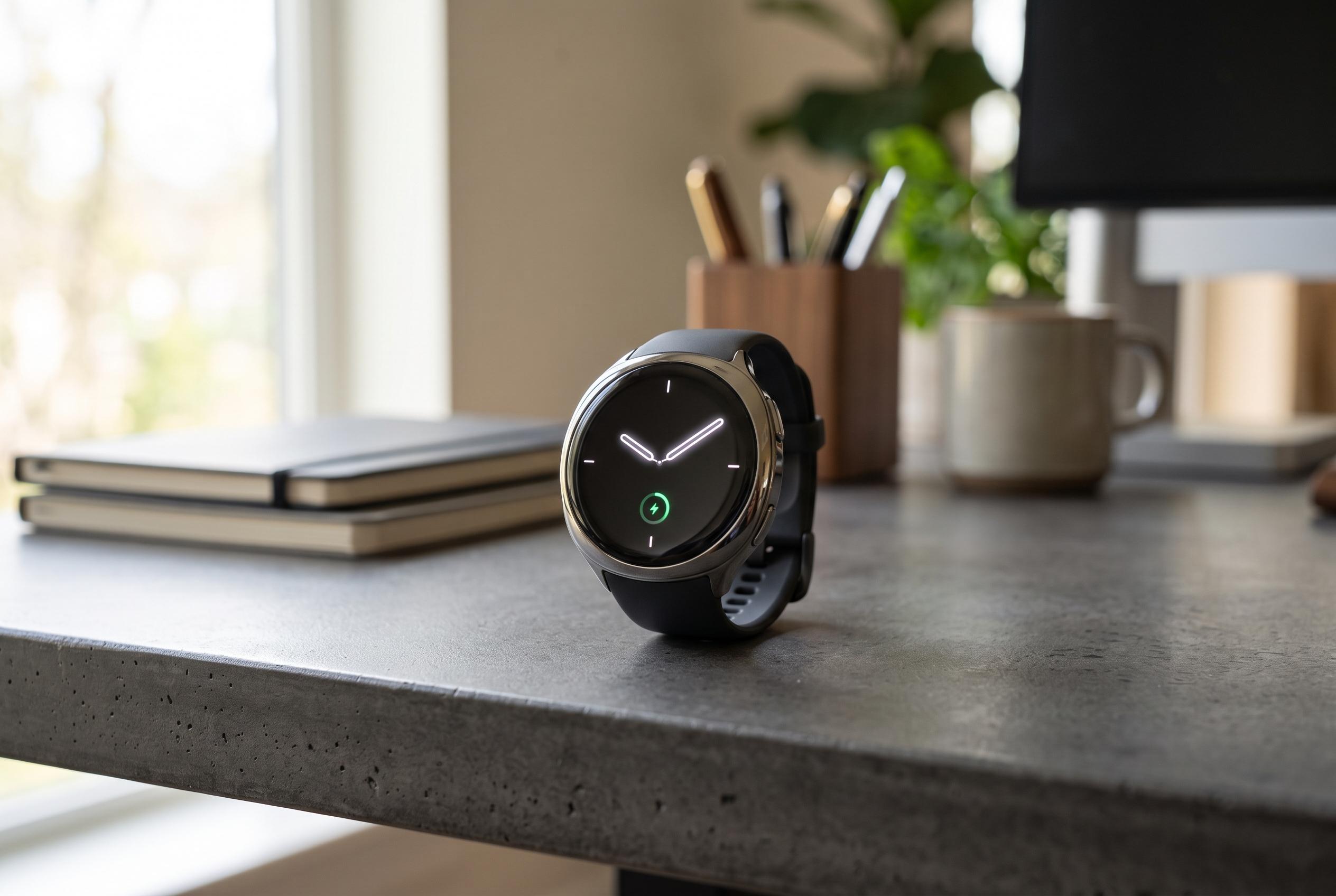

Oppo launches the Watch X3, a premium Wear OS device boasting up to 16 days of battery life, potentially reshaping the high-end smartwatch market despite stiff rivals and software flaws.
Oppo’s Watch X3 is pitched as a premium Wear OS smartwatch that tries to solve the platform’s most persistent weakness: battery life. The company says the watch can last up to 16 days in Power Saver Mode, while the full smart experience is designed to stretch across several days rather than a single charge cycle. In practice, reviewers have found it to be one of the strongest endurance performers in the Wear OS class, even if the exact figure varies by usage pattern.
The watch uses a lightweight titanium case, sapphire crystal over the display and a 43g body that is 11mm thick. Oppo has also kept the 1.5-inch LTPO AMOLED panel at the centre of the design, with a 466 x 466 resolution and a claimed peak brightness of 3,000 nits in outdoor sports modes. The hardware is built around a dual-chip approach, pairing Qualcomm’s Snapdragon W5 Gen 1 with a low-power companion processor to separate demanding smartwatch functions from background tasks.
That architecture is what allows Oppo to offer a full Wear OS 6 experience without collapsing battery life. Users get Google services such as Maps, Wallet and Gemini, alongside Oppo’s own health and fitness software. The company also links the watch to its OHealth app and says Android users with recent Oppo phones can unlock extra functions, including remote camera control. As with other Wear OS devices, the trade-off is platform dependence: the watch is not compatible with iPhones, and the companion app remains basic compared with the better smartwatch ecosystems.
Health and sports tracking are a major part of the package. Oppo’s Tri-Sense system combines optical heart-rate and blood-oxygen sensors, while the watch supports ECG, fall detection, sleep tracking and a 60-second wellness check. It also includes more advanced metrics for selected sports, such as running biomechanics and racquet-sport swing data. Some reviews have praised the breadth of features, although Engadget reported that fitness tracking can be inconsistent, suggesting that software polish still trails the hardware ambition.
The bigger commercial problem for the Watch X3 is that it arrives alongside near-identical rivals. Reports from Xataka and other reviewers point out that the OnePlus Watch 4 shares much of the same core hardware, while Xiaomi’s Watch 5 also competes on battery life through a similar dual-chip design. That leaves the Oppo model’s appeal centred on its materials, styling and charging performance. For buyers who want a polished Wear OS watch with unusually strong stamina, the Watch X3 is a serious option. For those focused on value, the market offers close substitutes at lower prices.
Disclaimer: This content is intended for informational purposes only. Readers are advised to exercise their own judgement, conduct due diligence, or consult a qualified expert before acting on any information provided.