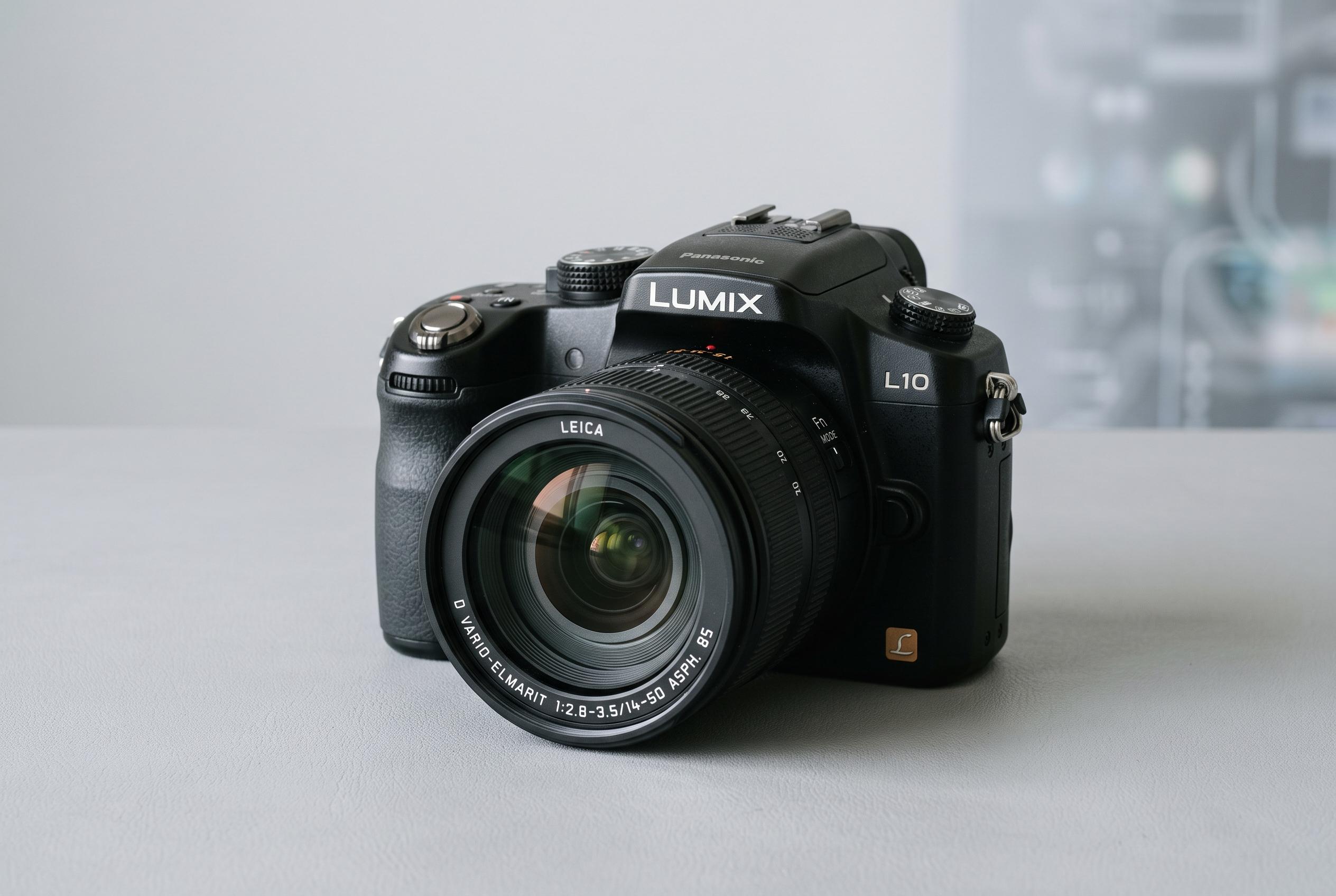

Panasonic introduces the Lumix L10 in India, a premium fixed-lens camera celebrating the 25th anniversary of the Lumix brand, featuring advanced Leica optics and versatile shooting capabilities.
Panasonic has launched the Lumix L10 in India, a fixed-lens camera that the company is using to mark the 25th anniversary of its Lumix brand. The model will arrive in the market later this month at a starting price of Rs. 1,79,990, with sales routed through multiple retail channels. Panasonic says the camera will be offered in Black and Silver, while its own announcement also lists a special Titanium Gold edition for some markets.
The Lumix L10 is built around a Leica DC Vario-Summilux lens with a 24mm to 75mm equivalent zoom range and an aperture that opens from f/1.7 to f/2.8. Panasonic says the camera supports macro shooting and can focus on subjects as close as 3cm in that mode. The body weighs about 508g and carries a saffiano leather-textured finish, which is intended to give it a more premium feel.
Inside, the camera uses a 4/3-type back-illuminated CMOS sensor with an effective resolution of 20.4 megapixels, according to the company. It also includes Phase Hybrid Autofocus with 779 focus points, a 2.36-million-dot OLED viewfinder and a 1.84-million-dot free-angle monitor. Panasonic says its Dynamic Range Boost feature is designed to preserve more shadow detail in still images, while multi-aspect shooting lets users frame images in 4:3, 3:2 and 16:9 without changing the angle of view.
The camera also supports Panasonic’s newer film-inspired Photo Styles, including L.Classic and L.ClassicGold, alongside REAL-TIME LUT, which allows custom colour profiles to be loaded directly into the camera. Independent coverage from Digital Camera World has positioned the Lumix L10 as a premium compact aimed at rivals such as the Fujifilm X100VI, noting that Panasonic has packed in a relatively large body to accommodate the zoom lens, an electronic viewfinder, a tilting screen and stronger thermal management for video capture. That larger chassis appears to be a deliberate trade-off: more flexibility and more features, but less of the pocketable design that defines many compact cameras.
Disclaimer: This content is intended for informational purposes only. Readers are advised to exercise their own judgement, conduct due diligence, or consult a qualified expert before acting on any information provided.