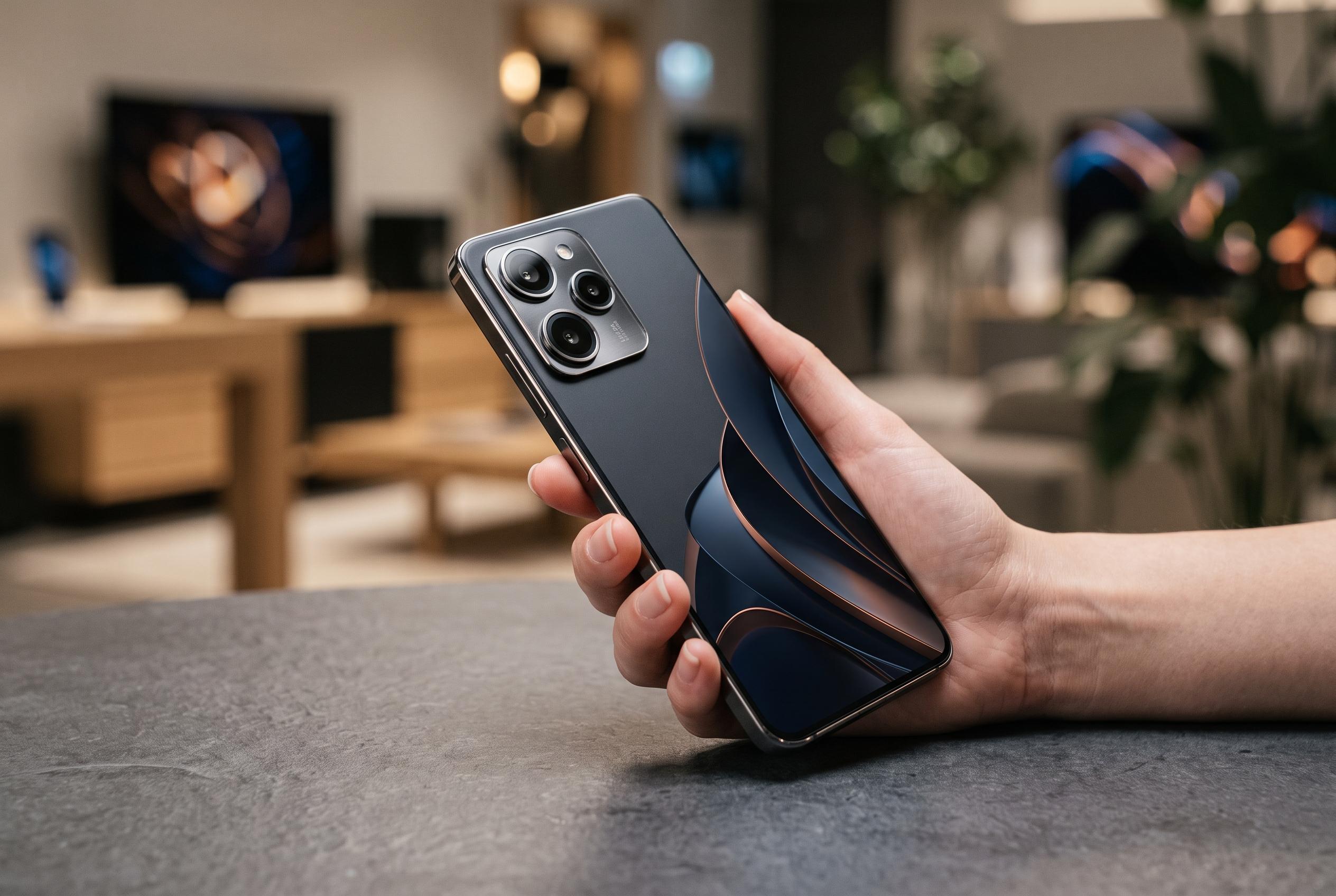

The Poco F9 Ultra redefines its market position with a more polished design, powerful performance, and notable battery life, though at a higher price point and with some trade-offs in camera consistency and software freshness.
Poco’s latest Ultra phone is no longer trying to be a bargain-bin disruptor in the old sense. At S$1,119 to S$1,699 depending on storage, the F9 Ultra enters a market where premium Android handsets routinely cost well over S$1,800. HardwareZone’s review suggests that shift defines the device: it still leans on speed, battery life and sound, but the trade-offs are now easier to see, especially in imaging and software polish.
The phone’s industrial design is familiar rather than radical. HardwareZone noted that the rear camera island sits flatter than before, which makes the handset more stable on a desk and slightly easier to live with during gaming. The large 6.9-inch chassis is heavy at 235g, but the curved frame helps soften the bulk. Android Central also highlighted the move to a cleaner, more polished finish, with Poco dropping the denim-style rear seen on older models. The handset remains IP68-rated, uses Gorilla Glass 7i up front and comes in Black and Dark Cherry.
The display is another area where Poco aims high without fully matching the headline figures. Poco says the AMOLED panel can reach 185Hz in selected games, but HardwareZone’s testing found 120Hz to be the general ceiling. Peak brightness is quoted at 10,000 nits, though only on a tiny portion of the screen; more practical full-screen output is closer to 850 nits, rising to 2,200 nits in sunlight mode. In use, the panel remained readable outdoors, even if it was somewhat reflective and not especially vivid. Audio, by contrast, is a clear strength: HardwareZone described the Bose-tuned 2.1 speaker system as loud and unusually lively for a phone, while other reviews singled out the subwoofer as one of the device’s defining features.
The F9 Ultra launches with Android 16 and Xiaomi’s HyperOS 3, a point that leaves it slightly behind some rivals that are already shipping newer software. HardwareZone said the interface is broadly familiar, with limited bloatware, but it also carries some awkward extras such as a Xiaomi app store that pushes notifications and a weather widget that redirects to an ad-supported app. Poco says the phone will receive four Android version upgrades, but buyers expecting the very latest software out of the box may still find the timing a little odd.
Camera hardware is strong on paper, with a 200-megapixel main sensor joined by 50-megapixel telephoto and ultrawide modules. HardwareZone found the main camera capable of excellent detail, especially in the 200MP mode, where distant textures and fine edges were captured more convincingly. The weaker point is consistency: colours shift between sensors, the ultrawide can look washed out, and the telephoto sometimes pushes saturation too far. Contrast handling is also uneven. Android Central likewise pointed to the 200MP main camera as a major upgrade, but the overall picture remains that of a competent, not class-leading, imaging system.
Performance is where Poco’s argument remains strongest. The phone uses Qualcomm’s Snapdragon 8 Elite Gen 5, paired with up to 16GB of RAM and 1TB of storage. HardwareZone found the chip fast, stable and well suited to gaming, with Poco’s WildBoost tuning helping maintain frame rates in demanding titles. Thermals were generally manageable, though repeated benchmarking still pushed the handset to around 40C, and gaming while charging made it notably warm. Battery life is a major asset: the 8,050mAh silicon-carbon cell lasted comfortably through a full day and more, and Android Central said it can stretch to two days in lighter use. Poco claims 100W wired and 50W wireless charging, but the lack of an in-box charger slightly blunts the convenience.
Taken together, the F9 Ultra looks less like a disruptive bargain and more like a selective compromise. It is no longer cheap in the way the original Poco flagship killer once was, and HardwareZone argued that the price rise makes the label harder to defend. Even so, the combination of strong performance, exceptional battery capacity, loud speakers and generous memory options still gives it a serious place in the 2026 value-flagship field. For gamers and power users who can accept uneven cameras and imperfect software, it remains one of the more practical high-end Android buys.
Disclaimer: This content is intended for informational purposes only. Readers are advised to exercise their own judgement, conduct due diligence, or consult a qualified expert before acting on any information provided.