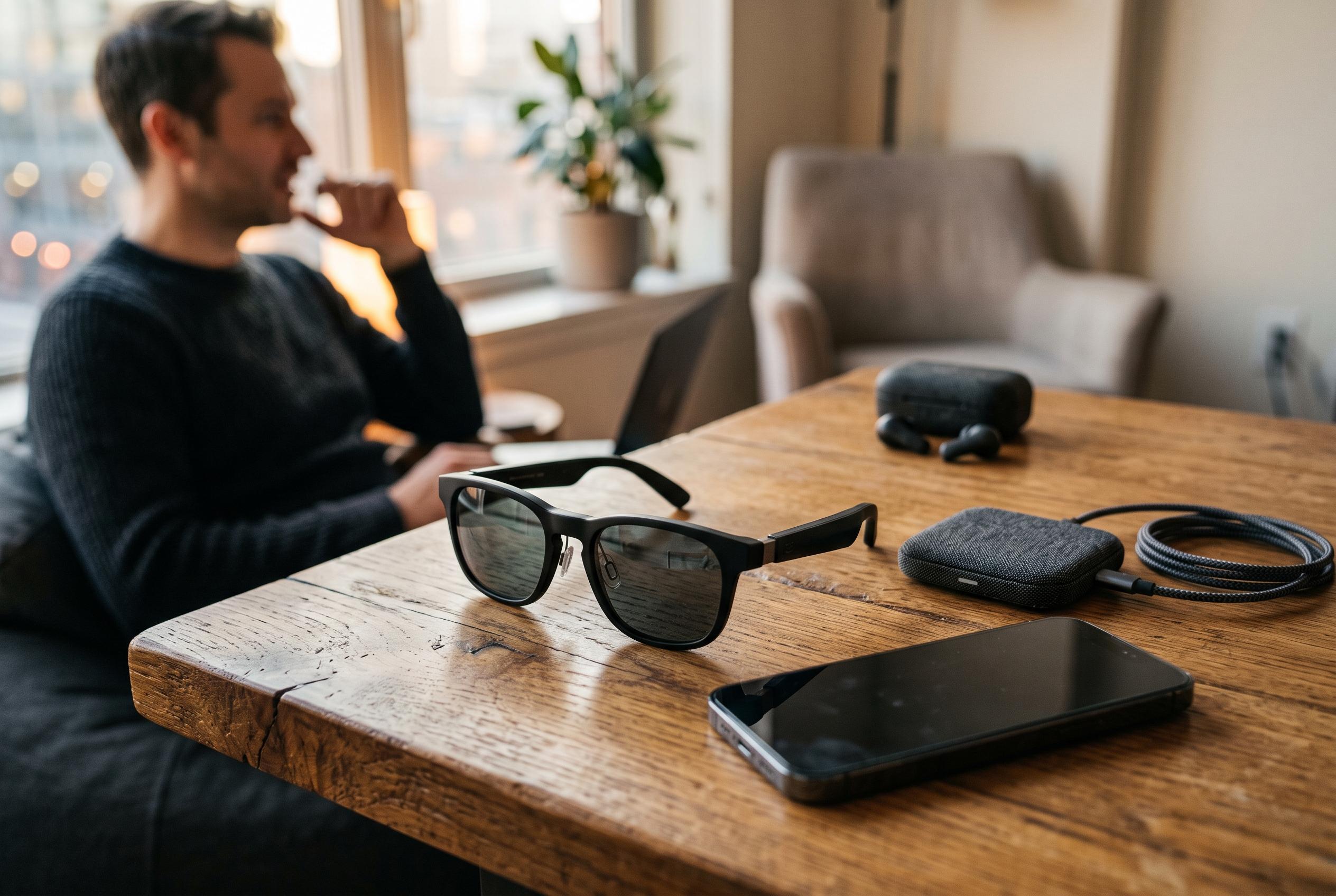

Ray-Ban Meta’s third-generation smart glasses launch in India, featuring new styles, enhanced battery life, and upgraded audio capabilities, marking a significant step in wearable tech evolution.
Ray-Ban Meta’s third-generation smart glasses have gone on sale in India, broadening the range of frames and bringing a modest set of hardware upgrades to the company’s wearable line-up. According to TelecomTalk and Gadgets 360, the glasses are now available through the official Ray-Ban online store in India, with launch pricing starting at Rs44,300 for selected frame-and-lens combinations. Other listed variants are priced at Rs46,500 and Rs50,100, making the new model slightly dearer than the previous generation, which began at Rs39,900 in India.
The latest version is offered in three familiar styles: Wayfarer, Aviator and Zena. Tom’s Guide and Notebookcheck both noted that the new frame choices are a key part of the update, alongside a slimmer look and a more comfortable fit. Ray-Ban’s own product page for the Meta AI glasses also emphasises adjustability, with temple tips, interchangeable nose pads and hinge design intended to improve wearability over long periods. Tom’s Guide reported that privacy controls remain unchanged from the earlier model, despite the refreshed styling.
Battery life is one of the main functional improvements. TelecomTalk said the glasses can last up to nine hours on a single charge, an hour longer than the Gen 2 model, while the charging case adds up to 50 hours of extra use, up from 48 hours. That figure differs from Ray-Ban’s US product page, which lists up to 12 hours on a single charge and up to 48 hours from the case, suggesting the specifications vary by configuration or market. Either way, the direction of travel is clear: the new generation is designed to run longer between charges.
Audio capture has also been upgraded. TelecomTalk reported that the Gen 3 model uses a six-microphone array, compared with five on the previous version, and Meta says it can reduce background noise by up to 90%, which should help voice commands in busy or windy conditions. Notebookcheck and 9to5Google said the glasses also support improved video capture, including Dolby Atmos recording support, although that feature appears to be part of Meta’s broader software roadmap rather than a headline hardware change. Taken together, the update is evolutionary rather than radical, but it reinforces Meta’s push to make smart glasses more practical for everyday use.
Disclaimer: This content is intended for informational purposes only. Readers are advised to exercise their own judgement, conduct due diligence, or consult a qualified expert before acting on any information provided.