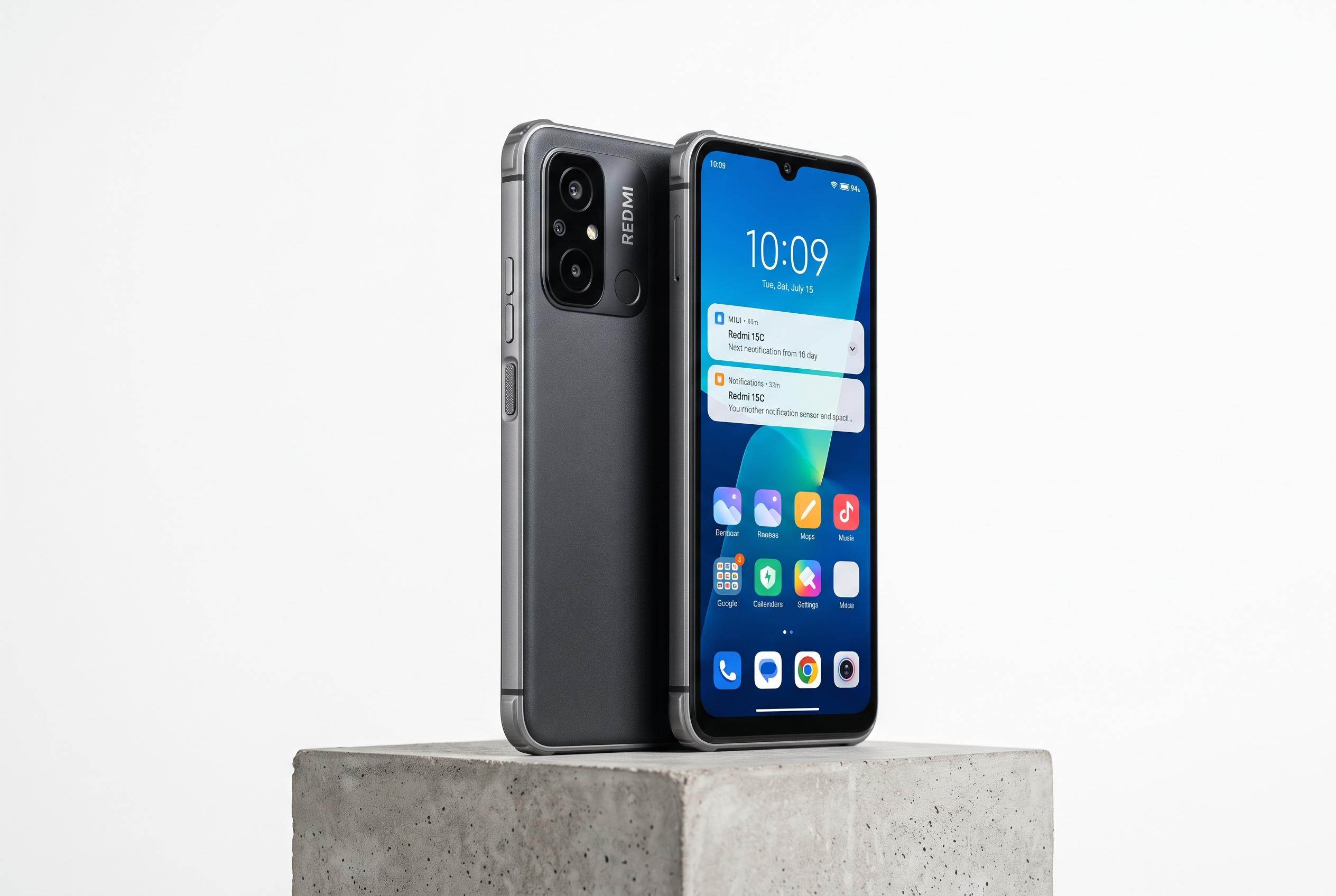

The Xiaomi Redmi 15C introduces significant improvements in battery life, durability, and software support, making it a more future-proof choice for Nigerian buyers despite similar performance levels to the Redmi 14C.
Xiaomi’s Redmi C series has long targeted buyers who want the basics done well at low cost, and the Redmi 14C and Redmi 15C fit that brief closely. Both use the same MediaTek Helio G81 Ultra platform, so the newer model is not a performance leap. The real differences lie in battery life, charging, durability, screen brightness and software support, which makes the choice more about long-term value than raw speed.
In Nigeria, pricing remains fluid because of exchange-rate pressure and store-to-store variation. The Redmi 14C is generally the cheaper option, while the Redmi 15C usually commands a modest premium for equivalent RAM and storage. The older phone is also becoming harder to source in some channels, whereas the Redmi 15C is broadly available through major retailers and marketplaces. That availability gap matters, because limited stock can push buyers towards the newer handset even when the price difference is noticeable.
The Redmi 15C brings the more meaningful hardware upgrades. Xiaomi’s official specifications show a 6.9-inch 120Hz display, IP64 dust and water resistance, a 6,000mAh battery and 33W charging. By contrast, the Redmi 14C has a 6.88-inch 120Hz panel, IP52 protection, an 5,160mAh battery and 18W charging. The newer phone is also brighter, which should improve outdoor visibility. In practical use, these changes are more important than the small differences in size or resolution.
There is, however, one clear area where the Redmi 14C remains ahead: the front camera. The older model uses a 13MP selfie camera, while the Redmi 15C drops to 8MP. Both phones keep a 50MP main rear camera with a depth sensor, so the rear imaging setup is broadly similar. For buyers who care most about video calls and selfies, that downgrade may be enough to tilt the decision back towards the Redmi 14C.
Software support is another point in the Redmi 15C’s favour. Xiaomi says the newer model ships with Android 15 and HyperOS 2, and will receive four major operating system upgrades plus six years of security updates. The Redmi 14C starts on Android 14 with HyperOS and is due two major upgrades and four years of security patches. That gives the Redmi 15C a longer useful life, which is especially relevant for budget phones that are often kept for several years.
For most buyers, the Redmi 15C is the stronger overall purchase because the battery, charging, durability and update policy all improve in ways that are easy to notice. The Redmi 14C still makes sense if it is significantly cheaper, or if the better selfie camera is a priority. Since performance is effectively the same on both, buyers should focus on RAM rather than the model name if they want smoother multitasking.
Disclaimer: This content is intended for informational purposes only. Readers are advised to exercise their own judgement, conduct due diligence, or consult a qualified expert before acting on any information provided.