
Samsung and Google are developing markedly different flagship foldables, with contrasting hardware philosophies, camera setups, and user priorities, offering consumers tailored choices between media focus and feature richness.
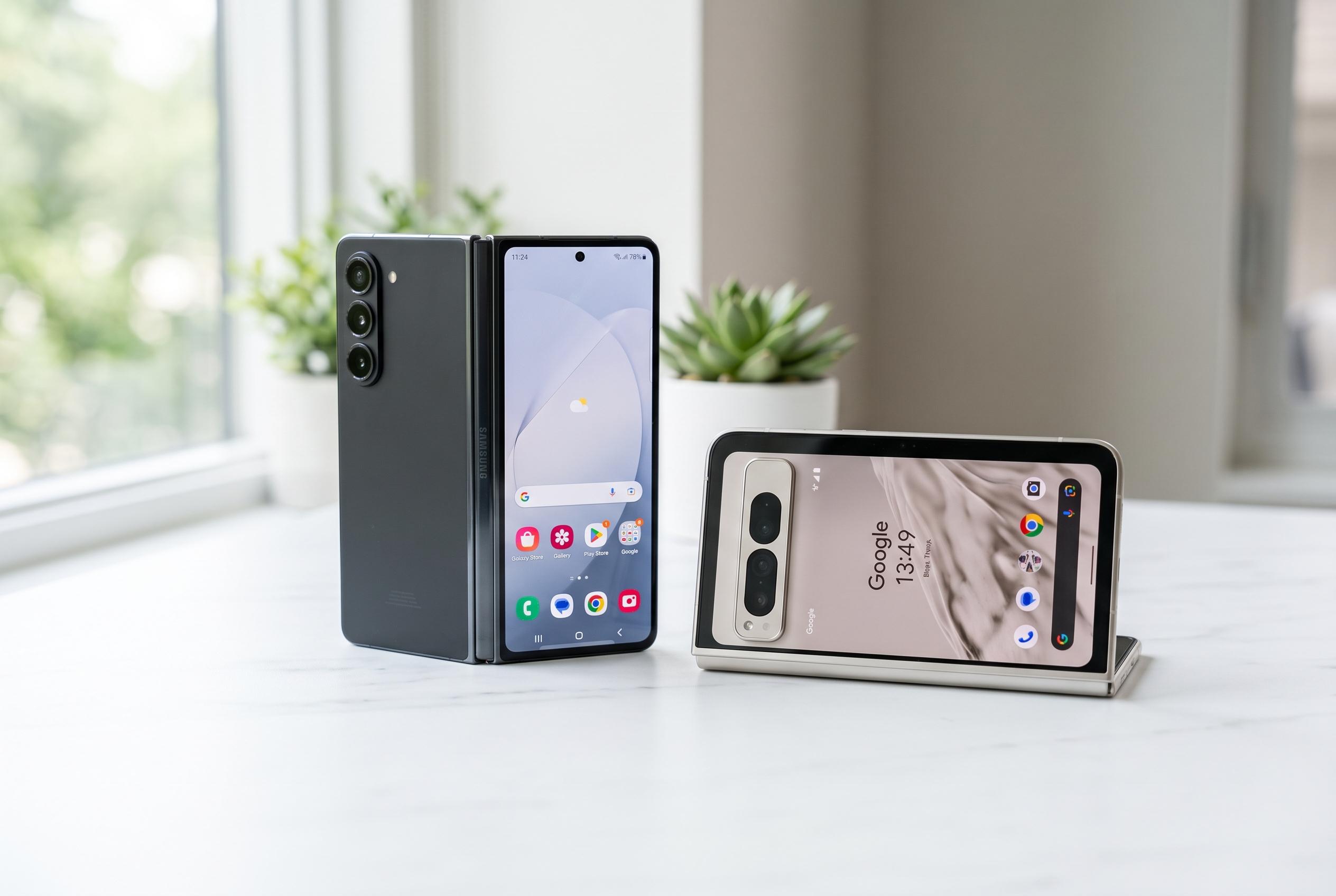
Samsung’s next foldable and Google’s rival model are shaping up as very different answers to the same problem: how to make a premium folding phone feel genuinely useful. According to The Economic Times, both devices are expected to run Android 17 and sit at roughly $1,900, but Google is pairing its Pixel 11 Pro Fold with more memory at the base level, while Samsung is leaning on a redesigned chassis and a less intrusive crease. (economictimes.indiatimes.com)
The clearest split is in the hardware philosophy. The report says Samsung has shortened and widened the Galaxy Z Fold 8 into a more passport-like device, with a 5.5-inch cover screen and a 7.6-inch inner panel aimed at media viewing. Google, by contrast, is said to be keeping the Pixel 11 Pro Fold taller and narrower, with a 6.5-inch outer display and an 8-inch inner screen that should suit split-screen use more comfortably. The Economic Times also notes that Samsung is offering more colour options and a less visible crease, while Google is pushing brighter displays on paper. (economictimes.indiatimes.com)
Cameras and software may decide the argument for many buyers. The Economic Times reports that Google’s model includes a triple rear-camera set-up with a dedicated telephoto lens and stronger zoom capability, whereas Samsung has dropped the telephoto unit in favour of dual 50MP rear cameras and 8K video recording. On performance, Samsung is using Qualcomm’s Snapdragon 8 Elite Gen 5, while Google relies on Tensor G6, with both phones promising seven years of updates and deep Gemini integration. Battery and charging also differ: Samsung is said to have a 4,800mAh cell with 45W wired charging, while Google offers a slightly smaller battery, 30W wired charging and magnetic wireless alignment. (economictimes.indiatimes.com)
On paper, neither foldable is the obvious winner. Samsung appears better suited to readers who want a wider inner display, a cleaner-looking fold and faster charging. Google seems stronger for those who value RAM, camera flexibility, AI tools and a larger interior screen. As The Economic Times frames it, the final choice depends on whether the buyer wants the more media-friendly device or the more feature-rich one. (economictimes.indiatimes.com)
Disclaimer: This content is intended for informational purposes only. Readers are advised to exercise their own judgement, conduct due diligence, or consult a qualified expert before acting on any information provided.