
After two weeks with the Samsung Galaxy S26 FE, experts find it to be a balanced but incremental upgrade over the S25 FE, with key improvements balanced by practical downgrades such as slower USB-C transfer speeds.
After two weeks with Samsung’s Galaxy S26 FE, the central question is not whether it is a good phone, but whether it improves enough on last year’s S25 FE to justify paying for the newer model. The answer, based on the available testing and comparisons, is that the newer handset is a strong all-rounder, but the gains are narrow. Samsung has kept the formula familiar: a 6.7-inch AMOLED display, a 4,900mAh battery, 45W wired charging, and a feature set that still pushes close to flagship territory. The main appeal remains value, not reinvention. According to Tom’s Guide and Samsung’s own comparison materials, the S26 FE is positioned as a cheaper route into the company’s premium software and hardware ecosystem, rather than as a dramatic upgrade over the S25 FE.
Camera performance remains one of the S26 FE’s strongest selling points. In daylight, the phone produces images that are broadly in line with Samsung’s more expensive Galaxy S26, especially from the main and ultra-wide cameras. The zoom camera is where the flagship still has the edge, with better contrast and less washout in tougher scenes, while low-light portrait and selfie results can be a little less balanced on the FE. Even so, Samsung Mobile’s own materials and recent independent reviews indicate that the S26 FE continues the line’s reputation for punching above its price in photography, particularly when compared with other mid-premium rivals.
Design changes are modest but visible. Samsung has kept the same overall footprint and the same 6.7-inch class display, but the rear camera layout now sits on a single raised island rather than as separate lenses. That gives the phone a more current look, even if the glass back has shifted to a glossier finish that will divide opinion. Build protection remains a strength: the S26 FE carries an IP68 rating, uses Gorilla Glass Victus Plus on both sides, and, according to Samsung, retains the same general durability standards as the S25 FE. European lab labelling cited by reviewers also suggests the phone met the top tier in drop testing, matching the older model.
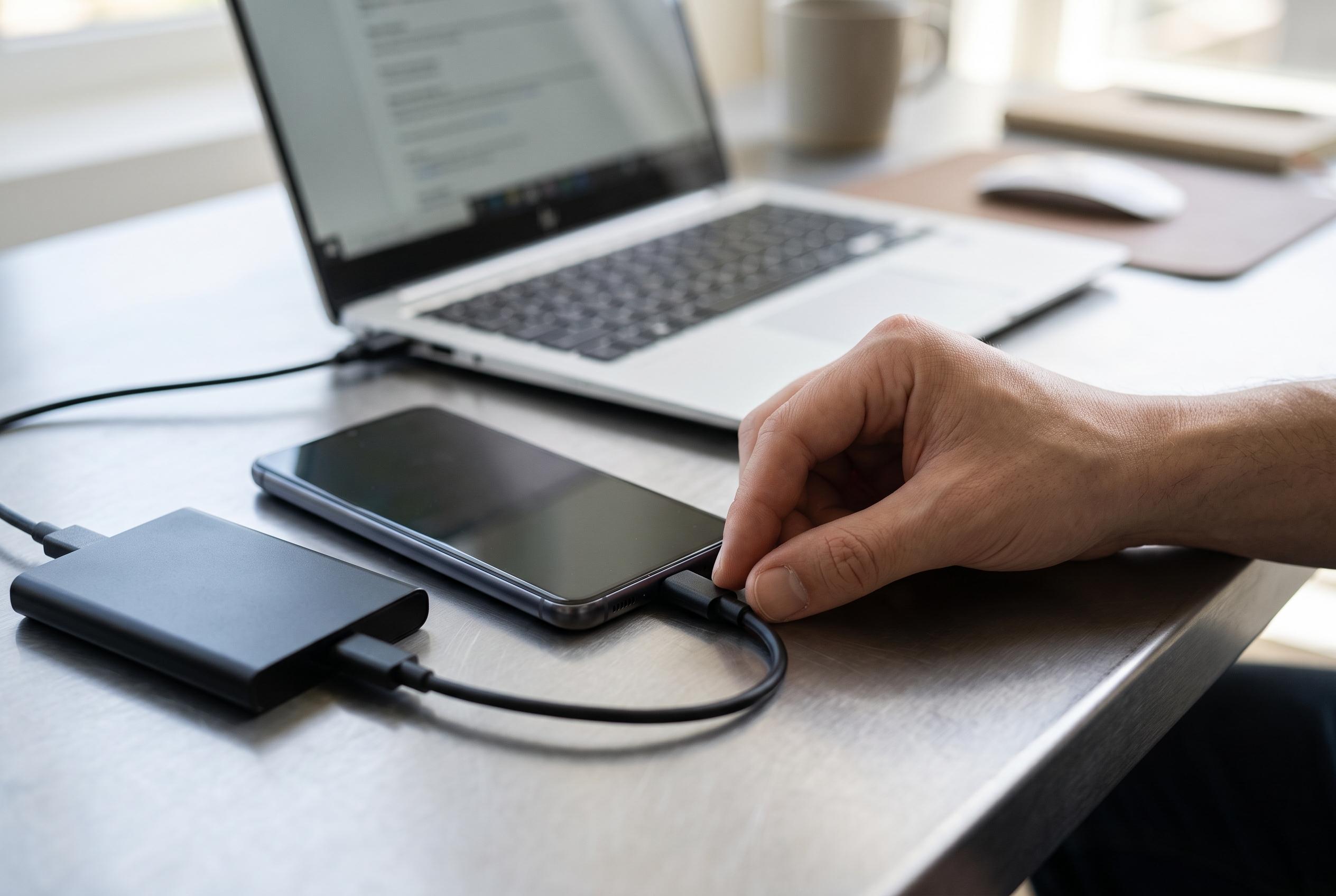
The most awkward downgrade is not visual but practical. The S26 FE appears to ship with a USB 2.0 Type-C port, where the S25 FE had faster USB 3.2 support. Samsung does not make much of that omission in its marketing, but the consequence is clear: wired file transfers are slower, and DeX over cable is no longer available. Samsung and third-party comparison guides both emphasise that wireless DeX remains an option, but it is not a complete substitute for a cabled connection when latency, charging and accessory management matter. For many buyers this will be irrelevant; for power users, it is a genuine step backwards.
Performance is the one area where the S26 FE makes an undeniable advance. The Exynos 2500, built on a 3nm process, lifts benchmark scores and delivers a noticeable advantage in heavier workloads such as video editing and demanding games. Samsung’s specification sheet places the chip alongside 8GB of RAM and UFS 4.0 storage, with 128GB and 256GB versions available in some markets, and up to 512GB in others. Reviewers say the phone feels no faster than the S25 FE in routine use, which is itself not a criticism, but the newer chip does widen the gap under sustained load. The trade-off is that Samsung has not paired the improved efficiency with a larger battery; the capacity stays at 4,900mAh, and battery life is solid rather than class-leading.
Software support remains a major reason to consider the handset. The S26 FE launches with One UI 9 and Android 17, and Samsung says it will receive up to seven generations of operating system upgrades and seven years of security updates. That places it among the longest-supported Android phones on the market and means it should remain viable well into the next decade. The problem for the S26 FE is not that it lacks merits, but that its predecessor already covered most of the same ground. The S25 FE is cheaper, almost identical in design and display, and only materially weaker in processor performance. As a result, the newer model is best seen as a careful refinement rather than a must-have replacement, with the USB downgrade making the case for an upgrade even less convincing.
Disclaimer: This content is intended for informational purposes only. Readers are advised to exercise their own judgement, conduct due diligence, or consult a qualified expert before acting on any information provided.