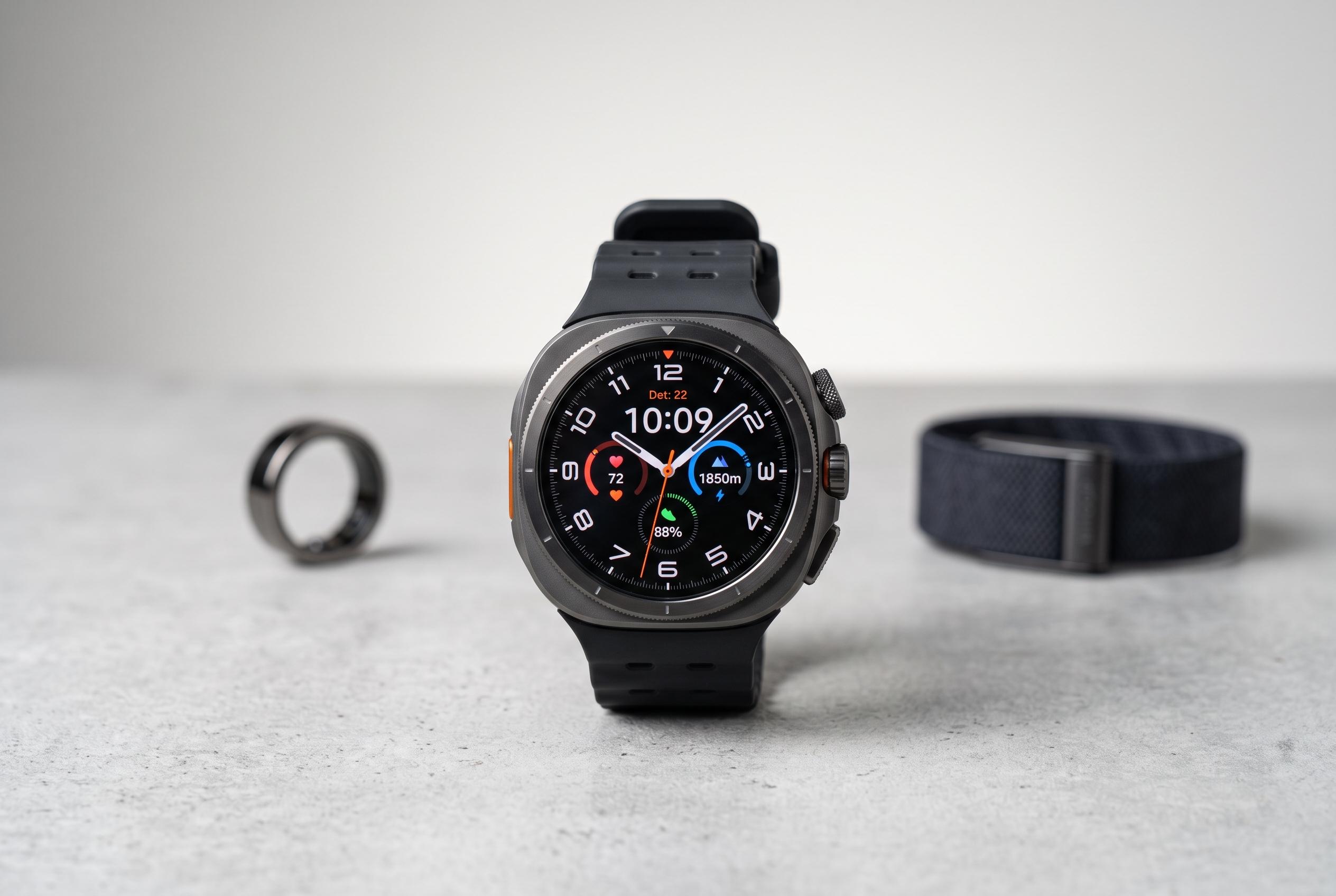

Samsung’s Galaxy Watch Ultra 2 sets a new benchmark in wearable versatility, surpassing traditional focus of sleep and recovery trackers like Oura Ring 4 and Whoop Band 5.0 with its all-in-one approach, rugged outdoor features, and full smartwatch capabilities.
Samsung’s Galaxy Watch Ultra 2 is being pitched as the company’s most capable smartwatch yet, and the comparison with Oura Ring 4 and Whoop Band 5.0 mostly comes down to use case. Samsung has built a device that tries to combine serious fitness tracking, outdoor navigation, dive support and full smartwatch functionality, while Oura and Whoop remain narrower tools focused on sleep, recovery and low-friction wearability. That split explains why the best choice for many buyers is less about raw sensor count than about how much device visibility, charging, and interaction they actually want day to day.
On paper, the Galaxy Watch Ultra 2 is the most ambitious of the three. Samsung says it uses a 1.52-inch Super AMOLED panel with 5,000-nit peak brightness, a titanium case, LTE connectivity and fast charging, while the watch also adds trail guidance, nutrition and hydration alerts, and automatic dive tracking. Android Central reported that the new model was unveiled on 22 July 2026, costs $699 in the US, and runs on the Snapdragon Wear Elite chip with 2GB of RAM and 64GB of storage. Samsung’s own product page says the watch is built for dust, drops and ocean dives to 130 feet, making it far closer to an outdoor instrument than a passive health band.
That broader ambition comes with trade-offs. The review data supplied in the lead article suggests the Galaxy Watch Ultra 2 is strongest when the user wants direct visibility and immediate access to information, because the screen and eSIM support let it function without a phone in ways the others cannot. By contrast, the Oura Ring 4 and Whoop Band 5.0 are designed to fade into the background. Tom’s Guide says the Oura Ring 4 improves comfort and tracking accuracy through its recessed sensors and “smart sensing” system, which uses 18 sensor paths, while TechRadar notes that Oura’s ongoing subscription remains a key consideration for buyers weighing value against convenience.
The sleep data comparison in the lead article also highlights a practical difference in philosophy. Samsung recorded a shorter sleep duration than Oura and Whoop, but it also appears to have ended tracking when the wearer was awake in bed, rather than continuing to count the period as sleep. That is not necessarily a flaw; it reflects a more conservative interpretation of rest. Oura and Whoop, meanwhile, are better aligned with the kind of overnight recovery analysis their users usually want. Tom’s Guide says Oura’s app now groups information into Today, Vitals and My Health tabs, with added stress and coaching tools, reinforcing its position as a dedicated wellness platform rather than a general-purpose wearable.
The same pattern shows up in exercise. Samsung’s watch is better suited to people who want a live display, phone-free runs and a more complete smartwatch experience, while Whoop is aimed at athletes who value strain and recovery analytics over interaction. The lead article’s workout testing suggested Samsung’s calorie estimates were higher during weight training, which may make them feel more representative in some sessions, although Whoop stayed close on heart-rate readings. In practice, that means the Ultra 2 is the more versatile machine, but not necessarily the most discreet or the most specialised.
Taken together, the three devices serve different users. Oura Ring 4 is still the best fit for people who want comfort, subtlety and strong overnight tracking. Whoop remains the most focused option for recovery-led training. Samsung’s Galaxy Watch Ultra 2 is the clear choice for anyone who wants a rugged smartwatch with standalone cellular support, a large bright display and no mandatory subscription. For buyers willing to accept two-day battery life and a larger wrist footprint, it is the one that does the most.
Disclaimer: This content is intended for informational purposes only. Readers are advised to exercise their own judgement, conduct due diligence, or consult a qualified expert before acting on any information provided.