
Samsung’s latest Galaxy Z Flip 8 introduces subtle design refinements, improved software support, and high-end performance, but maintains a conservative update with no significant upgrades to battery, camera, or charging speed amidst rising prices.
Samsung’s Galaxy Z Flip 8 arrives as a cautious refinement rather than a reinvention. The folding phone keeps the same core proposition as before: a compact clamshell design, premium materials and a cover screen that aims to make the handset useful without being opened. According to the launch and review summaries, Samsung has slimmed the device down slightly and kept the focus on polish rather than radical change, even as prices move higher in some markets. In Europe, the base model is said to start at €1,300, with the 512GB version rising to €1,500.
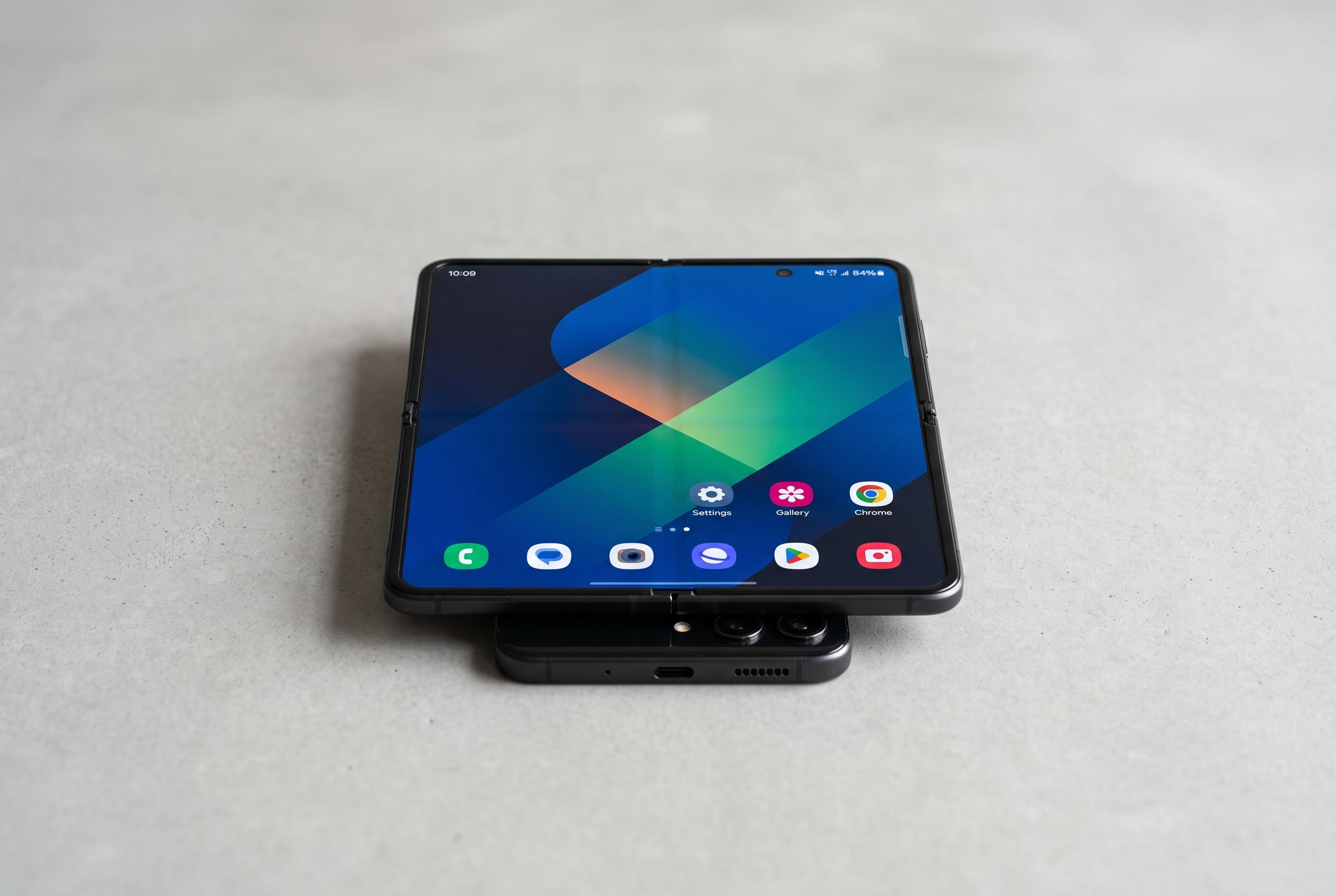
The most visible update is the trim. Presse Citron says the phone is now 6.1mm thick when unfolded and weighs 180g, compared with 6.5mm and 188g previously. Gizmochina also reports a revised hinge and IP48 protection, while Samsung is emphasising a lighter, more pocketable profile. The result is not a dramatic transformation, but it does make the device easier to handle. The fold is also meant to feel slightly smoother, with a subtly reshaped frame and hinge reducing the friction that has often made one-handed opening awkward on flip phones.
Both displays remain central to the experience. The main panel is a 6.9-inch OLED with a 120Hz refresh rate, while the 4.1-inch outer screen also runs at 120Hz. That secondary display is clearly more capable than on earlier generations, but it still falls short of the flexibility offered by Motorola’s best-known rivals. Presse Citron notes that widgets and Samsung’s Multistar utility unlock useful functions, yet app support is inconsistent and some tasks remain awkwardly limited. In practice, the cover screen is good for notifications, music controls and quick interactions, but not yet a full substitute for opening the phone.
Performance appears strong, though regional variants complicate the picture. Presse Citron says the model tested used Samsung’s Exynos 2600, a 2nm chip paired with 12GB of RAM and 256GB or 512GB of storage. SamMobile and other launch coverage point to the same Exynos platform in many markets, but PhoneArena says the United States version uses the Snapdragon 8 Elite Gen 5 instead. Either way, the hardware is positioned as high-end and capable of handling demanding games and intensive multitasking. The trade-off is heat: the folding design still limits sustained thermal management, so prolonged gaming can push temperatures up and drain the battery more quickly.
Battery life remains an area of restraint. Capacity stays at 4,300mAh, with 25W wired charging and, according to SamMobile, 15W wireless charging. Presse Citron’s testing suggests the phone can last roughly a day to a day and a half in mixed use, but heavier gaming shortens that quickly. Charging is also slower than many rivals, taking about 90 minutes for a full refill. The lack of a bundled charger, which is now standard practice across much of the industry, adds to the cost of ownership.
Camera hardware has changed little. The rear system again combines a 50MP main sensor with a 12MP ultra-wide lens, and there is a 10MP front camera. Presse Citron found the imaging quality mixed: daylight shots can look oversaturated and slightly soft, while low-light performance is more respectable than expected, if still far from class-leading. The flip format remains the phone’s strongest photographic advantage, because it lets users fold the device into a stable shooting position or use the main camera for selfies. Video recording reaches 4K at 60fps, and the hinge can still be positioned at roughly 90 degrees for hands-free capture.
Software is one of the Z Flip 8’s clearer strengths. It launches with Android 17 and One UI 9.0, and Samsung is promising seven years of Android updates. That level of support is ahead of most Android rivals and materially improves the case for a premium foldable bought to last. Presse Citron praises the interface for its fluidity and consistency, but also notes the amount of Samsung software preloaded at first boot. The company’s AI features are extensive, covering calls, notes, transcription and web tasks, yet many functions still require a Samsung account and manual consent for local processing.
Taken as a whole, the Galaxy Z Flip 8 looks like a well-executed but conservative update. It is thinner, lighter and more polished, with strong displays, dependable software support and enough performance for almost any mainstream task. But the battery has not grown, charging remains slow, camera hardware is unchanged and the price is higher. That leaves Samsung with a phone that is easy to admire, but harder to recommend as a must-have upgrade unless the folding format is already the main attraction.
Disclaimer: This content is intended for informational purposes only. Readers are advised to exercise their own judgement, conduct due diligence, or consult a qualified expert before acting on any information provided.