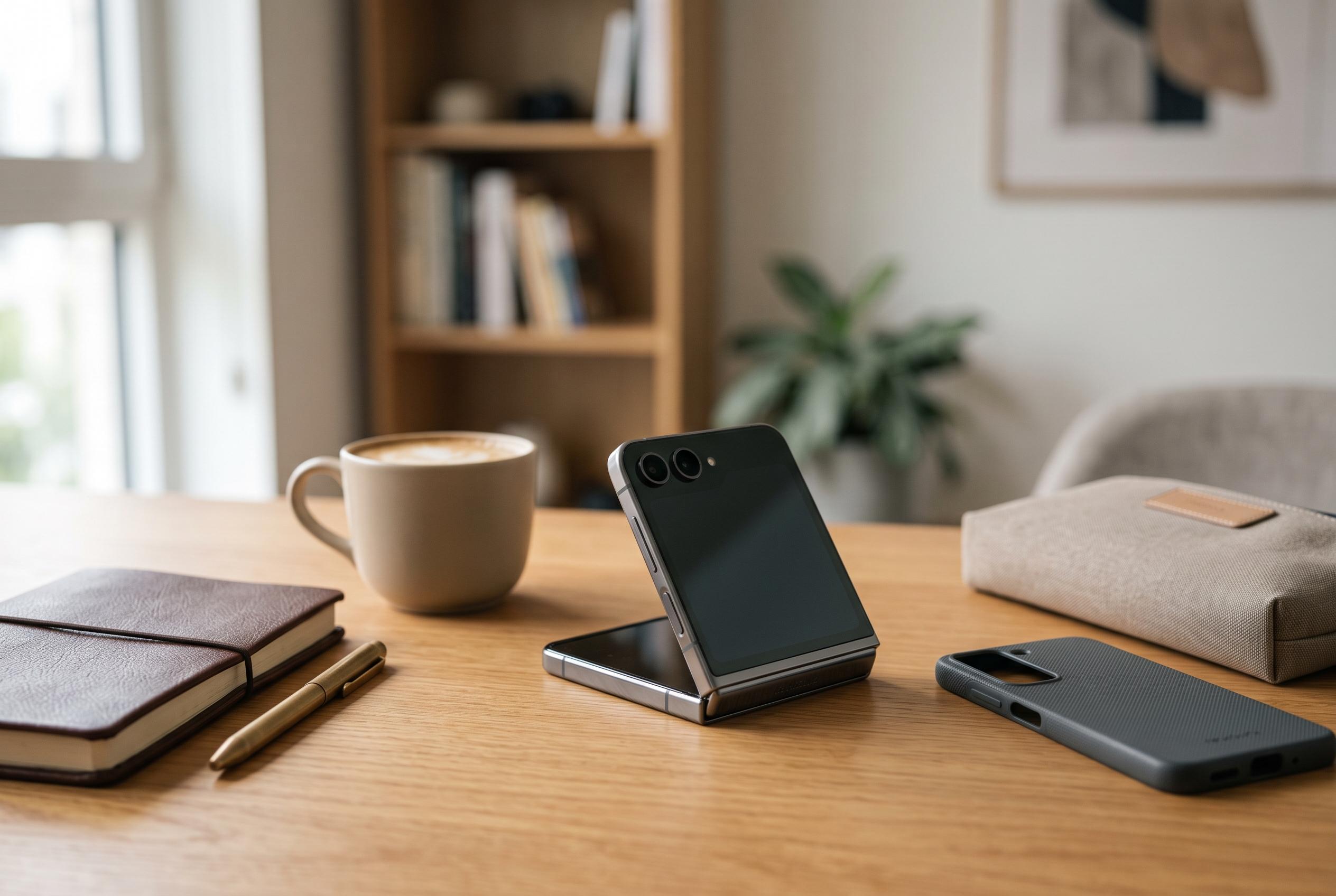

Samsung’s Galaxy Z Flip8 introduces a slimmer, lighter design with improved durability and software features, but critics see it as an iterative update rather than a groundbreaking leap in foldable tech.
Samsung’s Galaxy Z Flip8 is less a reinvention than a careful polish of the formula Samsung has already built. In YugaTech’s review, the phone is described as slimmer and lighter than the previous model, while Tom’s Guide and Gadgets 360 both note that the outward design remains largely familiar. Samsung itself has framed the device as its thinnest and lightest flip phone yet, but the broader impression from early reviews is that this is an iteration rather than a breakthrough.
That refinement is most visible in the body. YugaTech says the handset is around half a centimetre thinner and about 10 grams lighter than before, and that the updated hinge makes the fold line on the main display less obvious. Samsung also highlights improved durability and its IP48 rating, while keeping the same familiar clamshell layout, with the side-mounted fingerprint reader, USB-C port and dual rear cameras all in the same positions.
The displays are also a case of careful continuity. YugaTech reports a 6.9-inch Dynamic AMOLED 2X inner panel and a 4.1-inch cover screen, both with 120Hz refresh rates and peak brightness of 2,600 nits. Samsung’s own product page similarly promotes the FlexWindow as a more useful front screen, while reviews from Tom’s Guide and Gadgets 360 say the external display and the phone’s new video tools make it easier to use the device without unfolding it.
The biggest changes are inside. YugaTech says the review unit uses Samsung’s Exynos 2600, paired with 12GB of RAM and up to 512GB of storage, and describes performance as fast in everyday use, with strong gaming results and only moderate heat under load. Other reviews point to the Snapdragon 8 Elite Gen 5 in some markets, but they broadly agree that the Flip8 feels quicker than before. Samsung’s software pitch also centres on FlexWindow, Now Brief and Super Steady Video with Horizontal Lock, which are meant to make the folding form more useful in daily use.
The camera hardware is where Samsung has been the most conservative. YugaTech says the Flip8 keeps the same 50-megapixel main camera, 12-megapixel ultrawide and 10-megapixel inner selfie camera, although new software features such as AI stereo bokeh and Dual Recording add some flexibility. Tom’s Guide and Compsmag both argue that the unchanged imaging setup, together with the higher price, limits the appeal for owners of recent models. YugaTech reaches a similar conclusion: the Flip8 is a more polished phone, but not an essential upgrade from the Flip7, even if it should suit users coming from older foldables.
Pricing reinforces that cautious verdict. YugaTech says the Galaxy Z Flip8 starts at PHP 77,990 for the 12GB/256GB model and PHP 91,990 for the 12GB/512GB version, while Tom’s Guide and Compsmag both highlight a meaningful price rise in their markets. That puts the phone in a difficult position: technically improved, noticeably thinner and more usable on the outside, but still short on the sort of hardware leap that would make long-time foldable owners rush to upgrade.
Disclaimer: This content is intended for informational purposes only. Readers are advised to exercise their own judgement, conduct due diligence, or consult a qualified expert before acting on any information provided.