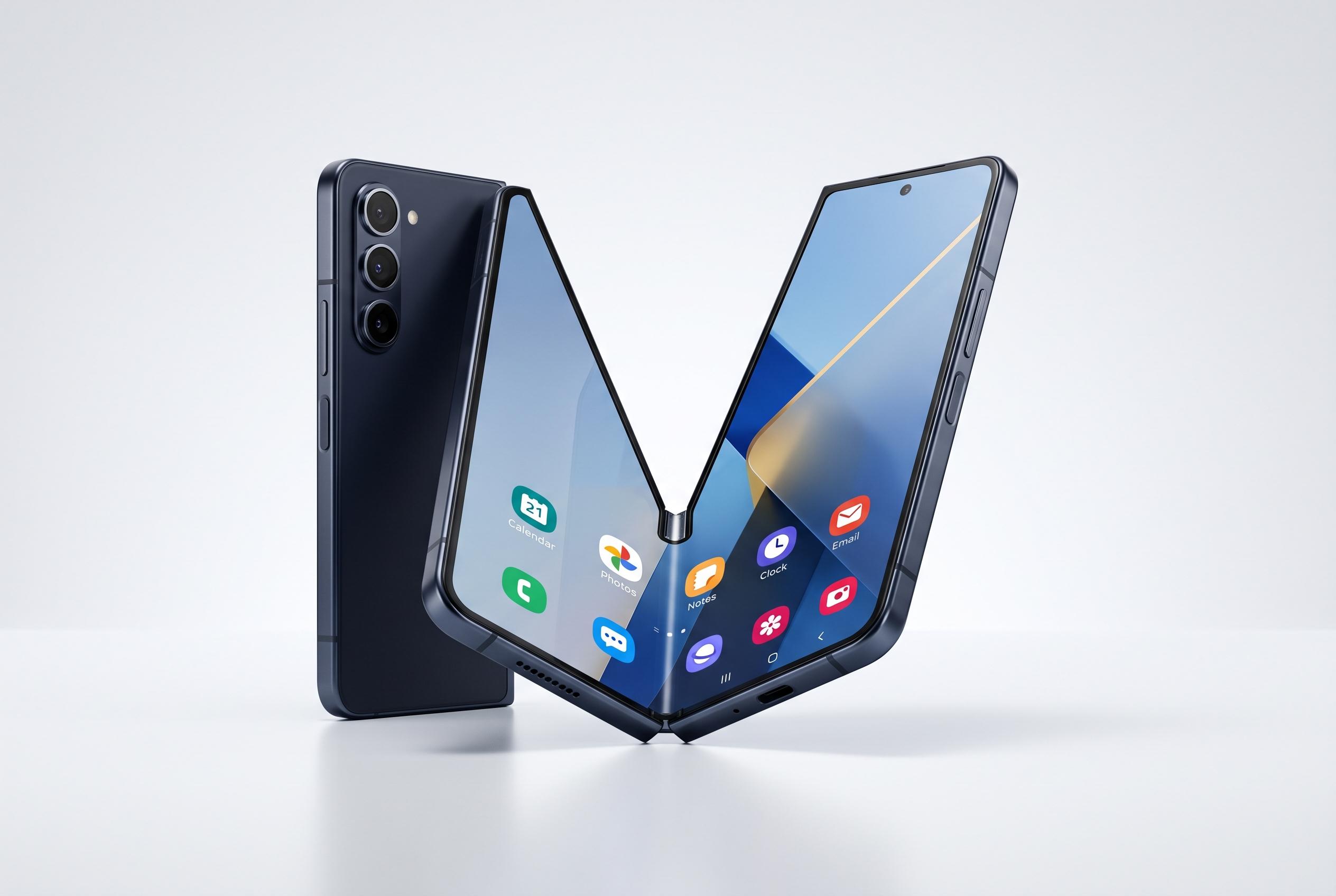

The Samsung Galaxy Z Fold 8 sets a new standard in foldable smartphones by balancing portability with a larger, tablet-like display, signalling a shift in user preferences and design maturity in the foldable market.
Samsung’s Galaxy Z Fold 8 appears to be the foldable that finally matches the shape many users have wanted for years: compact enough to handle like a normal phone when closed, but broad enough to feel useful when opened. That is the view of Android Headlines, which says the new design crystallises a shift that began with the Oppo Find N in 2021 and is now becoming more mainstream. The key idea is simple: a book-style foldable should not feel like a stretched square when unfolded, but more like a proper tablet-style canvas that still slips easily into a pocket.
According to recent hands-on and review coverage, Samsung has pushed the Fold 8 closer to that ideal with a 5.5-inch outer display and a 7.6-inch inner OLED panel, both running at 120Hz, in a chassis that is 9.7mm thick when folded and weighs 201g. Digital Camera World said the device’s compact, passport-like shape makes it easy to use one-handed when shut, while still offering enough screen area to justify the fold when opened. That balance, rather than raw size, is what seems to define the phone’s appeal.
The wider inner display also changes how the device is used. With a 4:3-style panel, the Fold 8 is better suited to watching video with fewer black bars while also giving portrait apps such as Instagram and TikTok more room than a standard slab phone. Split-screen multitasking benefits too, particularly in landscape mode, where each app gets more width and content feels less cramped. Reviewers have also noted that Samsung’s newer display treatment and anti-reflective finish make the crease less distracting than before, even if rivals such as the Oppo Find N6 still have a slight edge in tactile smoothness.
Camera trade-offs remain part of the package. Digital Camera World said the Fold 8 uses 50-megapixel main and ultra-wide cameras but no telephoto lens, which means it relies on digital zoom rather than optical reach. Tom’s Guide found the newer Fold 8 Ultra’s 3x zoom clearly better at longer distances, but said the gap was often modest at everyday zoom levels and not necessarily worth the extra cost for every buyer. That leaves the standard Fold 8 positioned as the lighter, smaller option for people who care more about portability and display comfort than camera versatility.
Samsung’s broader message around the launch has been that the company still sees foldables as a major innovation area, even as critics argue the category is maturing. In a Reddit AMA after the launch, Annika Bizon, Samsung’s vice-president of product and marketing for mobile experience in the UK and Ireland, pointed to the wider Fold 8 screen as evidence of continued product development. The company also framed its recent device updates around user feedback, AI functions and health features, suggesting that Samsung wants the Fold line to be seen as part of a wider platform strategy, not just a hardware experiment.
Disclaimer: This content is intended for informational purposes only. Readers are advised to exercise their own judgement, conduct due diligence, or consult a qualified expert before acting on any information provided.