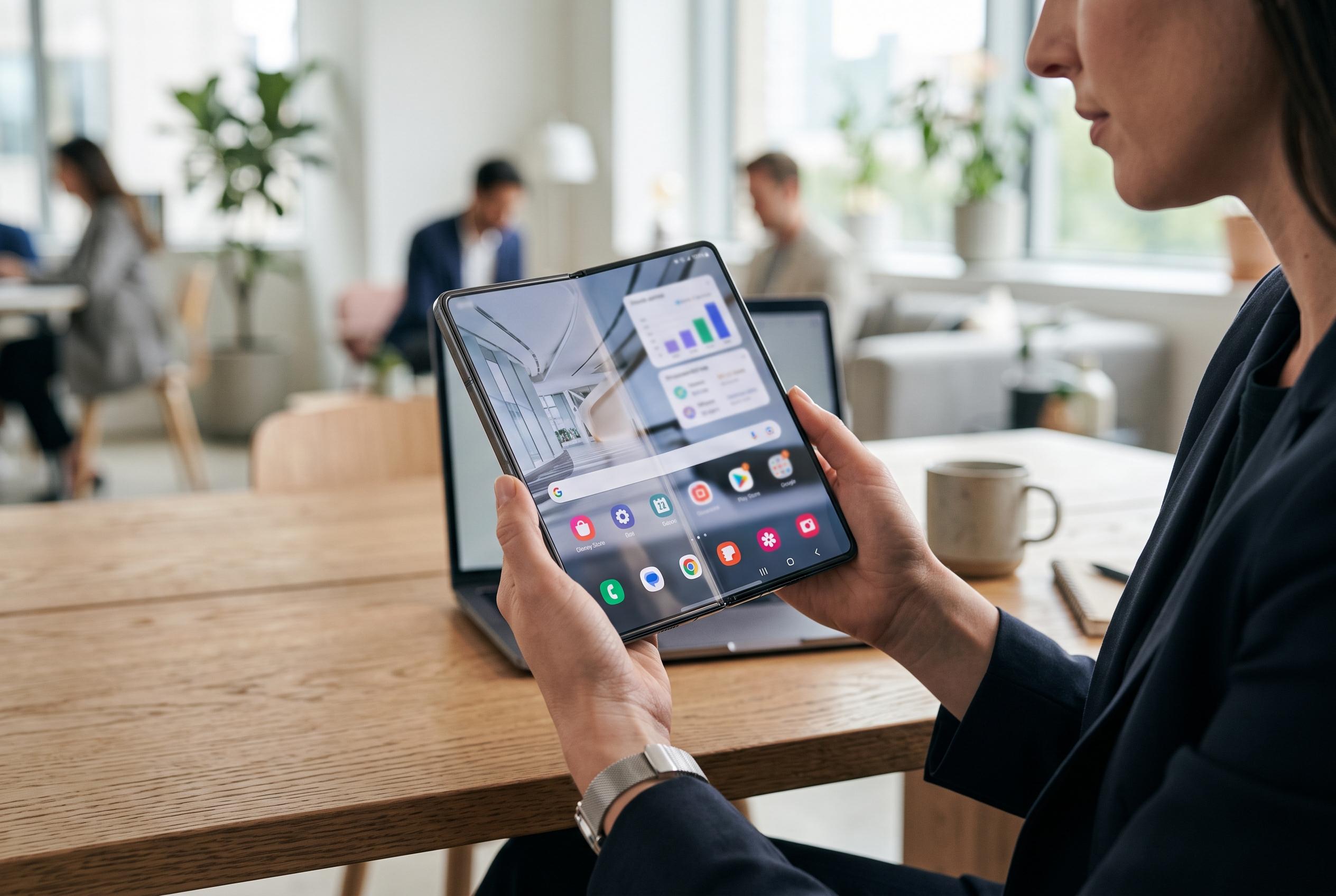

The Galaxy Z Fold8 introduces a wider inner display, lighter build, and improved usability, signalling a new era for foldable smartphones focused on everyday practicality rather than engineering novelty.
Samsung’s Galaxy Z Fold8 is the clearest sign yet that foldables are moving away from novelty and towards utility. The core change is its wider inner panel, which uses a 4:3 shape rather than the long, narrow format Samsung used before. That makes the device far better for reading, multitasking and media, while the lighter chassis also improves day-to-day use. In practice, it feels less like a concept and more like a phone designed to be carried constantly.
Pricing in the Philippines starts at ₱109,990 for the 256GB model, with 512GB and 1TB variants also available. That positions the Fold8 as a premium purchase, but one aimed less at spec-sheet chasing than at people who want a foldable they can actually live with. Samsung says it is available through its official stores, Lazada and Shopee after pre-orders closed on 13 August.
The hardware shift is significant. At 201g and 4.5mm when unfolded, the Fold8 is the thinnest and lightest Fold Samsung has produced. Reviewers have noted that the new display structure and hinge also reduce the central crease, helping the device feel more polished. The 7.6-inch main screen and 5.5-inch cover display both use Dynamic AMOLED 2X panels with 120Hz refresh rates, while the cover screen is now practical enough for email, messaging and even video without immediately opening the phone.
Performance is strong across the board, thanks to Qualcomm’s Snapdragon 8 Elite Gen 5 and Samsung’s One UI 9 on Android 17. The device also benefits from Samsung’s long software support policy, which remains a major advantage in the foldable market. That said, the Fold8 is not built for sustained heavy gaming in the same way as larger, thicker phones. Benchmarks and hands-on testing suggest its priority is balanced productivity rather than maximum thermal headroom.
Camera hardware is the main compromise. The standard Fold8 keeps a 50MP main camera and a 50MP ultrawide, but omits a telephoto lens, which limits zoom versatility. Creative Bloq found the pricier Fold8 Ultra clearly ahead for detailed photography, especially at longer ranges, although the standard model still performs well for everyday shots and content creation. Video remains a strength, with support for advanced HDR recording and dual capture features that make the phone more useful for creators than the camera array might suggest.
Samsung’s wider foldable strategy also appears to be shifting around this design. According to Android Central, the Fold8’s wider-screen approach has been well received in South Korea, where the Z8 series reportedly achieved record pre-order volume. That helps explain why Samsung is said to be exploring additional wide-format foldables for the next generation. For now, though, the Fold8 stands out for a simpler reason: it is the first Galaxy Fold that feels shaped around real use rather than engineering ambition alone.
Disclaimer: This content is intended for informational purposes only. Readers are advised to exercise their own judgement, conduct due diligence, or consult a qualified expert before acting on any information provided.