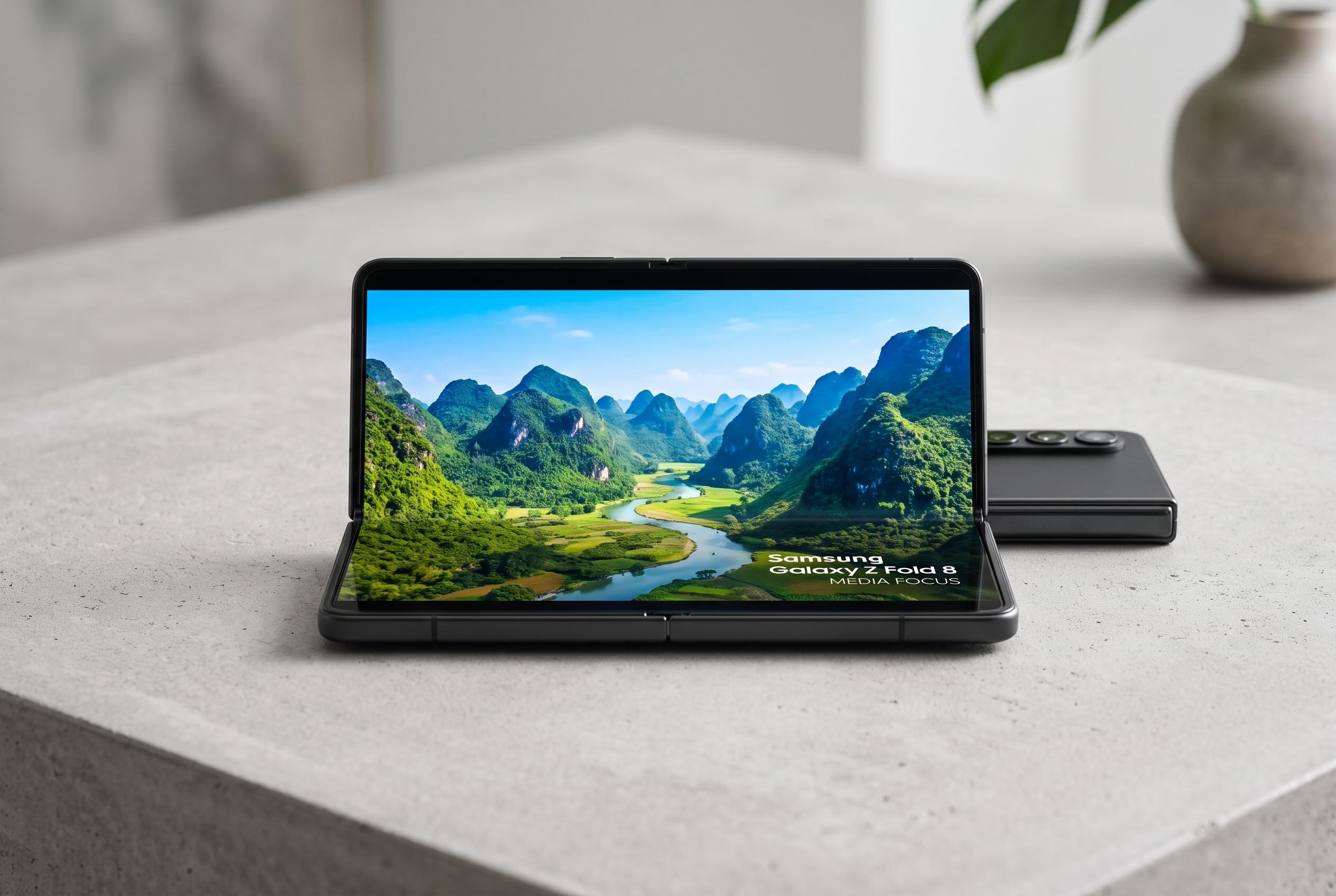

Samsung’s latest Galaxy Z Fold 8 introduces a shorter, lighter form factor, prioritising media consumption and everyday usability, signalling a strategic shift in its foldable range.
Samsung’s Galaxy Z Fold 8 marks a notable shift in its foldable strategy, moving away from the taller, narrower design that has defined the series for years. Reviewers say the new, shorter body makes the phone easier to carry and more natural to use as an everyday handset, while still opening out into a tablet-style screen when needed. SamMobile reported that Samsung has positioned the device for media use, multitasking and vertical video, and that it is the lightest Galaxy Z Fold yet at 201g.
The most immediate improvement is the outer display. At 5.5 inches, it is wide enough for reading, browsing and typing without forcing constant unfolding, according to reviews from ZDNET and Digital Camera World. The inner 7.6-inch panel has also been tuned for consumption rather than pure productivity, with a 4:3 shape that reduces black bars when watching video. TechRadar said this makes films and streaming content feel more natural than on taller foldables, while the lighter chassis also improves comfort during long sessions.
Samsung has also refined the display hardware in ways that matter in daily use. Reviewers noted a substantially less visible crease, a matte finish that helps reduce fingerprints and a more effective anti-reflective coating. Samsung says reflectivity on the inner screen has been cut by 50% compared with the Fold 7, and reviewers found the panel far easier to use in bright light. ZDNET said the screen remained legible outdoors in Delhi sunlight, helped by brightness that now reaches 3,000 nits.
Software remains central to the experience. One UI 9, based on Android 17, was described as more intuitive for split-screen use and general multitasking, although the phone can run three apps at once. In practice, reviewers preferred a two-app layout for most tasks. There is one notable compromise: the punch-hole camera on the inner display can interrupt text and content in some situations. That, alongside the lack of an under-display camera, was one of the few design choices that drew criticism.
The camera system is competent but not class-leading. The Fold 8 uses two 50-megapixel rear cameras and omits a telephoto lens, which limits zoom flexibility. Tom’s Guide found the absence of optical zoom was only a minor issue at moderate distances, but the gap became more obvious at higher magnification. Digital Camera World said daylight shots are strong, while low-light performance is less convincing at this price level. The device also lacks built-in magnets for Qi2.2 charging, another omission in a phone that otherwise leans heavily on premium hardware.
Taken together, the Galaxy Z Fold 8 looks less like a radical reinvention than a carefully judged correction. TechRadar and Android Central both place it at the top end of the market, with pricing from $1,899, and its strengths are clear: portability, a brighter and less distracting folding display, and a shape that makes media consumption easier than before. The trade-offs are equally clear. Buyers wanting the best zoom camera, the largest possible inner display or the most complete accessory support may still prefer a larger rival. For everyone else, this is the first Fold that seems genuinely designed around how people actually use foldables.
Disclaimer: This content is intended for informational purposes only. Readers are advised to exercise their own judgement, conduct due diligence, or consult a qualified expert before acting on any information provided.