
Samsung unveiled its latest foldables in July 2026, tailoring each device to different photography needs, cityscapes, video content, and selfies, minimising technical focus in favour of use-case matching.
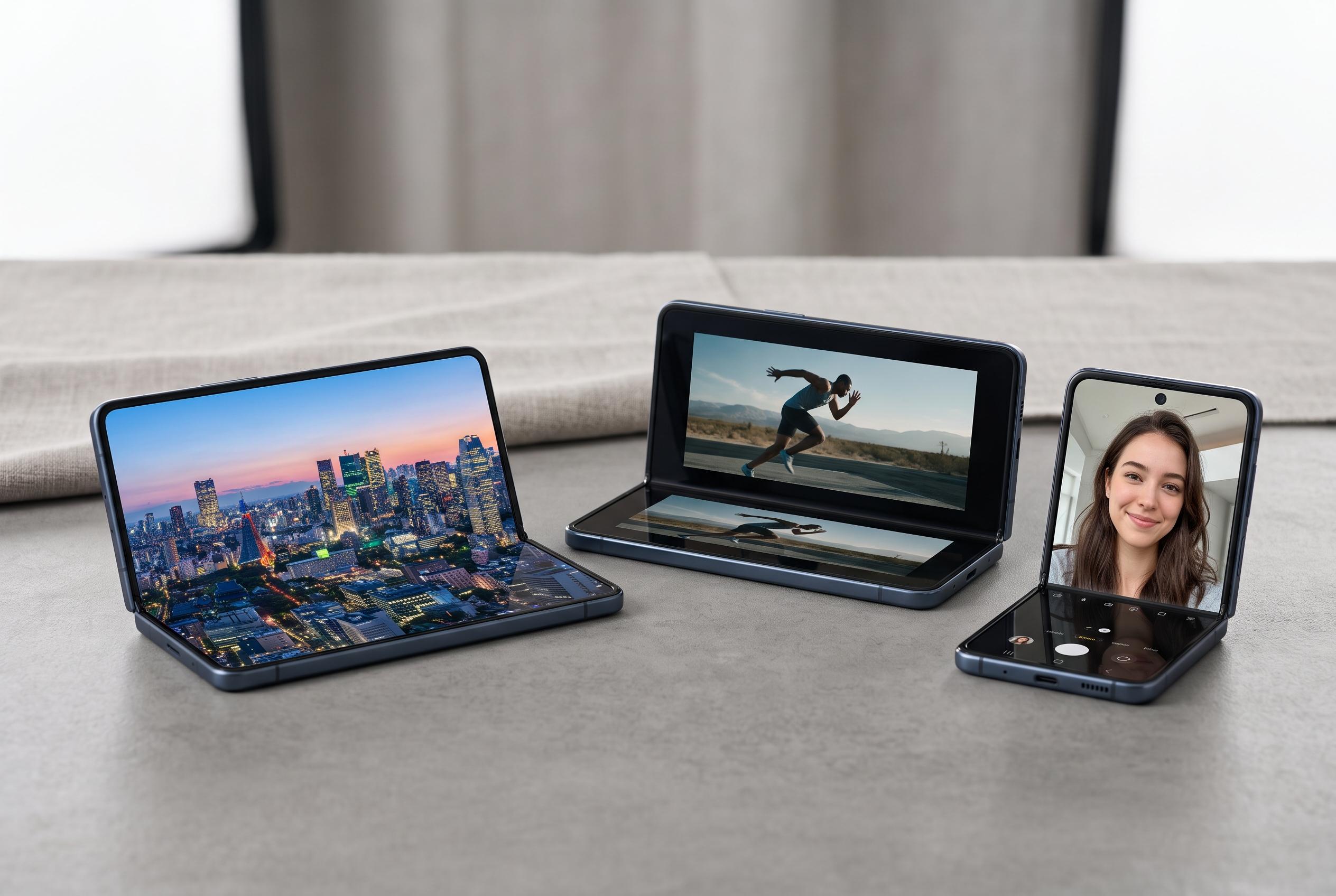
Samsung used its July 2026 Galaxy Unpacked event to frame its foldables around a simple idea: one city, three camera roles. In London, the company positioned the Galaxy Z Fold8 Ultra as the device for wide, detailed scenes, the Galaxy Z Fold8 as the better option for video, and the Galaxy Z Flip8 as the most natural fit for selfies and hands-free social content. The pitch is less about raw specifications than about matching each phone to a different way of shooting.
For photography, the Galaxy Z Fold8 Ultra is the strongest option in the line-up. Samsung says it pairs a 200MP main camera with a 50MP ultra-wide lens, while also adding a 10MP 3x telephoto camera for more flexible framing. That makes it the most capable model for cityscapes, travel shots and scenes where detail retention matters, although reviews have noted that Samsung’s non-folding Ultra phones still hold advantages in low light and long-range zoom. TechRadar described the Fold8 Ultra as a refined, premium device with a thinner body, a flatter foldable screen and a strong five-camera system.
The Galaxy Z Fold8 is aimed more squarely at creators who prioritise motion. Samsung highlights Dual Recording, which captures the front and rear cameras at the same time, and Super Steady with Horizontal Lock, which is designed to keep footage level while walking or filming from a moving vehicle. With its 7.6-inch main display, the phone is also easier to edit on straight after recording. The result is a foldable built less for still images than for travel video, reaction clips and quick social edits.
Samsung’s Galaxy Z Flip8 is the clearest selfie device of the three. The company says its 50MP FlexCam is backed by AI Bokeh for softer background blur and by the FlexWindow cover display, which allows a live preview before the shot is taken. Official UK product information also points to Super Steady video with Horizontal Lock, making the device more usable for short-form video and vlogging. SamMobile reported that Samsung has made the cover screen more functional in this generation, with app access, widgets and Gemini-powered actions, although some reviewers still argue the clamshell format remains more about style than radical reinvention.
Across the range, Samsung is leaning heavily on Galaxy AI and its ProVisual Engine to manage light, colour and detail automatically. That is meant to keep the results natural rather than heavily processed, which matters for beauty, lifestyle and travel content where skin tone and scene balance can be sensitive. In practical terms, the AI layer is there to make each camera type more reliable without requiring manual adjustment from the user.
In Malaysia, the pricing positions the three phones at very different levels. Samsung’s published local figures put the Galaxy Z Flip8 from RM5,399, the Galaxy Z Fold8 from RM7,299 and the Galaxy Z Fold8 Ultra from RM8,099, with the top Fold8 Ultra configuration reaching RM10,499. Samsung also ran a pre-order promotion in Malaysia until 13 August 2026, but that window has now closed. For buyers weighing the range, the choice is straightforward: the Fold8 Ultra for maximum image detail, the Fold8 for video, and the Flip8 for the easiest, most expressive selfie setup.
Disclaimer: This content is intended for informational purposes only. Readers are advised to exercise their own judgement, conduct due diligence, or consult a qualified expert before acting on any information provided.