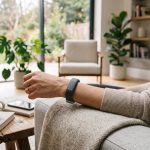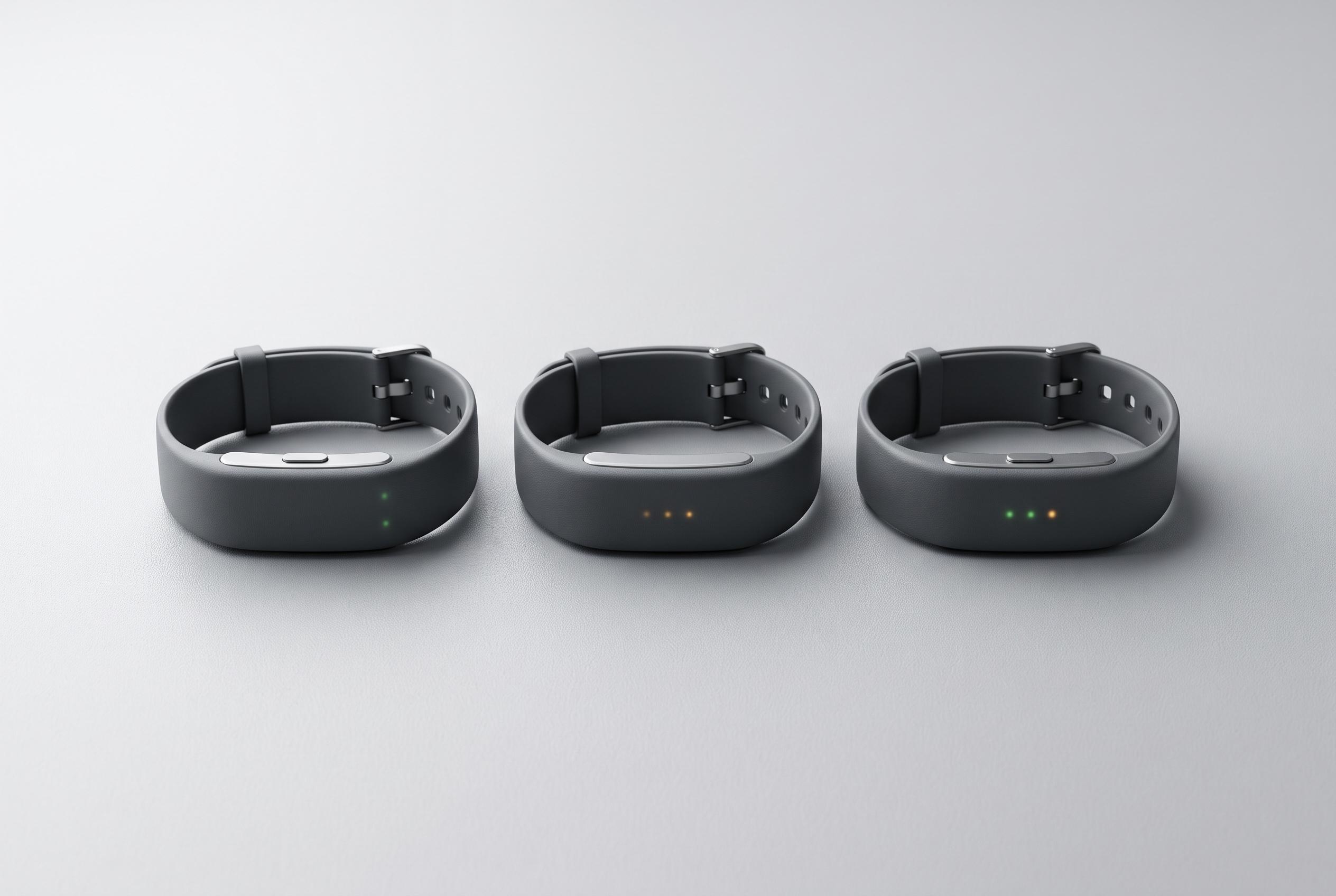

Emerging screenless fitness bands from Garmin, Amazfit, and Google offer a quieter, more understated way to track health stats, redefining the market for discreet fitness wearables.
Screenless fitness bands are carving out a niche for people who want health data without wearing a smartwatch. The category is aimed at users who prefer a traditional watch, dislike a busy display on the wrist or want a device that can sit quietly alongside a more formal timepiece. According to the German newspaper Frankfurter Allgemeine Zeitung, the appeal lies in understatement: the band stays out of sight while still tracking activity, sleep and basic health signals.
The market is being shaped by a few clear names. FAZ says Whoop remains the best-known premium player, but it also notes the high cost of that model, which is tied to a subscription that can run to about €400 a year in Europe. Against that backdrop, Garmin, Amazfit and Google’s Fitbit division are pushing cheaper bands that can be used without a subscription, even if some extra services still cost money.
Garmin’s Cirqa Smart Band, Amazfit’s Helio Strap and Google’s Fitbit Air all use a similar design: a small sensor module sits against the skin and collects data through photoplethysmography, a light-based method used to estimate heart rate and related measures. FAZ says that approach allows the bands to track pulse, heart-rate variability and blood oxygen, while motion sensors handle movement data. Garmin’s device is the widest at 27 millimetres and costs €200, while Amazfit and Google both sell slimmer 100-euro models.
The biggest practical difference is how each band is charged and used. FAZ reports that Garmin uses its own familiar proprietary charger, Amazfit has a compact magnetic charger with a USB-C cable and Google’s charger is the least elegant because its cable is fixed to the adapter. Battery life is broadly similar at about a week, depending on how much exercise is recorded. None of the bands has built-in GPS, so outdoor runs and rides must be tracked with a phone if exact route data is needed.
Software matters as much as hardware in this segment. Garmin Connect remains the most developed platform for serious athletes, with browser-based analysis, export tools and optional Connect Plus features for €9 a month or €90 a year. Google’s Fitbit and Amazfit both lean more heavily on app-only analysis, with paid add-ons for deeper coaching. FAZ says the Garmin band was the most precise of the three in its testing, but it also concluded that all three are best seen as companions to a sports watch rather than replacements for one. Sleep tracking, by contrast, remains weak across the category, with the publication warning that sleep-stage readings are not reliably valid even if the overnight window itself can still be useful to monitor.
Disclaimer: This content is intended for informational purposes only. Readers are advised to exercise their own judgement, conduct due diligence, or consult a qualified expert before acting on any information provided.