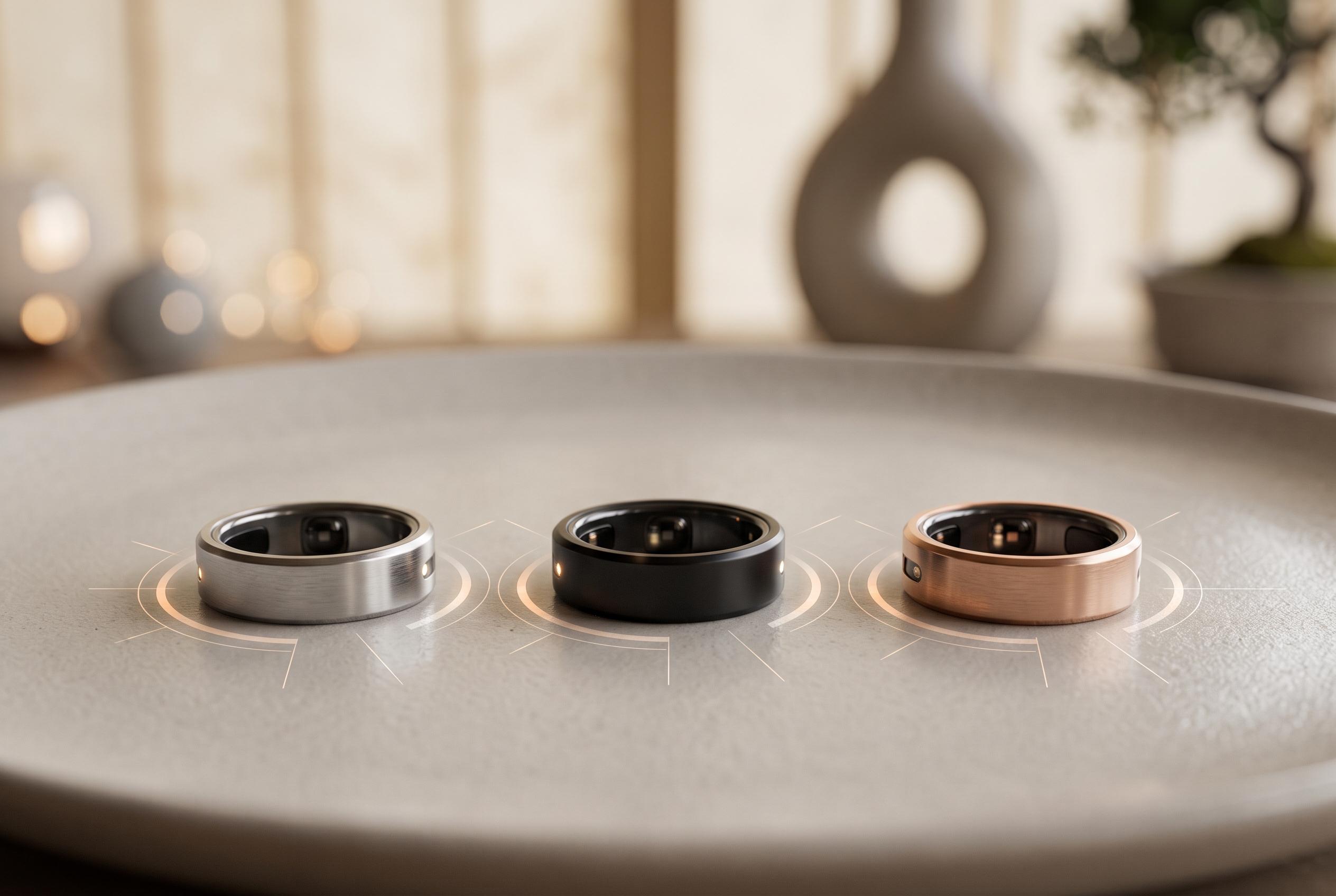

Japanese market sees increasing attention on smart rings, with global brands like Samsung and local startups competing to turn the niche into a mainstream health trend amidst rising influencer interest.
Japan’s wearable market is entering a crowded phase, but smart rings remain the category that has yet to find a clear mass audience. AI glasses are arriving in quick succession, smartwatches continue to post steady demand, and yet ring-shaped devices have still struggled to move beyond early adopters. That may be changing, at least at the level of visibility, as influencers and tech commentators have begun to give the form factor far more attention.
The category itself has split into three distinct paths: payment rings, notification rings and health-tracking rings. Early products such as the NFC Ring in 2013 focused on access control and authentication through NFC, while experimental devices like Smarty Ring and Amazon’s Echo Loop explored alerts and voice interaction. But the notification-led approach has largely disappeared from the market, leaving health monitoring as the dominant use case.
That shift was established by Oura, which brought sensor-based wellbeing tracking to smart rings in 2015 and remains a global leader in the segment. In Japan, SOXAI entered the market in 2022 and has become the more familiar domestic name, while Samsung pushed further into the category with the Galaxy Ring, launched globally in 2024 and released in Japan on 14 February 2025 through selected SoftBank outlets. The device is positioned as a daily health monitor and is tied into Samsung’s Galaxy AI ecosystem, underlining how firmly the market now centres on continuous biometric tracking.
Against that backdrop, ITmedia’s Kodera Shin’ichi has been testing the Ultrahuman Ring AIR, a product from the Indian company Ultrahuman, which entered the market in Japan in 2024. The company launched its first ring in 2022 and followed with Ring AIR in 2023. Its official price is listed at $349, while the Japanese suggested retail price is ¥59,800. The article uses the device as a lens through which to judge whether smart rings can move from niche curiosity to a meaningful category in Japan.
Disclaimer: This content is intended for informational purposes only. Readers are advised to exercise their own judgement, conduct due diligence, or consult a qualified expert before acting on any information provided.