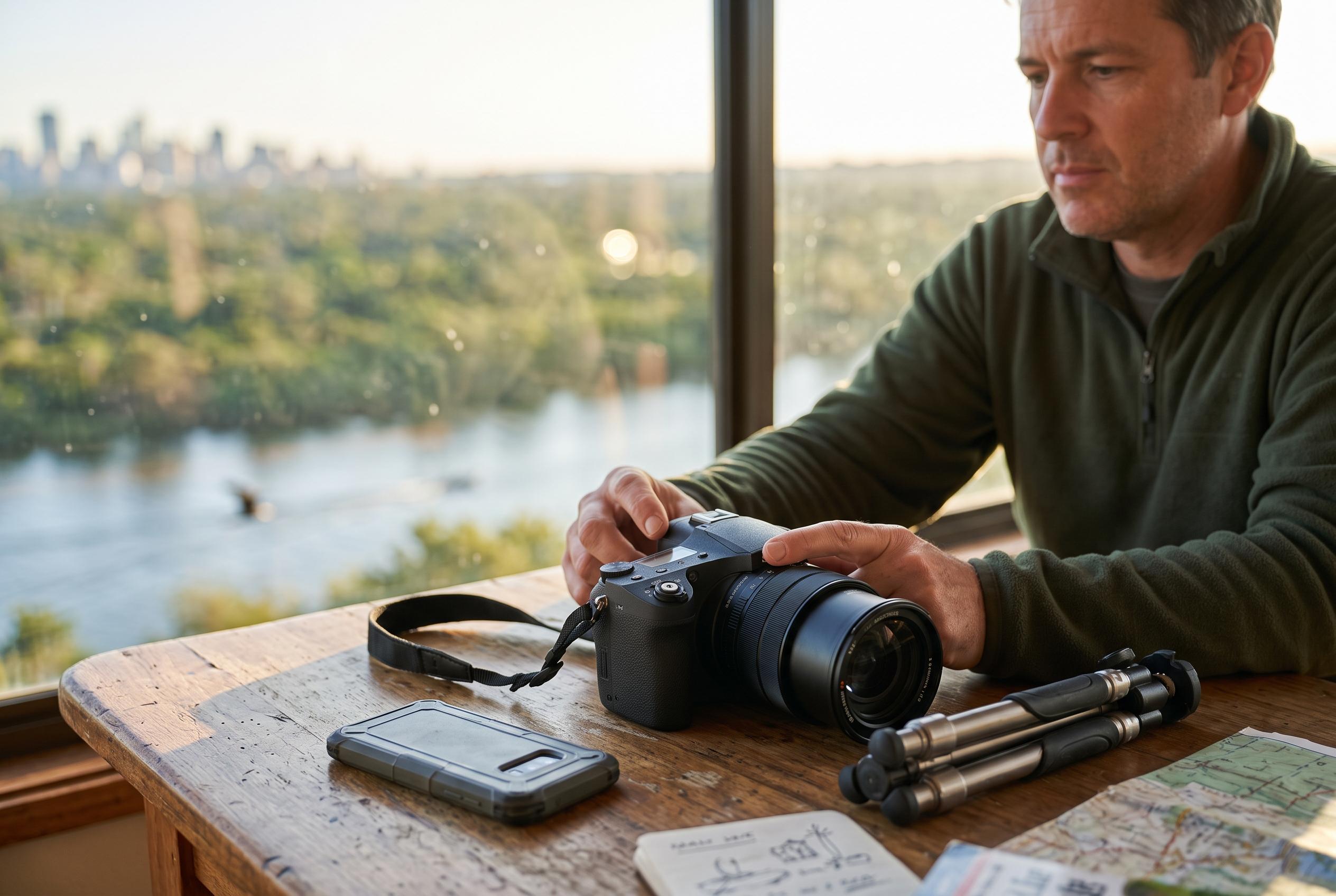

Sony India unveils the RX10 V, a flagship super-zoom camera equipped with AI-driven recognition, advanced video features, and improved design, targeting travel, wildlife, sport, and everyday use.
Sony India has introduced the RX10 V, the latest model in its long-running RX10 super-zoom line, positioning it as a single-camera solution for travel, wildlife, sport and everyday use. The company says the new model combines a 24-600mm ZEISS Vario-Sonnar T* lens with a 1.0-type stacked Exmor RS CMOS sensor and the BIONZ XR image processor, aiming to deliver both reach and image quality in one body.
The headline feature is Sony’s AI-powered Real-time Recognition AF, which the company says can identify people, animals, birds, insects, cars, trains and aircraft. Paired with blackout-free continuous shooting at up to 30 frames per second with full AF and AE tracking, the RX10 V is intended to keep fast-moving subjects in focus during unpredictable action. Sony also says the camera uses pose-estimation technology to maintain tracking even when faces are obscured or a subject turns away.
For video, the RX10 V supports 4K at 120fps, which allows slow-motion playback at up to 5x in 4K resolution, according to Sony. The company has also added Active Mode stabilisation, S-Cinetone for a more cinematic look, S-Log3 for grading, and support for importing up to 16 LUTs. An Auto Framing function, driven by subject recognition, is designed to keep a subject centred during recording.
Sony says the camera’s design borrows from its Alpha mirrorless range, with a revised button layout, improved grip and a larger Quad-VGA OLED electronic viewfinder. The battery is rated for up to about 630 still images, roughly 50% more than the previous model, and the body includes dust and moisture resistance, Wi-Fi, USB Type-C and support for Sony’s Creators’ App. In India, the RX10 V will go on sale from 2 September 2026, with an MRP of Rs. 245,645.
Disclaimer: This content is intended for informational purposes only. Readers are advised to exercise their own judgement, conduct due diligence, or consult a qualified expert before acting on any information provided.