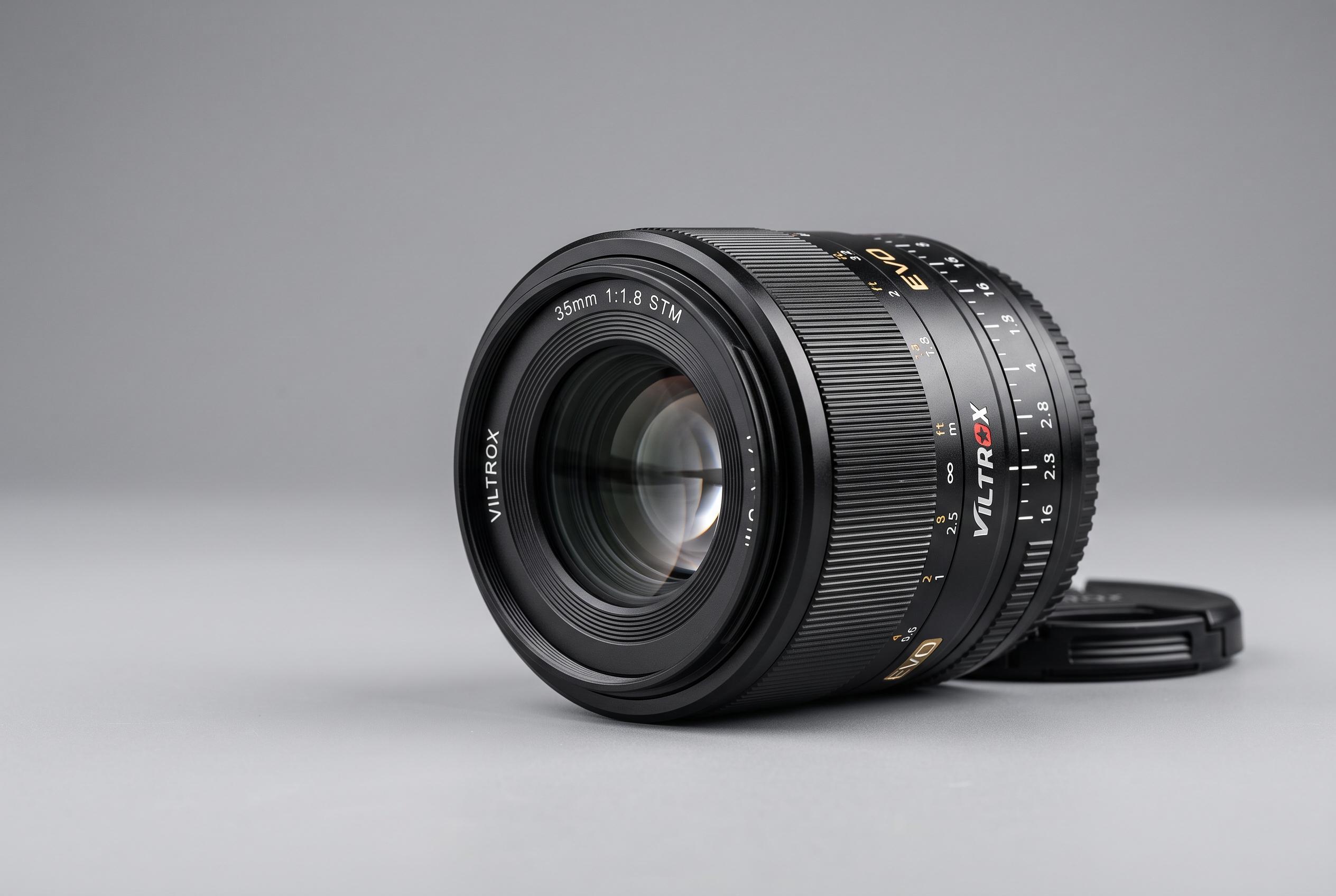

Viltrox has significantly advanced its 35mm f/1.8 EVO lens, rivaling premium brands with sharpness, build quality, and competitive pricing, marking a turning point for the company’s reputation beyond budget alternatives.
Viltrox’s 35mm f/1.8 EVO shows how far the company has moved beyond being seen mainly as a budget alternative. Photography Life said the original version of this lens lagged well behind Nikon’s equivalent, but the new model is a different proposition: a full-frame prime for Sony E and Nikon Z that pairs a metal barrel with an aperture ring, an AF/MF switch, a programmable function button and USB-C firmware support. At 355g, it sits close to the size and weight of competing 35mm f/1.8 lenses, while the minimum focus distance of 0.34 metres remains one of the few clear practical concessions versus Nikon’s own lens.
In handling terms, the lens appears to be built for regular use rather than novelty. Photography Life found the manual focus ring smooth, the aperture ring usable in click or de-click mode and autofocus quick enough for everyday work, with subject detection on the Nikon Z9 and Z5 II working reliably. CameraLabs likewise pointed to a useful control layout and low focus breathing, though it noted that the lens is not weather-sealed and that its close-range distortion is more obvious than ideal. Viltrox says the optical formula uses 13 elements in 10 groups, including specialised glass designed to improve colour and sharpness.
Optically, the strongest impression from the published reviews is that Viltrox has made a genuine leap. Photography Life found the EVO version sharper than Nikon’s 35mm f/1.8 S in the centre at f/1.8, with the advantage extending into the corners in its test set. PhotographyBlog described centre sharpness as outstanding from wide open to f/11, with edge performance strongest between f/2.8 and f/11. That combination makes the lens look unusually competitive for its price, especially in a focal length that is often judged on how well it renders subjects at wider apertures.
There are still trade-offs. Lenstip found vignetting to be pronounced at f/1.8 and still visible after stopping down, while CameraLabs highlighted the lens’s limited maximum magnification and its weakness at very close distances. Photography Life also observed some flare behaviour, including occasional rainbow-shaped artefacts, though it said contrast usually held up well with only minor changes in shooting angle. The lens can produce 18-point sunstars when stopped down, which will matter more to landscape and city photographers than to users focused on portraits or street work.
Price is the point that changes the comparison most. Photography Life put the Viltrox at about $379, far below Nikon’s $747 list at the time of review, and argued that the cheaper lens makes little sense to dismiss on image quality alone. CameraLabs reached a similar conclusion, saying the lens is well suited to street photography and environmental portraits despite its compromises. The broader picture is clear: Viltrox is no longer simply undercutting rivals on cost. In this case, it has built a lens that now competes on performance as well.
Disclaimer: This content is intended for informational purposes only. Readers are advised to exercise their own judgement, conduct due diligence, or consult a qualified expert before acting on any information provided.