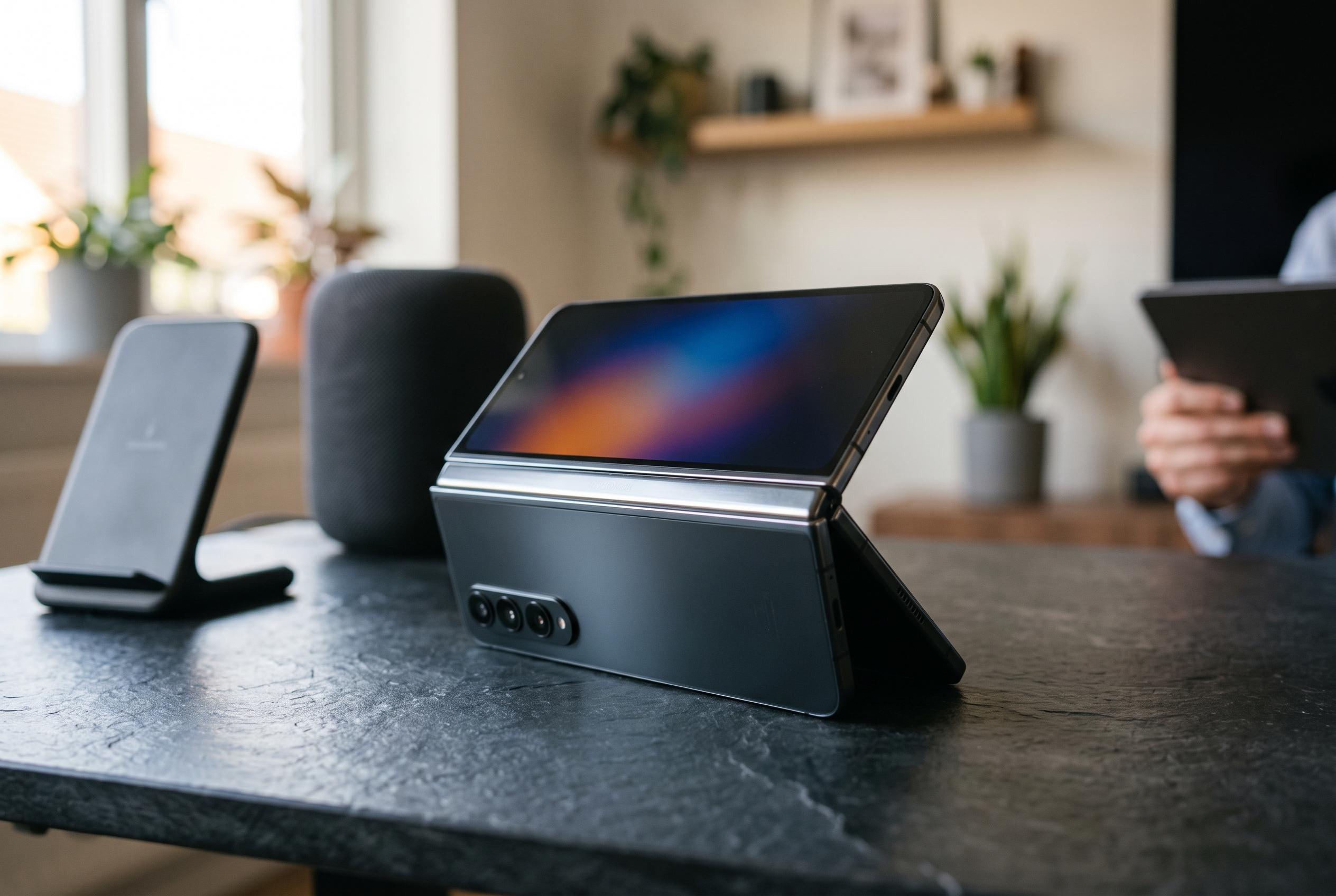

Vivo launches its highly specified X Fold6 internationally, boasting a slim profile, massive battery, and advanced camera system, signalling a new high in foldable device innovation.
Vivo has taken the X Fold6 into international markets, extending its book-style foldable beyond China and presenting one of the most aggressively specified devices in the category. According to Vivo’s own materials and subsequent coverage of the launch, the handset combines a very slim chassis with a 6,900mAh battery, a high-brightness dual-display setup and a camera system built around a 200-megapixel main sensor. The company is positioning it as a premium productivity device as much as a flagship phone.
The headline engineering claim is its size. Vivo says the device measures 4.4mm when unfolded and weighs 228g, figures that place it among the thinnest and lightest large foldables on the market. It also carries a wide set of durability claims, including IP58 and IP59 protection, while Vivo’s Spanish product page adds IPX8 and IPX9 water resistance and IP5X dust resistance, suggesting the phone is being marketed with unusually strong environmental protection for a foldable.
The display hardware follows the same high-end approach. The inner screen is an 8.02-inch LTPO OLED panel with a 120Hz refresh rate and peak brightness of up to 5,000 nits, while the cover display measures 6.51 inches and also reaches 5,000 nits. Reports from Gizmochina, 91mobiles and Notebookcheck indicate that both panels support adaptive refresh rates up to 120Hz and Dolby Vision, with the internal screen using a 2K-class resolution. In practical terms, that should mean strong outdoor visibility and smoother motion, whether the phone is open or closed.
Inside, Vivo has chosen MediaTek’s Dimensity 9500 Super Edition, a 3nm flagship chipset aimed at high-performance Android devices. Coverage from Gizmochina, Techoper and 91mobiles says the phone can be configured with up to 16GB of LPDDR5X RAM and up to 1TB of UFS 4.1 storage, though one report lists a lower ceiling of 12GB and 512GB for some markets. That discrepancy suggests regional variation, but the core message is clear: Vivo is targeting the top end of the foldable market with desktop-class multitasking, split-screen workflows and other productivity features.
Camera hardware is another area where Vivo is trying to stand out. The company’s launch material highlights a 200-megapixel Samsung HPB main camera with optical image stabilisation, a 50-megapixel ultra-wide camera and a 50-megapixel periscope telephoto camera with 3x optical zoom. Vivo also ties the system to Zeiss optics and T* coating, while its own product page confirms the 200-megapixel sensor and 50-megapixel telephoto unit. The emphasis on a large main sensor and a dedicated zoom lens reflects a broader trend in foldables: thinner phones no longer have to mean a significantly weaker camera system.
Battery life and charging complete the package. Vivo says the X Fold6 uses a 6,900mAh battery, with 80W wired charging and 40W wireless charging, which is a substantial battery for a folding handset. Reports also note support for bypass charging, designed to reduce heat during gaming or other demanding use while plugged in. Vivo has not yet given a detailed international pricing breakdown, but the specifications show a device aimed squarely at buyers who want a foldable without obvious compromises in endurance, brightness or camera hardware.
Disclaimer: This content is intended for informational purposes only. Readers are advised to exercise their own judgement, conduct due diligence, or consult a qualified expert before acting on any information provided.