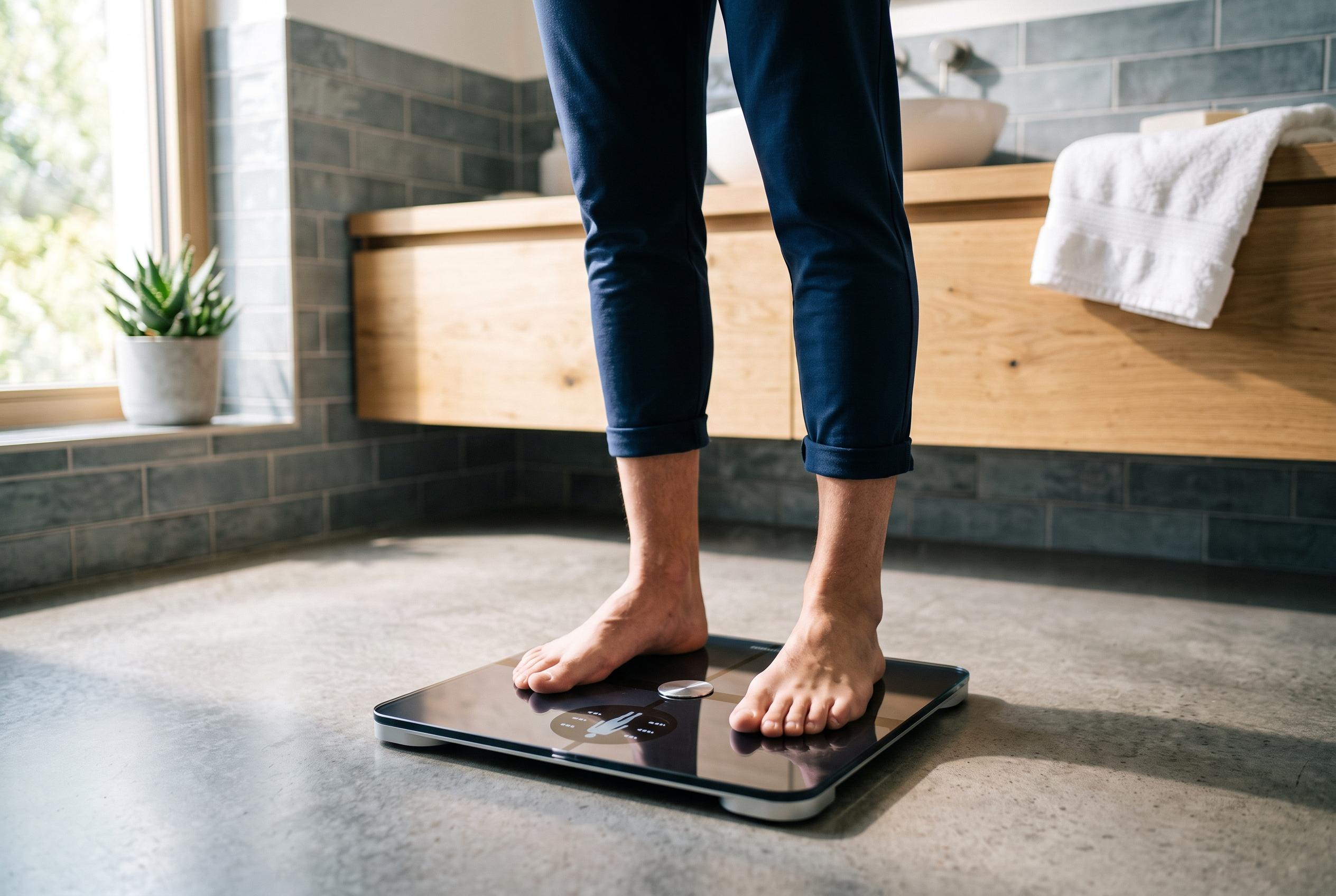

Withings launches its premium BodyFit smart scales, featuring segmental body scans and over 40 metrics, offering a detailed body analysis for dedicated fitness enthusiasts and weight-loss seekers, albeit with a higher price and subscription model.
Withings’ BodyFit smart scales are a reminder that bathroom scales can now do far more than record a single number. Priced at £229.95, the device sits at the premium end of the market and is aimed at serious fitness users, people trying to lose weight and anyone who wants a more detailed picture of body composition than conventional scales can provide.
The key difference is the retractable handle, which enables a segmental scan rather than a simple whole-body reading. According to Withings, the system uses eight electrodes and bioelectrical impedance spectroscopy across multiple frequencies to map fat, muscle and other measurements across the arms, legs and trunk. The company says this produces a more granular view of how the body is changing over time, with the scale able to deliver more than 40 metrics, including body fat, lean mass, bone mass, visceral fat, water and basal metabolic rate.
That level of detail may be useful for people following a structured training or weight-loss plan, but it also raises the usual caveat with smart scales: the figures are best treated as trend data, not clinical diagnoses. At-home body composition tools can be affected by hydration, timing and other variables, so their value lies in consistency rather than one-off readings. Tom’s Guide and Android Central have both argued that Withings’ wider smart-scale range is strongest when it is used to monitor patterns rather than obsess over daily fluctuations.
The hardware appears to match the ambition of the software. Withings says the BodyFit has a compact platform, a colour LCD for immediate readings and support for up to eight users, while the battery is rated for as long as a year between charges. Bristol Live’s review praised the Withings app as polished and straightforward, and that matters: a data-heavy device is only useful if the software presents the information clearly. The app also remains the main gateway to the more advanced insights, which means the experience depends heavily on how well users engage with the platform.
There is, however, a cost to that depth. The review noted that some of the more advanced functionality sits behind Withings+, which is sold as an annual subscription and adds to an already high purchase price. TechRadar has also pointed out that Withings has increasingly positioned its health products around users looking for more than simple weight tracking, including people interested in nutrition logging, activity goals and cardiovascular context. That makes BodyFit a highly capable but specialised product: impressive for committed users, probably excessive for everyone else.
Disclaimer: This content is intended for informational purposes only. Readers are advised to exercise their own judgement, conduct due diligence, or consult a qualified expert before acting on any information provided.