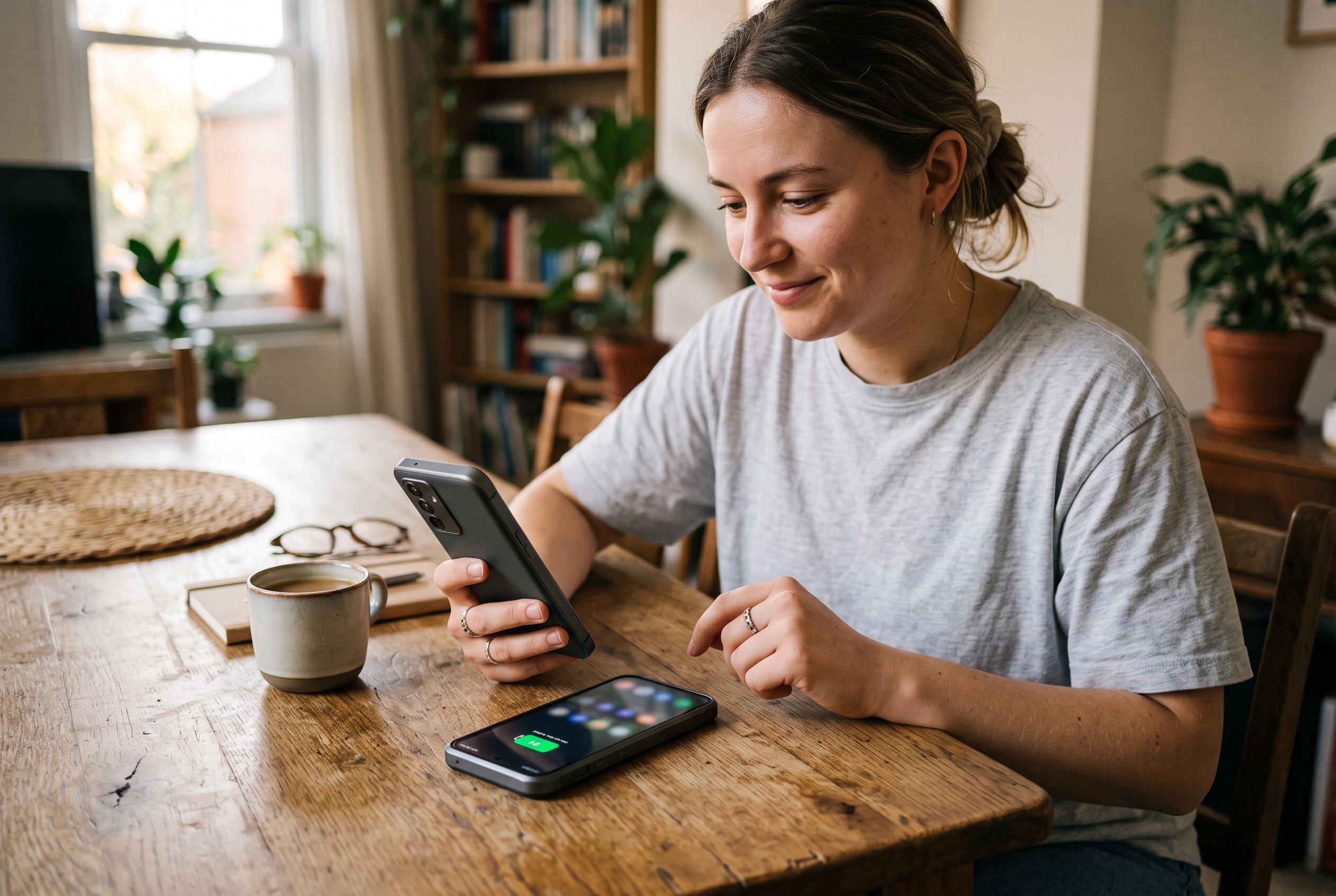

Xiaomi has launched its Redmi Note 17 range in South Africa, pairing unusually large batteries with rugged protection and flagship-style software features at mid-range prices.
Xiaomi has brought its Redmi Note 17 series to South Africa with a clear message: mid-range phones no longer need to feel compromised. The launch, held in Johannesburg after the line-up first appeared in China in August, places the brand in direct competition with Samsung’s Galaxy A series, Huawei’s Nova range, Honor’s 600 line and Xiaomi’s own POCO models. The strategy is straightforward. Rather than chasing benchmark-heavy performance claims, Xiaomi is leaning on battery capacity, toughness and software features to win buyers who want more than a basic handset.
The range starts with the Redmi Note 17, followed by the Note 17 Pro and Note 17 Pro Max, priced at R9,999, R12,999 and R15,999 respectively. According to Xiaomi’s South African launch materials, the series is built around a 6.83-inch 1.5K CrystalRes AMOLED display, Cloud Blush styling with photochromic technology, and protection levels that extend to IP66, IP68, IP69 and IP69K on the higher-end models. Xiaomi also says the phones have passed a certified three-metre drop test and are covered by 24 months of quality assurance, with limited replacement offers for the screen, battery and back cover in specified periods.
Battery life is the most obvious differentiator. The Redmi Note 17 Pro Max carries a 10,000mAh battery paired with 100W HyperCharge and 27W reverse charging, a specification that is unusual even among more expensive devices. Xiaomi says that combination is meant to deliver long endurance and rapid refuelling for users who spend much of the day away from a charger. The standard Redmi Note 17 includes a 7,700mAh battery, while the Note 17 Pro uses an 8,349mAh cell. In a market where many buyers still judge a phone by how reliably it survives a full day, those figures are likely to matter as much as any headline processor specification.
The company is also pushing durability as a selling point. Xiaomi’s own launch pages say the Pro models use advanced waterproof construction and can withstand a demanding two-metre, 72-hour water-resistance test, while also introducing an Underwater Mode. The global and regional product pages add that the devices combine this protection with a bright AMOLED panel and a design intended to look more premium than the segment usually allows. That approach is consistent with Xiaomi’s broader effort to make features that were once reserved for flagship phones more common in its lower price bands.
There are still trade-offs. The larger batteries add weight, with some variants tipping the scales at more than 220g, which may make them feel less comfortable for one-handed use. The phones are powered by mid-range Snapdragon chipsets, which should be more than adequate for ordinary messaging, browsing and streaming, but will not necessarily match rivals aimed at mobile gaming. The base model also appears to omit an ultrawide camera, which may disappoint buyers who expect more flexibility from a modern multi-camera handset.
Camera hardware is otherwise respectable on paper. Xiaomi says the series uses a 50-megapixel main sensor, while the Pro Max adds optical image stabilisation to help reduce blur and improve low-light results. The software package also includes AI features inside HyperOS 3, such as photo editing, transcription tools and battery optimisation. For Xiaomi South Africa country manager Tianshi Lv, the broader aim is to move flagship-style technology into the hands of more buyers, while treating competition as a benefit rather than a threat. The real test will be whether South African consumers decide that endurance, ruggedness and day-to-day practicality are enough to outweigh the more established alternatives already on store shelves.
Disclaimer: This content is intended for informational purposes only. Readers are advised to exercise their own judgement, conduct due diligence, or consult a qualified expert before acting on any information provided.