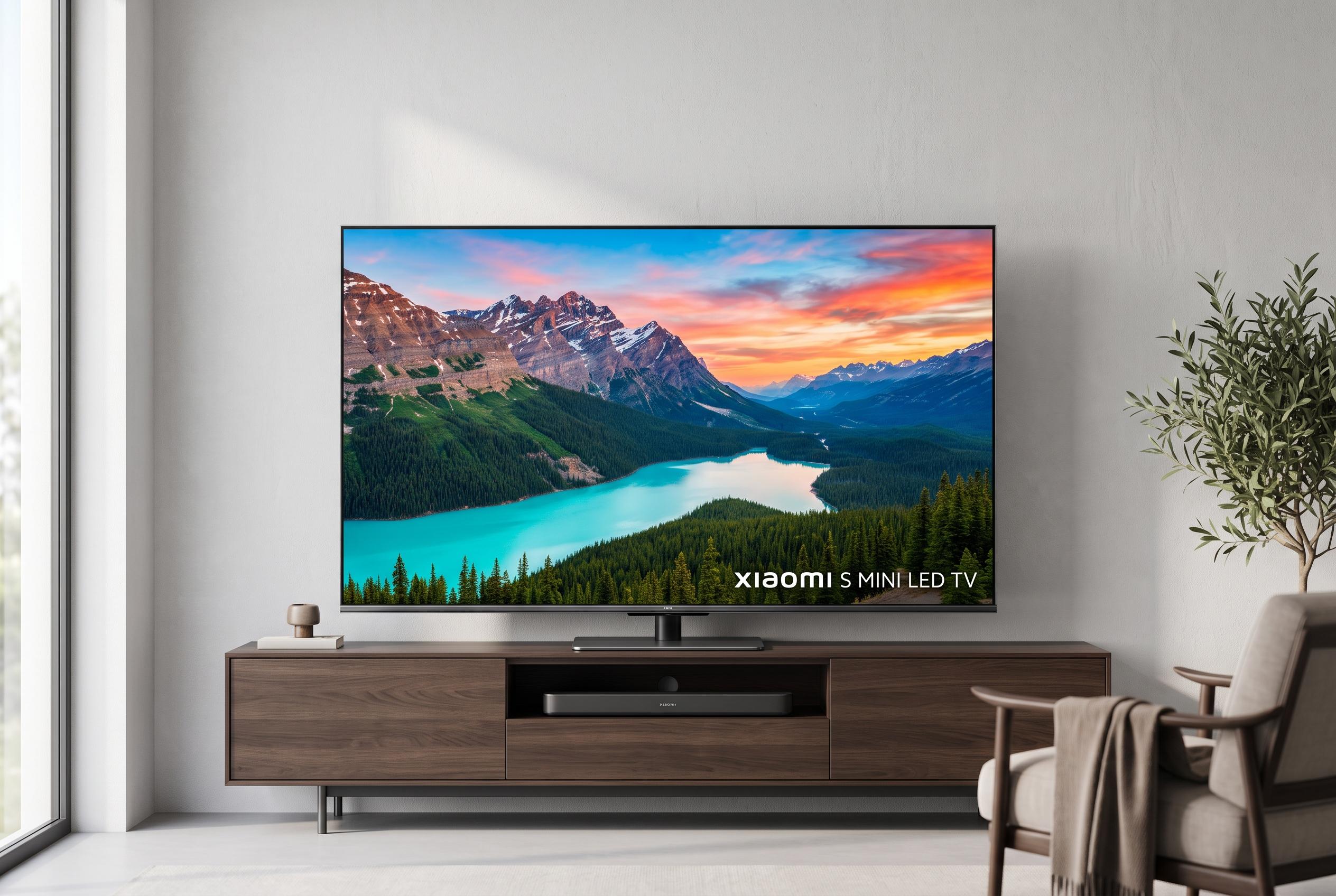

Xiaomi’s latest 65-inch S Mini LED TV bridges the gap between standard LED sets and OLEDs, delivering high contrast, brightness, and smart connectivity without the premium price tag, promising a fresh alternative for consumers seeking near-premium picture quality.
Xiaomi’s S Mini LED television is aimed at a familiar dilemma: whether to pay a premium for OLED or settle for a good LED set. In the 65-inch version, the answer is not absolute, but the screen technology gives Xiaomi a clearer route to near-premium picture quality without pushing the price into top-tier territory. After extended use, the set comes across as a broadly successful attempt to balance film viewing, sport and gaming rather than a simple exercise in specifications.
Design is one of its strongest points. The narrow bezels give the panel a clean, modern appearance and the chassis feels solid rather than flimsy. The Week also noted the restrained styling and sturdy construction in its review of the same model. The remote is less convincing. It is larger and more cluttered than Xiaomi’s earlier minimalist remotes, even though response is quick enough in daily use. Installation and after-sales support appear to be weaker points than the hardware itself.
The display is the main reason to consider it. Xiaomi’s QD Mini LED panel uses 384 local dimming zones on the 65-inch model, while the wider series ranges up to 512 zones on the 75-inch set, according to Gadgets 360. Peak brightness reaches 1,200 nits, which gives HDR material real punch. Dolby Vision content in particular benefits from the deeper contrast and brighter highlights. Black levels are not as absolute as on OLED, but they are far better than on a conventional LED television.
Motion handling is also competent. The set supports HDR10+ and uses MEMC and DLG 120Hz features to improve smoothness in sports and fast-moving scenes, though the native panel remains 60Hz. Smartprix said the 120Hz Game Boost mode comes with a trade-off, because it halves resolution, which is worth noting for buyers who care about gaming clarity. For most viewers, though, the combination is enough to keep action content looking fluid.
Audio is better than expected for such a slim television. The 34W quad-speaker arrangement, with two tweeters and two full-range drivers, delivers clear dialogue and enough scale for a medium-sized room. Xiaomi also includes Dolby Audio, DTS:X and DTS Virtual:X support. That makes the television more self-contained than many rivals, where a soundbar becomes necessary almost immediately. For everyday viewing, the built-in speakers appear to be more than adequate.
The software package is practical rather than flashy. Google TV provides the familiar app ecosystem, while Xiaomi’s PatchWall layer adds content recommendations and easier browsing across streaming services. According to recent launch coverage, the series also includes three HDMI ports, one with eARC, two USB ports, Ethernet, optical audio out, Bluetooth, dual-band Wi-Fi, Google Cast, Miracast and AirPlay 2 support. That is a strong connectivity list for a set positioned below the OLED class. At its reported sub-₹75,000 street price for the 65-inch model, the television lands in a useful middle ground: more capable than a standard LED set, less expensive than OLED and strong enough to make Mini LED look genuinely mainstream.
Disclaimer: This content is intended for informational purposes only. Readers are advised to exercise their own judgement, conduct due diligence, or consult a qualified expert before acting on any information provided.