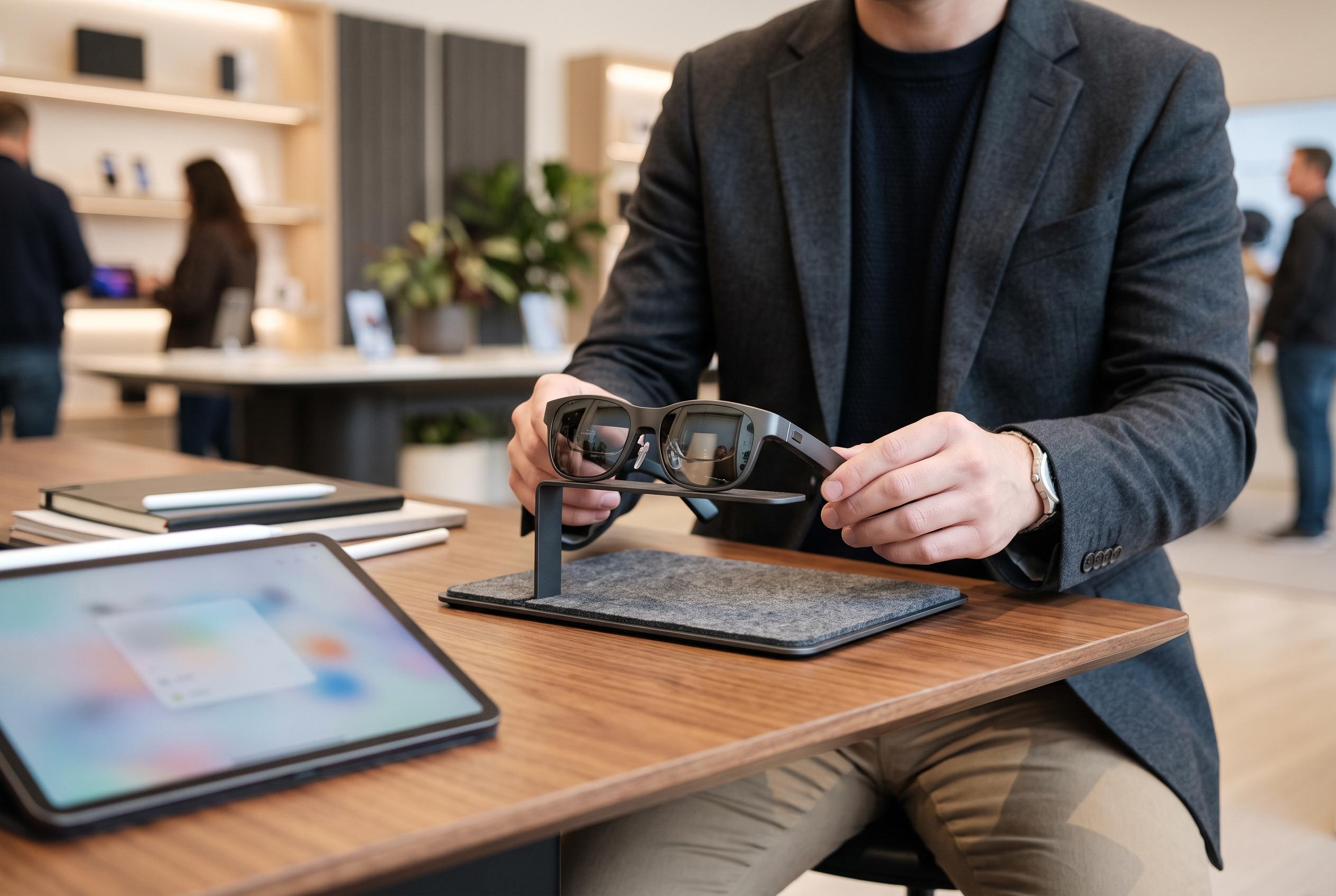

Xreal is set to expand its Android XR smart glasses, Aura, from controlled previews to wider release in autumn 2026, positioning itself as a high-end device with a staged worldwide rollout and price tags over $1,200.
Xreal is moving its first Android XR smart glasses, Aura, from controlled previews towards a wider launch, but at a price that places them firmly in premium hardware territory. The company has told reporters the glasses will start at $1,279 in the United States, with a higher-end version priced at $1,499, according to Tom’s Guide and a Xreal press release distributed through PR Newswire. Xreal’s own product pages in China and South Korea say the final retail price is expected to stay below $1,500 before tax and describe a launch window in autumn 2026.
The entry model pairs 12GB of memory with 256GB of storage, while the more expensive version doubles the storage to 512GB and increases memory to 16GB. Xreal is also offering the glasses in two frame sizes, covering interpupillary distances from 60mm to 66mm and from 66mm to 72mm, which should help with fit across different users. The company’s reservation pages also indicate a refundable deposit structure, including priority access for early backers, before wider orders open.
At launch, pre-orders are limited to customers who previously paid a reservation deposit, with general ordering expected to open in the coming weeks, according to Tom’s Guide and Investing.com. Shipments are due to begin first in the United States, Canada, Japan and South Korea, while other markets will have to wait until 2027, Xreal has said. That staged rollout suggests the company is trying to control demand and supply carefully, rather than opening the product globally at once.
Aura is Xreal’s most ambitious move yet in the smart-glasses category. The device runs Android XR and integrates Google Play support, hand tracking, Gemini assistance and a 70-degree field of view, while Xreal says the glasses use a tethered compute module built around Qualcomm’s Snapdragon Reality Elite chip. The company is also leaning on Bose-branded audio tuning. That hardware approach may explain why Aura is not as light or compact as some camera-first glasses, including Ray-Ban Meta, but it also allows Xreal to include displays rather than limiting the product to audio and imaging features. Xreal’s official material says the optics are meant for mixed-reality tasks ranging from video viewing to navigation, which places Aura somewhere between consumer smart glasses and a more traditional extended-reality headset.
Disclaimer: This content is intended for informational purposes only. Readers are advised to exercise their own judgement, conduct due diligence, or consult a qualified expert before acting on any information provided.