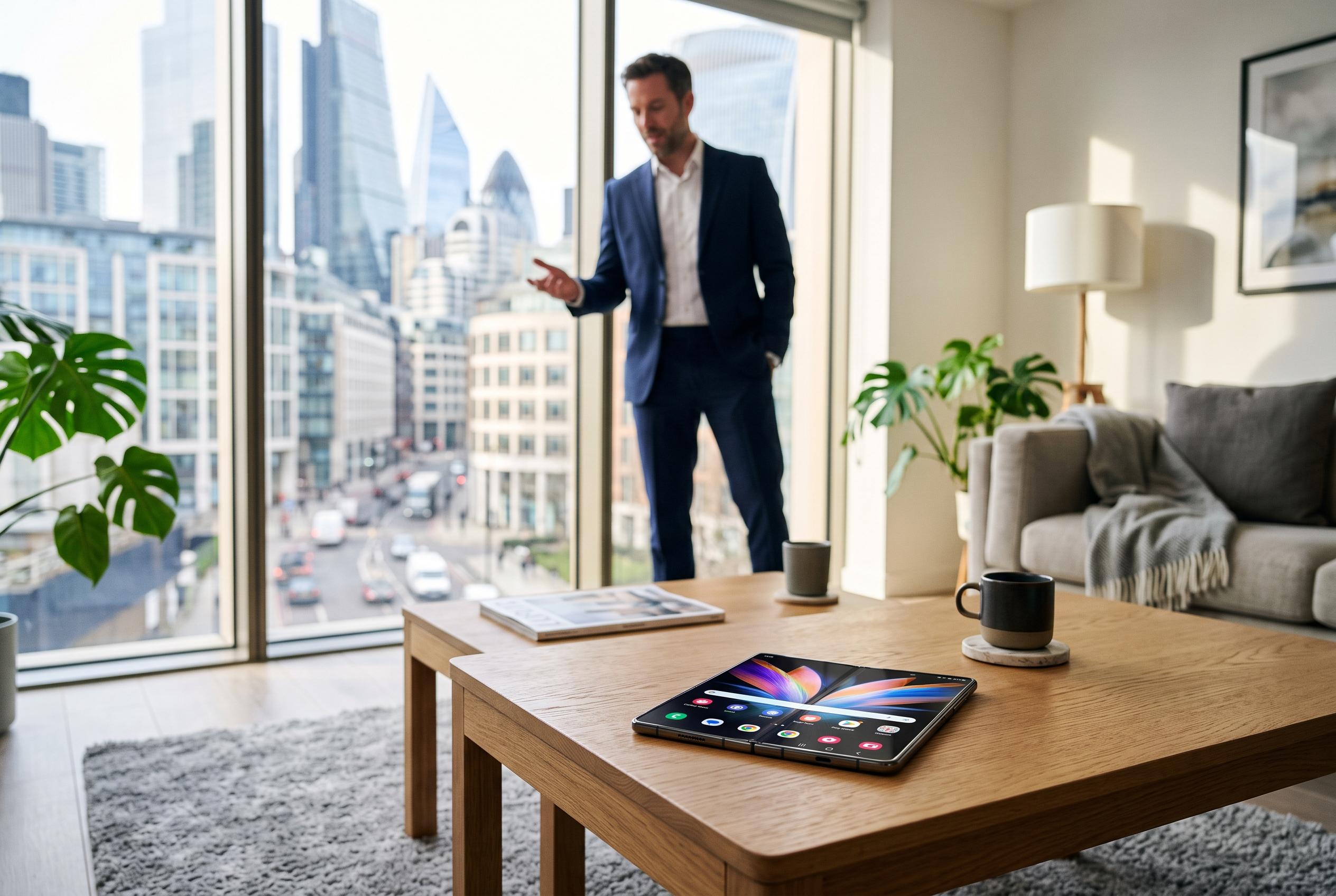

The 2026 US market for book-style foldables is diverging into three premium segments led by Samsung, Google, and Motorola, each with unique strengths, marking a move towards a more competitive and differentiated landscape.
The 2026 US market for book-style foldables is no longer producing a single obvious winner. Instead, the category is breaking into three distinct premium offers: Samsung for outright hardware, Google for durability and magnetic charging convenience, and Motorola for a more everyday-friendly take on the form factor. Tom’s Guide described the segment as a “fiercely contested battleground”, while Popular Mechanics said it tested the Pixel 11 Pro Fold specifically against Samsung’s Galaxy Z Fold8, Galaxy Z Fold8 Ultra and Motorola’s Razr Fold because those devices now define the field. (tomsguide.com)
Samsung still leads on the specification sheet. On its US product page, the company says the Galaxy Z Fold8 Ultra weighs 215g, measures 4.1mm when unfolded, carries a 6.5-inch cover display and an 8-inch main screen, and runs on the Snapdragon 8 Elite Gen 5 for Galaxy with a 5,000mAh battery. Samsung also lists a 200MP wide camera, a 50MP ultrawide and a 10MP telephoto with 3x optical zoom. Yet some of the more foldable-specific extras are missing. Samsung says the Fold8 Ultra does not support S Pen, and its magnetic accessory solution relies on a case with a built-in ring rather than magnets integrated into the handset itself. (samsung.com)
That helps explain why Samsung remains the engineering benchmark without being the automatic recommendation. WIRED gave the Pixel 11 Pro Fold 7/10 and called it a “predictably iterative improvement”, arguing that Google’s $1,899 device is still “comparatively chunky” beside Samsung’s latest hardware. The magazine put the Pixel at 239g and 10.1mm, against 201g and 9.7mm for the Galaxy Z Fold8 and 215g and 8.9mm for the Fold8 Ultra, and said the price rise over the previous Pixel foldable makes the case for Google harder if hardware is the priority. (wired.com)
Google’s counter-argument is more practical than glamorous. In an October 2025 design explainer, the company said it moved to a gearless hinge because gears can be damaged and dust can get stuck between them over time, degrading the opening and closing experience; industrial designer Sangsoo Park said the aim was improved reliability. Popular Mechanics found that the result, on the current Pixel 11 Pro Fold, is a device whose 19.5:9 outer screen behaves much more like a normal smartphone when closed. That review also noted a 4,806mAh battery and Qi2.2 wireless charging up to 25W, giving Google a distinct usability pitch even before software enters the discussion. (blog.google)
Durability is central to that pitch because foldables still have an obvious weak point: the hinge. Popular Mechanics noted that the 6 in an IP68 rating means the Pixel 11 Pro Fold is dust-tight, whereas rivals with IP48 or IP49 protection should not be exposed to particles smaller than a millimetre. For a conventional slab phone that may sound academic. For a folding device, it is more serious, because fine sand, lint and pocket dust can work their way into moving parts and turn normal wear into a costly failure. Google’s earlier explanation for the gearless hinge shows that this has been a deliberate design priority rather than a one-year marketing line. (popularmechanics.com)
The camera story, however, prevents Google from claiming a clean overall victory. Tom’s Guide found that the Pixel 11 Pro Fold’s 30x Super Res Zoom beat the Fold8 Ultra in one long-range sign test, but also said the Razr Fold “surprised” it by producing sharper distant text through better AI upscaling. Android Central was more sceptical about Google’s imaging package overall. Its reviewer said the main camera was “fine enough”, but lacked the best dynamic range and the fine detail seen on the Pixel 11 Pro and Pro XL. The same review described portrait cut-outs as “quite messy” and ranked the ultrawide only third among four foldables tested, behind rivals from Samsung, Motorola and Honor. (tomsguide.com)
That broader context matters because Google is no longer being treated as a foldable outsider with lower expectations. Popular Mechanics said Samsung and Motorola’s new large-screen foldables gave the Pixel “serious competition”, and Tom’s Guide argued that Google no longer has the luxury of being “graded on a curve”. In effect, the market has moved from a Samsung-led niche into a genuine three-way premium contest. Samsung still has the thinner chassis, lighter hardware and stronger raw silicon case; Google has the clearest durability and charging differentiators; and Motorola is now credible enough in reviews to influence camera comparisons and overall buying advice, rather than merely filling shelf space. (popularmechanics.com)
The result is a foldable category that is finally behaving like the wider flagship market, where the best product depends on what the buyer values most. If the goal is maximum performance, the most aggressive camera hardware and the slimmest premium build, Samsung still has a strong claim. If the priority is dust resistance, built-in magnetic charging and an outer screen that feels closer to a standard phone, Google’s case is far more coherent than its raw specifications suggest. That is why Samsung’s Ultra can still be the best foldable on paper while no longer being the most persuasive choice in practice. (samsung.com)
Disclaimer: This content is intended for informational purposes only. Readers are advised to exercise their own judgement, conduct due diligence, or consult a qualified expert before acting on any information provided.