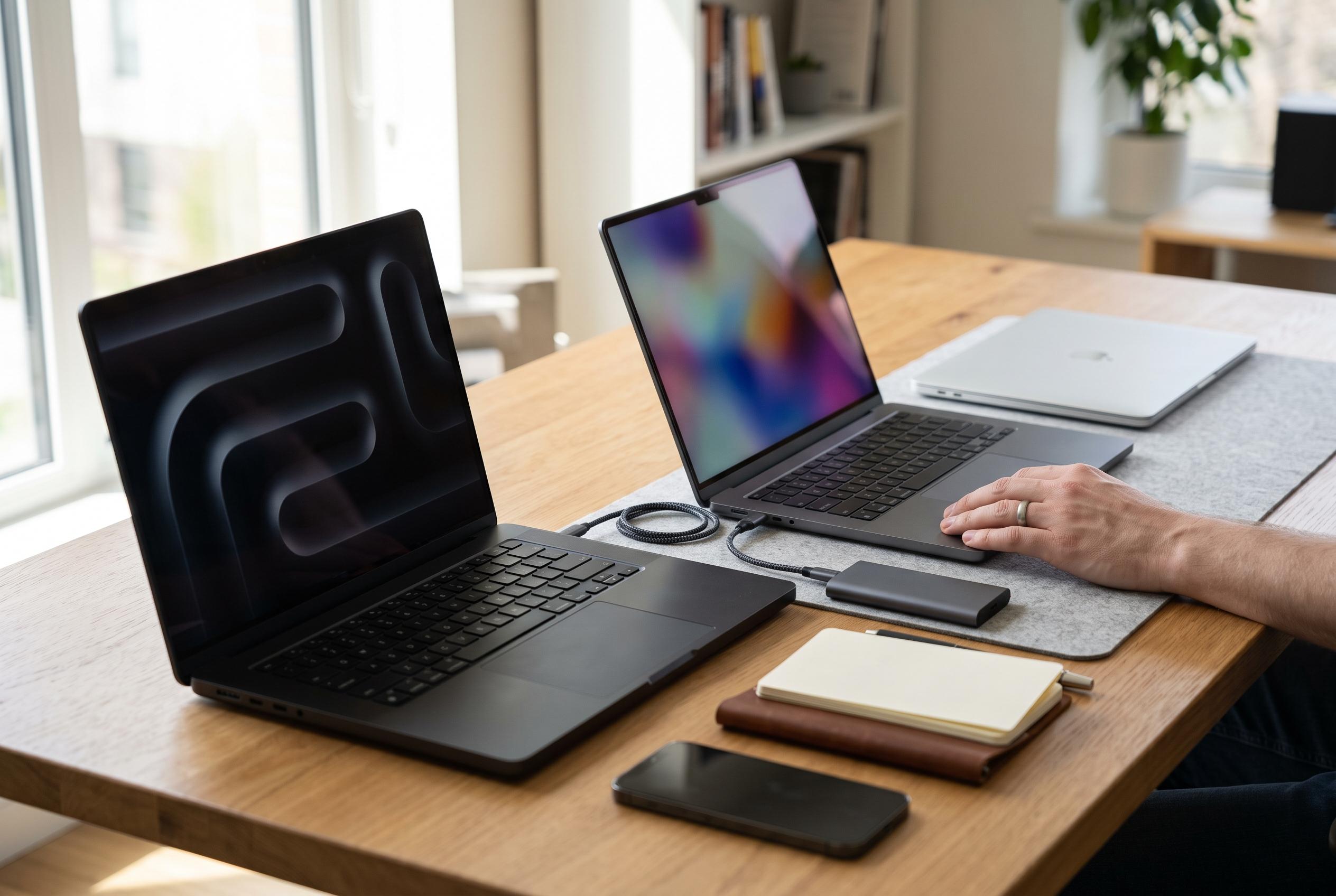

The 2026 MacBook range shifts focus from release date to performance, with new tiers of Neo, Air, and Pro models catering to varied user needs, from basic tasks to professional-grade workflows.
In 2026, choosing a MacBook is less about buying the newest model and more about matching the machine to the workload. Tecnoblog’s guide places the line-up into three clear tiers: the MacBook Neo as the entry-level option, the MacBook Air as the mainstream choice for most buyers, and the MacBook Pro for heavier creative and development work. That structure broadly matches wider buying guides from TechRadar, Tom’s Guide, MacPrices.net and RTINGS, which all separate Apple’s portable range by performance, portability and budget rather than by release date alone. According to those comparisons, the MacBook Air M5 is the best all-round choice for most people, while the MacBook Neo is the value option for simpler use cases.
The MacBook Pro remains the model for sustained performance. Tecnoblog says the M5 version is built around active cooling, higher-end graphics and a Liquid Retina XDR display with ProMotion up to 120Hz, which makes it better suited to long editing sessions, software development and other demanding tasks. The guide also notes that the range extends to M5 Pro and M5 Max configurations, with larger memory ceilings and more powerful graphics for users who regularly work with large video files, complex project builds or other heavily threaded workloads. That aligns with RTINGS, which points to the 14-inch MacBook Pro with M5 as a strong general productivity machine and recommends the M5 Pro and M5 Max variants for more intensive professional work.
For most buyers, however, the MacBook Air is the more practical balance. Tecnoblog’s breakdown of the M5 model highlights a thin aluminium body, 13-inch and 15-inch sizes, up to 32GB of unified memory and battery life rated at up to 18 hours of video playback. It also notes the Air’s limitations: a 60Hz Liquid Retina panel, fewer ports than the Pro and no active cooling, which can reduce sustained performance under load. Even so, TechRadar and Tom’s Guide both describe the Air M5 as the strongest everyday laptop in Apple’s current line-up, crediting its combination of performance, battery life and portability.
At the bottom of the range, the MacBook Neo is positioned as the cheapest way into macOS. Tecnoblog says it uses Apple’s A18 Pro chip rather than an M-series processor, pairs that with 8GB of unified memory and offers a lighter 13-inch design at 1.23kg. That makes it suitable for browsing, streaming, documents and study, but less convincing for heavier multitasking or professional software. TechRadar and Tom’s Guide also identify it as the budget MacBook for buyers who want the Apple ecosystem without paying for the additional power and display technology of the Air or Pro.
The practical decision, then, comes down to how long the laptop must stay fast under pressure. Students and office users will usually be well served by the Neo if price is the overriding factor, although the Air M4 or M5 gives noticeably more headroom for coding, photo work and multiple apps open at once. Creators, developers and anyone who needs more ports, a brighter screen and better sustained performance should move to the Pro, especially if they depend on external displays, media cards or long rendering sessions. In short, the 2026 MacBook range is unusually easy to segment: Neo for basic use, Air for most people and Pro for those who genuinely need the extra power.
Disclaimer: This content is intended for informational purposes only. Readers are advised to exercise their own judgement, conduct due diligence, or consult a qualified expert before acting on any information provided.