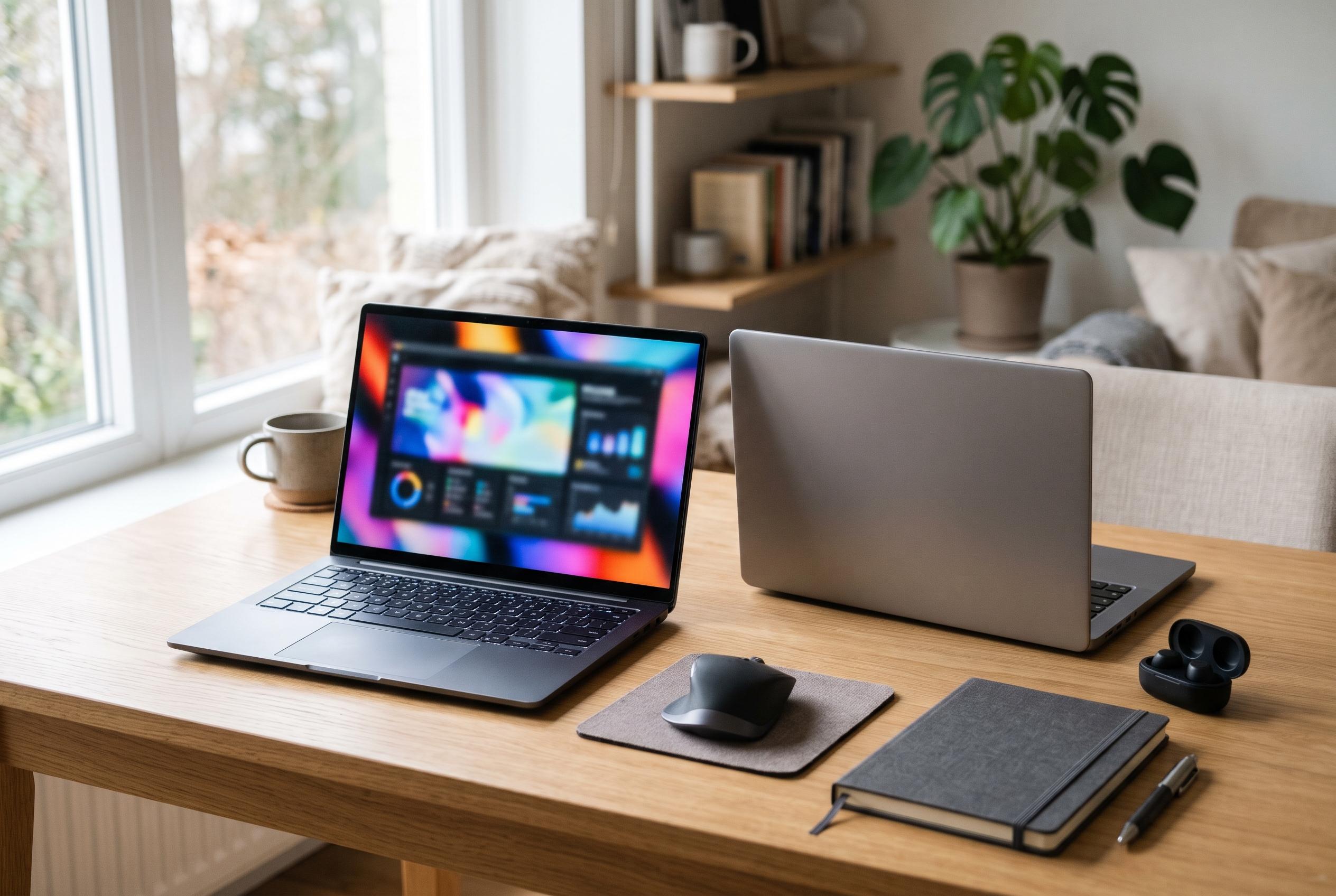

Acer’s $899 Googlebook 14 offers more memory, a sharper OLED touchscreen and greater flexibility than Apple’s $799 MacBook Neo, but unfinished software and limited app compatibility make the Neo the safer choice for most buyers.
Apple’s MacBook Neo and Acer’s Googlebook 14 are aimed at the same broad buyer, but they solve very different problems. On paper, Acer’s machine is the more generous package: for $100 more than the 512GB Neo, it brings twice the memory, a larger OLED touchscreen, a convertible hinge, and a stronger set of ports. Yet the safer recommendation for most people remains Apple’s $799 model, because it runs the desktop software many users already rely on, while Googlebook OS is still maturing through frequent updates.
That divide matters because the Googlebook is not a single laptop but a platform, with launch hardware from Acer, ASUS, Dell, HP and Lenovo. The Acer Googlebook 14 is the most affordable convertible in the range and the one that best exposes both the strengths and weaknesses of the new system. TechRadar described it as the only 2-in-1 in the initial lineup, while reviews from Tom’s Guide and TechRadar agree that its hardware is polished, light and well built, even if the software still feels incomplete in places.
The price comparison only becomes fair when both laptops are matched at 512GB. Apple raised the Neo’s prices in June, after launching the machine at a lower level, so the 512GB version with Touch ID now sits at $799. The Acer Googlebook 14 starts at $899 with 16GB of memory and 512GB of storage. For that extra $100, buyers get double the RAM, a 14-inch OLED panel with sharper pixel density than the Neo’s IPS display, a fold-back design for tablet use, and a faster mix of Thunderbolt and USB-C ports. Google also bundles a year of Google AI Pro with Googlebooks, a subscription that adds further value for users who would have paid for it anyway.
The larger question is not which laptop looks better on a specification sheet, but which one can actually run a full day of work. The MacBook Neo uses macOS and standard desktop applications, so the constraint is its fixed 8GB of memory rather than software availability. Tom’s Guide found it broadly responsive with multiple browser tabs, Slack and creative software open, although memory pressure can force users to close apps sooner than they would on a machine with more headroom. The Googlebook takes the opposite approach. It runs Android and web apps, plus Linux tools through a terminal, but it cannot run Windows or macOS software. That makes app compatibility the first thing buyers must check, and several reviews have called Googlebook OS underdeveloped, even while praising the underlying hardware.
Google is improving the platform quickly, but the pace of change also underlines how unfinished it still is. Recent Chrome updates have fixed download handling, document editing and stability issues that affected early reviews, according to 9to5Google. At the same time, some of the most useful work features are either missing or restricted. Reviewers have pointed to the absence of separate Chrome profiles for work and personal accounts, and Google has said that support is planned later. The same caution applies to the Android phone integration that Google has made central to the product pitch. According to Google’s help pages, the feature requires Android 17 or later, the same primary Google account on both devices, a private home Wi-Fi network and no VPN, with work profiles excluded.
That means the Googlebook’s best-case scenario is narrower than the marketing suggests. For an Android owner whose life is already built around browser-based tools and mobile apps, the Acer is unusually attractive, especially if the Google AI Pro bundle is genuinely useful. For everyone else, the Neo remains the more reliable purchase because it is finished now. Battery life data also leans that way, although the tests are not directly comparable: Tom’s Guide measured 13 hours 28 minutes of web browsing on the Neo, while TechRadar recorded just over 10.5 hours of web use and around 11 hours of video playback on the Acer. In short, the Googlebook has the better hardware, but the MacBook has the better answer to the practical question most buyers face: what will still work without fuss six months from now?
Disclaimer: This content is intended for informational purposes only. Readers are advised to exercise their own judgement, conduct due diligence, or consult a qualified expert before acting on any information provided.