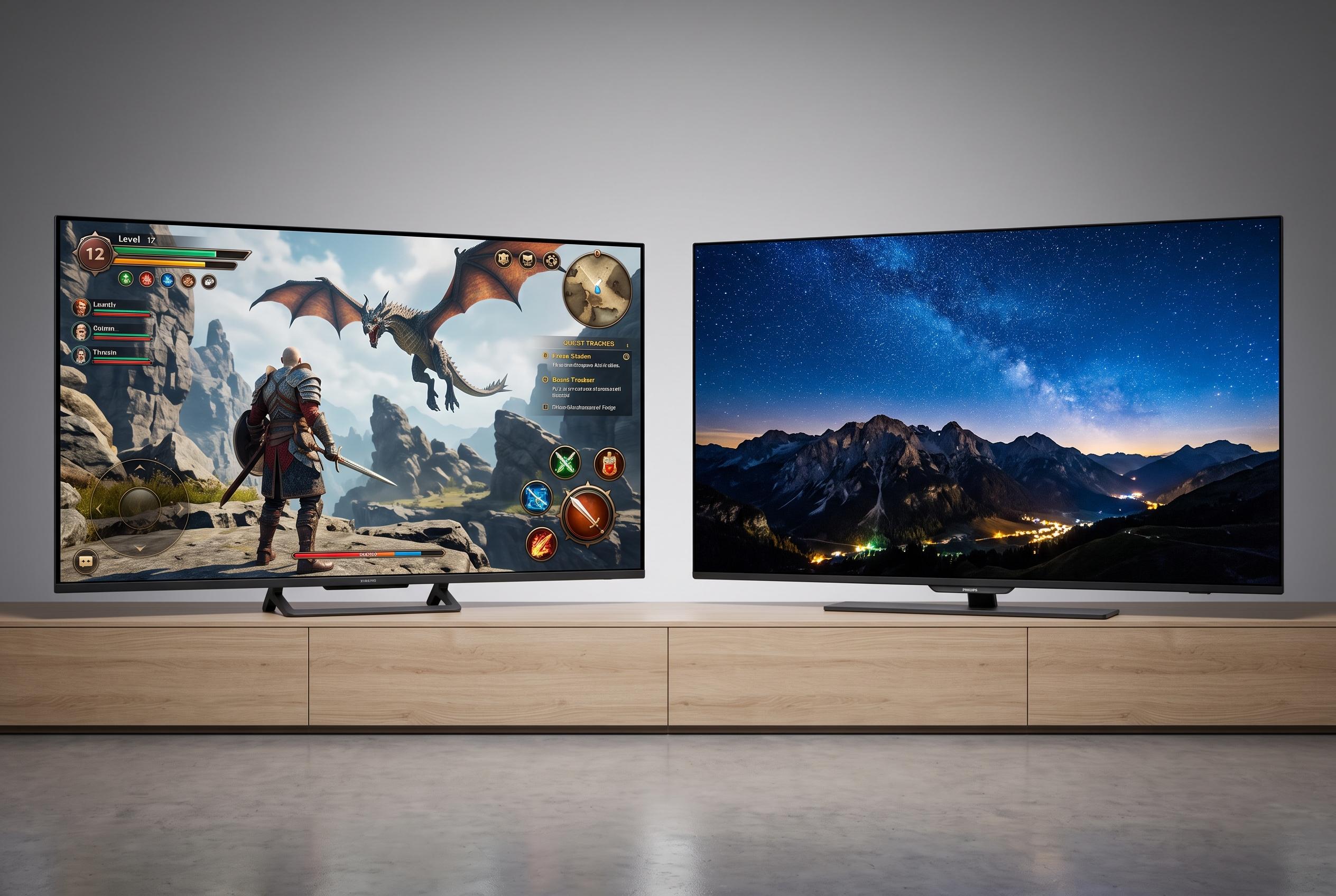

Two rival 55-inch TVs near the same price point, Xiaomi’s budget-friendly, gaming-oriented model and Philips’ premium HDR Mini LED, highlight differing appeals for streaming and entertainment enthusiasts.
Two 55-inch televisions are being pitched to Amazon shoppers at almost the same price, but they target different buyers. Xiaomi’s TV F 55 is listed at €324.90, while Philips’ 55MLED820 is priced at €349, a gap of just over €24. The lower-cost set leans on Fire TV, Alexa integration and a gaming mode, while the Philips model focuses on picture quality and premium HDR support.
According to Xiaomi’s own product page, the TV F2 55-inch model uses a 4K Ultra HD LED panel with MEMC motion processing, which is designed to make fast-moving scenes appear smoother. It also runs Fire TV, giving access to major streaming services and voice control through Alexa. Xiaomi says the set comes with 2GB of RAM, 16GB of storage and a quad-core Cortex-A55 processor, alongside HDMI, USB, Wi-Fi, Bluetooth and Ethernet. The gaming feature, Game Boost, reaches 120Hz through HDMI, but only at Full HD resolution rather than native 4K.
Philips takes a different route with the 55MLED820. The company describes it as a 55-inch QD Mini LED 4K television, using Quantum Dot technology to improve colour accuracy and brightness. Philips also says the set uses its P5 Perfect Picture Engine to refine sharpness, contrast and colour, with support for HDR10+ as well as Dolby Vision on the broader retail listing. The panel runs at a native 60Hz, which makes it more of an image-quality option than a display aimed at competitive gaming.
On the software side, Philips uses Titan OS for streaming apps and smart-TV functions, while its audio package includes Dolby Atmos and DTS:X. That is a notable contrast with Xiaomi, where the emphasis is more on smart-platform familiarity and broader everyday use. In practical terms, the Xiaomi set appears better suited to buyers who want a cheaper, more flexible streaming TV with some gaming appeal, while the Philips model is the stronger choice for film and series viewers who want Mini LED contrast, HDR depth and more advanced audio support.
Disclaimer: This content is intended for informational purposes only. Readers are advised to exercise their own judgement, conduct due diligence, or consult a qualified expert before acting on any information provided.