
Dell’s latest Alienware 15-inch gaming laptop aims to appeal to mainstream buyers but faces criticism for its display, design, and value proposition in an already crowded market segment.
Alienware’s latest 15-inch gaming laptop is an attempt to move the brand closer to mainstream buyers, but Frandroid said it still feels like a machine caught between a lower entry price and an uneven specification sheet. The reviewer found that Dell has stripped costs sensibly in some areas, yet the overall package does not stand out enough in a market where cheaper rivals often offer better displays, faster graphics and longer endurance.
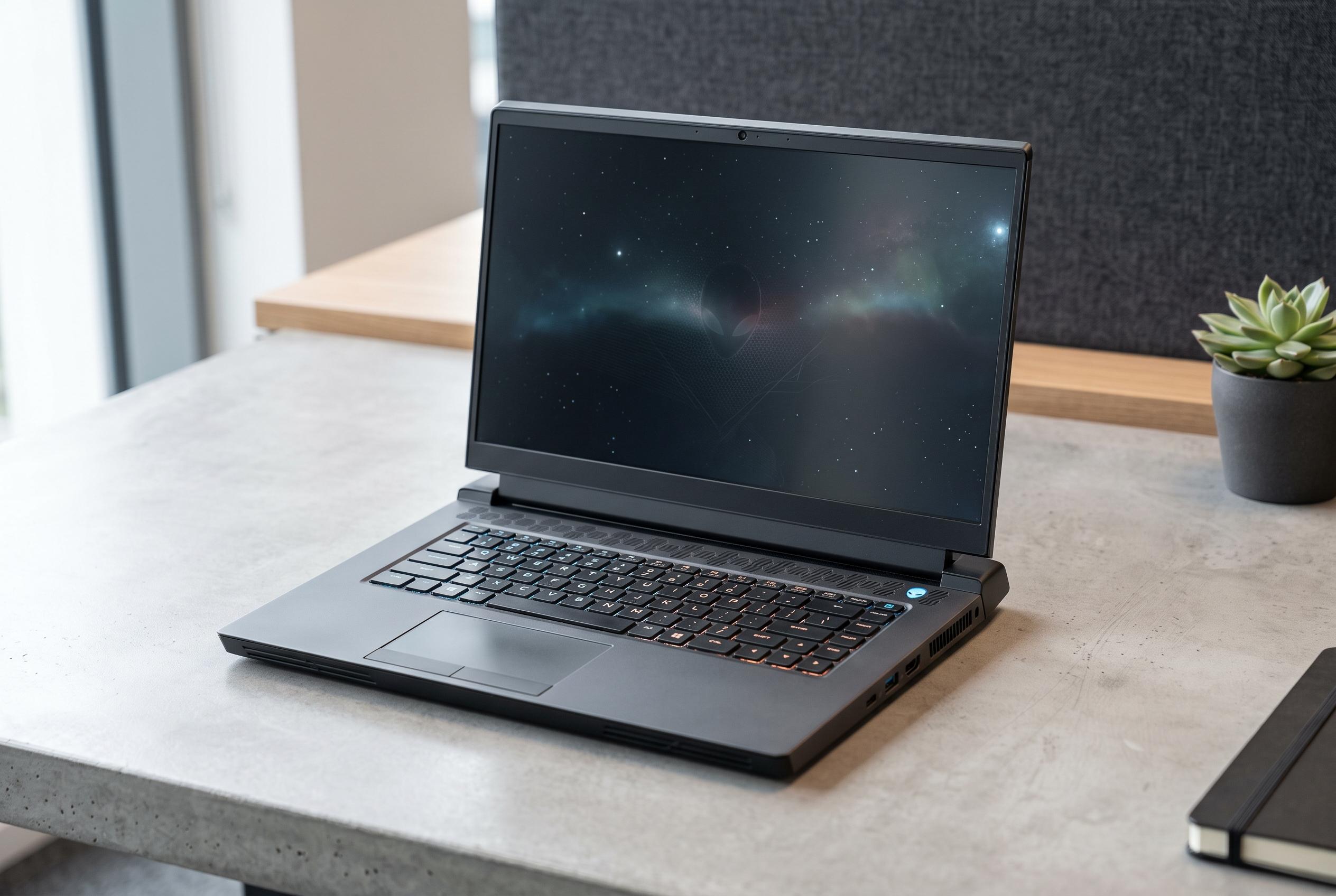
The chassis relies heavily on plastic, but the build was described as cleaner and more convincing than the material choice might suggest. Frandroid said the laptop keeps some of Alienware’s familiar styling, including a raised rear section that helps with cooling, but the trade-off is a thick body and a weight of about 2.25kg. That makes it more of a desk-first portable than a genuinely easy machine to carry, and the port layout was considered practical rather than clever, with key connections placed on the left side. RTINGS and TechSpot made similar points about the design, describing it as functional but plainly aimed at cost control.
Input quality is one of the stronger elements. Frandroid praised the keyboard as unusually good for this price class, with a satisfying key feel and well-judged travel, while the touchpad was judged more ordinary, with a plastic surface and a fairly small active area. The webcam and speakers were both treated as minimum-effort components, which is broadly in line with other reviews that described the audio and camera as serviceable at best.
The screen is the laptop’s biggest weakness. Frandroid measured the 15.3-inch 1,920 x 1,200 IPS panel at 299 cd/m², with only modest colour coverage and a result it described as well below what buyers should accept at more than €1,000. RTINGS likewise lists the display as a fixed 165Hz 1200p panel across the range, but notes that the machine is built around an entry-level gaming brief rather than a premium visual experience. TechRadar and Tom’s Guide also criticised the panel for looking dim and relatively muted compared with better-equipped rivals.
Inside, Frandroid’s test unit used an AMD Ryzen 7 260, 16GB of single-channel DDR5 memory, a 512GB PCIe Gen 4 SSD and Nvidia’s GeForce RTX 5050. That combination delivered decent everyday responsiveness and playable gaming performance, but the review said it is no longer especially competitive, particularly when ray tracing is involved and frame generation becomes essential. TechRadar and Windows Central reached a similar conclusion, saying the RTX 5050 can handle modern titles at 1080p with DLSS assistance, yet the limited storage, modest cooling headroom and noisy fans make the experience less refined than it should be. Frandroid also pointed to battery life of only around three to four hours in routine use, which is weak even by gaming laptop standards.
At €1,469 in the tested configuration, Frandroid argued that the Alienware 15 is priced too close to better-equipped alternatives, citing a competing HP Omen model with an RTX 5060 and a stronger display for only a little more money. That is the core problem with this laptop: it is not bad, but it arrives in a segment where value is dictated by sharper trade-offs, and Alienware’s entry-level effort does not quite make a compelling enough case.
Disclaimer: This content is intended for informational purposes only. Readers are advised to exercise their own judgement, conduct due diligence, or consult a qualified expert before acting on any information provided.