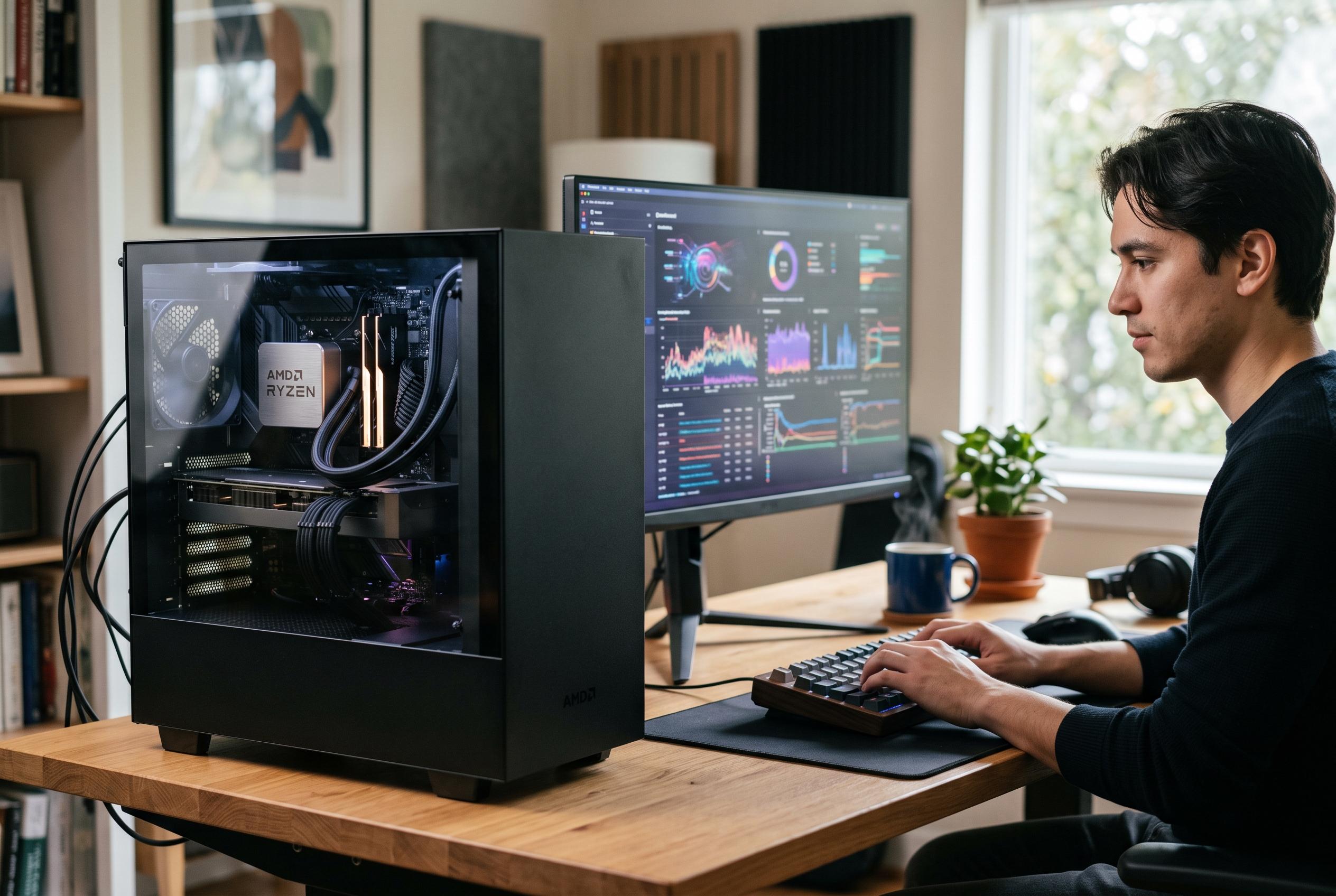

In 2026, selecting an AMD Ryzen 5 CPU remains a matter of balancing performance, compatibility, and price, with the Ryzen 5 7600X leading new builds and the 5600X maintaining its value allure on older platforms.
Choosing an AMD Ryzen 5 processor in 2026 is still a question of balance rather than absolute speed. The Ryzen 5 7600X remains the strongest all-round option for many buyers because it pairs six Zen 4 cores with high boost clocks and a relatively efficient design for its class. Notebookcheck lists the chip at up to 5.7GHz single-core boost and a 105W TDP, while NanoReview similarly highlights its 32MB of L3 cache and strong gaming and productivity performance.
For builders watching value, the Ryzen 5 5600X continues to be the most persuasive mainstream pick on the older AM4 platform. It uses six cores and 12 threads on Zen 3, with a 3.7GHz base clock, up to 4.6GHz boost and a 65W TDP, according to Notebookcheck and NanoReview. Tom’s Hardware describes it as an easy CPU to cool that still delivers excellent gaming and general-purpose performance, which helps explain why it remains attractive for lower-cost systems.
The difference between the two chips is not simply raw speed. The 7600X is built on a newer process and architecture, which gives it a clear edge in single-threaded work and newer-platform features, but that advantage comes with a higher power envelope and a more expensive AM5 upgrade path. By contrast, the 5600X trades some performance for lower heat output, simpler cooling and wider compatibility with existing AM4 motherboards, making it a more economical option for users who are upgrading rather than building from scratch.
Integrated graphics remain a key dividing line in this class. The source material flags the Ryzen 5 5600G as a practical option for compact or budget machines where a separate graphics card is not desirable, while the 7600X is aimed more squarely at users who will pair it with a discrete GPU. That means the right choice depends less on a generic “best” label and more on whether the system needs self-contained display output, lower upfront cost or higher gaming throughput.
In practice, the safest recommendation is still straightforward. The Ryzen 5 7600X suits buyers who want the strongest mix of speed, efficiency and longevity in a new build, while the Ryzen 5 5600X is better for value-focused systems that rely on AM4 compatibility. For users who need integrated graphics, the 5600G remains the more flexible choice. As the comparison makes clear, Ryzen 5 buying decisions in 2026 are shaped less by brand tier than by socket choice, graphics needs and how much performance a buyer is willing to pay for.
Disclaimer: This content is intended for informational purposes only. Readers are advised to exercise their own judgement, conduct due diligence, or consult a qualified expert before acting on any information provided.