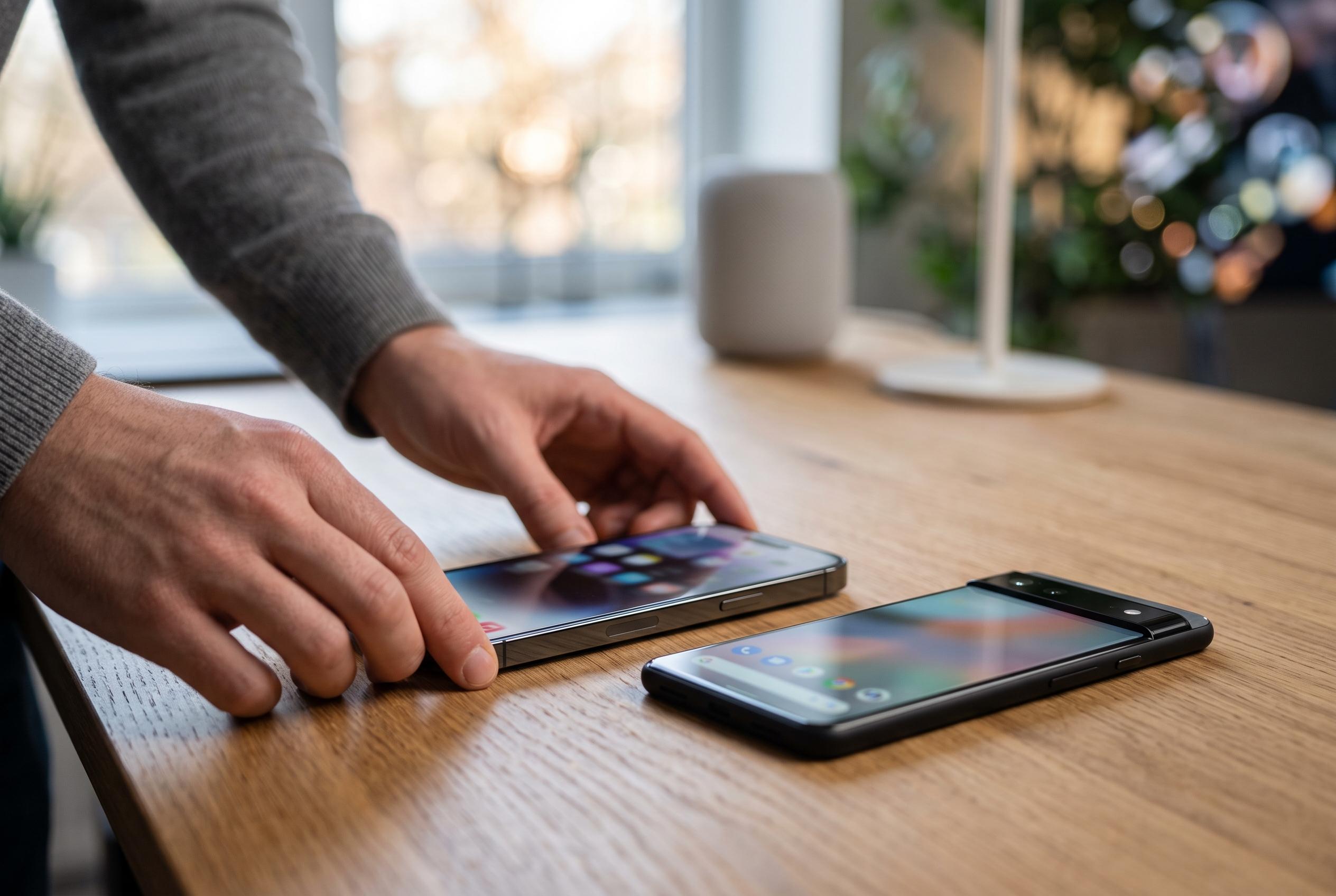

Apple’s iPhone 18 Pro and Google’s Pixel 11 Pro debut with similar designs but diverge in core strengths, highlighting Apple’s focus on processing power and Google’s emphasis on AI-driven features.
Apple’s iPhone 18 Pro and Google’s Pixel 11 Pro arrive with similar ambitions but different priorities. According to Trusted Reviews’ early comparison, both are 6.3-inch flagship phones with triple rear cameras and premium pricing, yet Apple is positioning its device as the more powerful option while Google is leaning harder into AI features and software-assisted photography.
Pricing already separates the pair. The iPhone 18 Pro is due to open for pre-orders on 12 September, ahead of release on 18 September, with a starting UK price of £1,199. The Pixel 11 Pro is already on sale and begins at £1,079, making it the cheaper of the two. Both phones come in four colour finishes, with Apple offering Deep Black, Silver, Glacier and Burgundy, while Google sells Canyon, Olive, Fog and Obsidian.
The biggest technical gap appears to be in the chipsets. Apple’s new A20 Pro, which MacRumors says is the first 2nm smartphone chip, uses a 6-core CPU, a redesigned 7-core GPU and a new Dual 16-core neural engine. Early benchmark results cited by MacRumors suggest notable gains over the A19 Pro, while PhoneArena says the chip has also moved ahead of rivals in early testing. By contrast, reports on the Pixel 11 Pro’s Tensor G6 point to a processor tuned for AI and everyday responsiveness rather than raw speed, with Notebookcheck describing weak sustained graphics performance and thermal throttling under load.
That difference shows up in the cameras too, even though both phones have three rear lenses. Trusted Reviews says the Pixel 11 Pro pairs a 50MP main camera with 48MP ultrawide and telephoto units, and its strengths lie as much in Google’s software as in the optics themselves. Features such as Camera Coach and Magic Capture are designed to improve or salvage shots automatically. Apple’s answer is a 48MP main camera with variable aperture, which is an unusual feature in the smartphone market because it can alter light intake and depth of field depending on the scene. Apple also adds more manual control for users who want to adjust aperture, shutter speed and style settings directly.
The software divide is equally clear. Google’s Gemini tools remain one of the Pixel’s strongest arguments, with Circle to Search, image editing and voice features integrated more deeply into the phone. Apple Intelligence, by contrast, has yet to win over many users, although Apple says the next version of iOS will bring substantial changes, including a broader overhaul of Siri. If those promises land, the iPhone could close part of the gap in AI usability. Until then, Google appears to have the more mature assistant experience.
Battery life is less decisive. Trusted Reviews says Apple claims up to 23 hours of typical use for the iPhone 18 Pro, while its own experience with the Pixel 11 Pro suggests mixed endurance, with some days requiring a charge by evening. The Pixel does at least support PixelSnap for easier top-ups. In practical terms, the choice looks likely to depend less on battery and more on ecosystem. Apple’s phone will suit buyers already invested in AirPods, Apple Watch and Mac hardware, while the Pixel will appeal to those who value Google’s AI tools and camera automation over peak performance.
Disclaimer: This content is intended for informational purposes only. Readers are advised to exercise their own judgement, conduct due diligence, or consult a qualified expert before acting on any information provided.