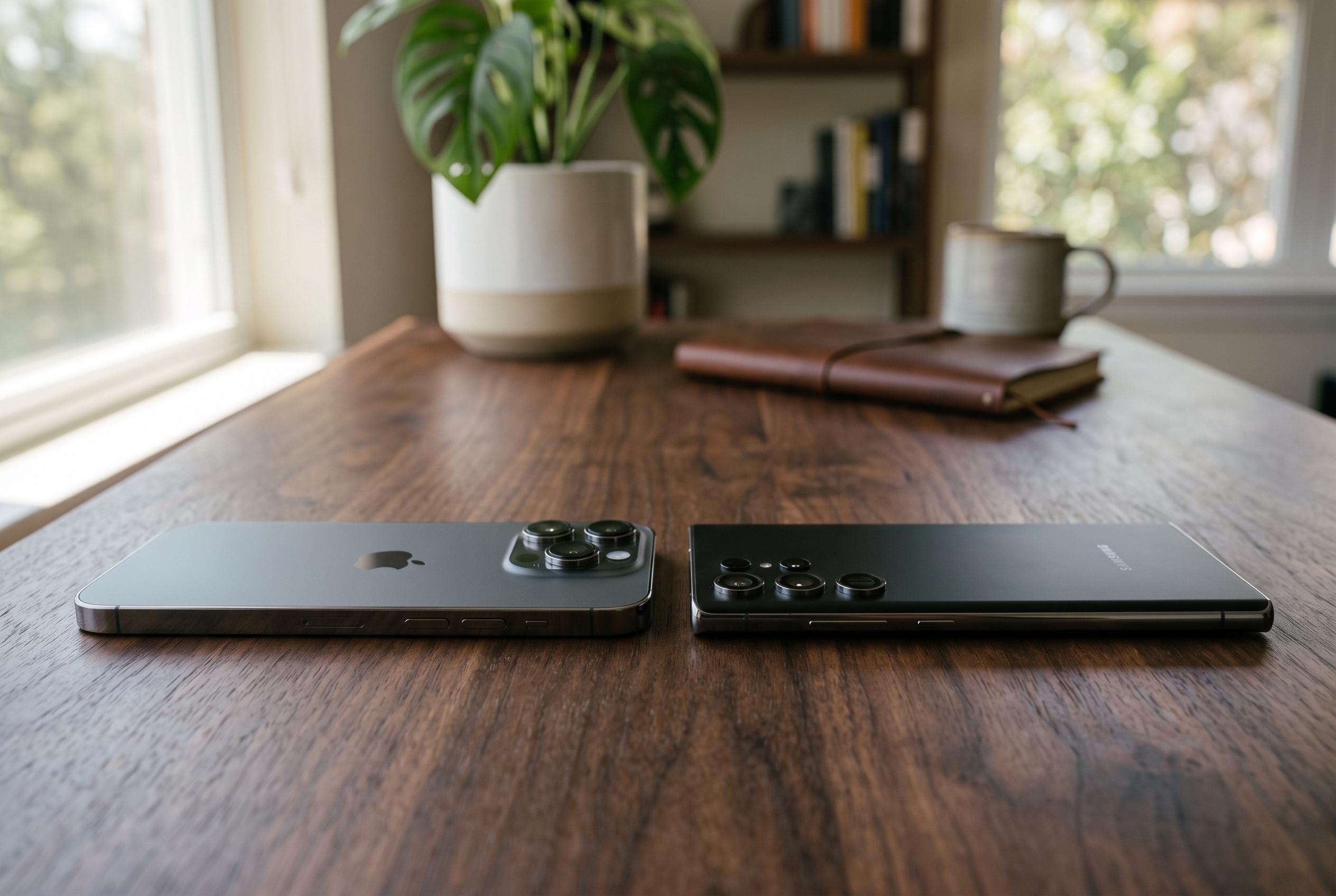

The latest flagship devices from Apple and Samsung are competing on equal footing in terms of price and specifications, but key differences in design, camera, and AI features are shaping consumer choices in this high-stakes rivalry.
Apple and Samsung have once again set up the year’s most direct premium-phone comparison, with the iPhone 18 Pro Max arriving after the Galaxy S26 Ultra and both devices opening at $1,299. According to Mashable’s hands-on comparison, that puts the two flagships on equal footing before users even consider storage, cameras or software.
On paper, the differences are clear. The Galaxy S26 Ultra pairs a 6.9-inch display with a 3,120 x 1,440 resolution, Snapdragon 8 Elite Gen 5 chip, 12GB of RAM and storage up to 1TB. The iPhone 18 Pro Max matches the 6.9-inch size but uses a 2,868 x 1,320 panel, Apple’s A20 Pro processor, 12GB of RAM and storage options that extend to 2TB. Tom’s Guide’s reporting on Apple’s launch also points to Wi-Fi 7, Bluetooth 6, improved heat management and iOS 27 on the new Pro models.
Samsung still has an edge in portability. PhoneArena’s specifications put the S26 Ultra at 214g and 7.9mm thick, versus around 231g and 8.75mm for the iPhone 18 Pro Max, making the Samsung device the slimmer and lighter handset. The S26 Ultra also offers more colour options and includes a built-in stylus, while its Privacy Display mode remains a distinctive feature for anyone who wants to block shoulder-surfing in public.
Camera systems remain a philosophical split. Samsung uses a 200MP main sensor alongside multiple zoom-focused lenses, while Apple has moved to a triple 48MP rear array with variable aperture on the main camera. Tom’s Guide said the Pro Max also gains more advanced photo and video controls, and Mashable noted that Apple’s strengths usually lie in video rather than headline megapixel counts. Battery life is another key divider: Samsung’s 5,000mAh cell delivered 31 hours of video playback in Mashable’s testing, while Apple is advertising up to 45 hours for the Pro Max, a claim that will need real-world verification.
AI is the other battleground. Samsung already ships a mature set of Galaxy AI tools, including Gemini integration and Circle to Search, while Apple is still rolling out a more capable Siri experience and broader image-generation features. That leaves the familiar choice intact: Android users may prefer Samsung’s lighter body and extra features, while iPhone buyers will be drawn to Apple’s larger storage ceiling, stronger battery claims and tighter ecosystem. For now, the outcome looks less like a winner-takes-all contest than another split verdict between two very expensive phones.
Disclaimer: This content is intended for informational purposes only. Readers are advised to exercise their own judgement, conduct due diligence, or consult a qualified expert before acting on any information provided.