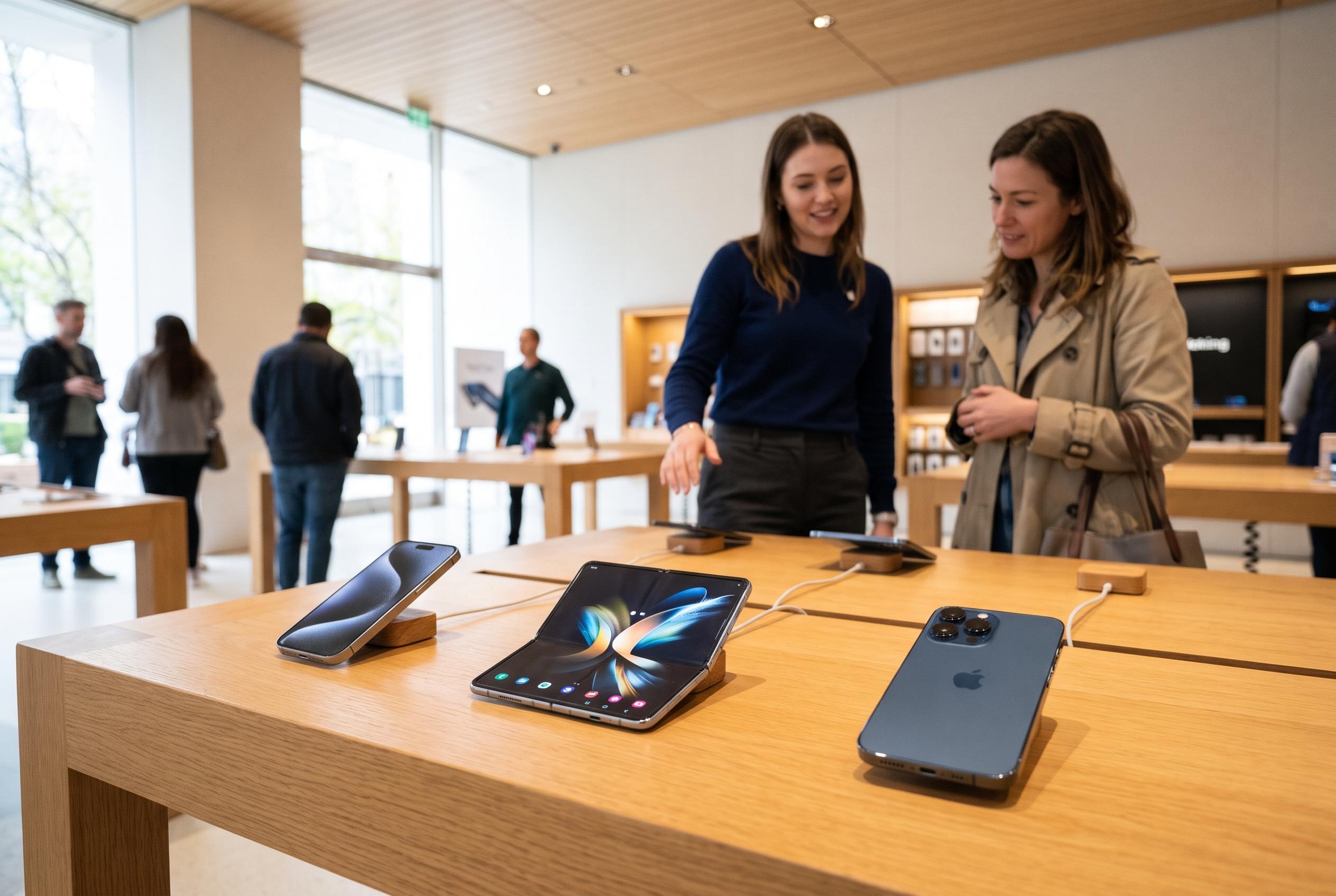

From the slim iPhone Air to the foldable Duo and camera-focused Pro Max, Apple’s expanded line-up offers more choice , but makes choosing the right model harder.
Apple’s iPhone line-up is now broader and less predictable than it once was. The familiar split between standard and Pro models still remains, but buyers can now also choose an ultra-thin iPhone Air, a lower-priced “e” model and, in Apple’s newest turn, a foldable iPhone Duo. According to CHIP’s overview, that variety makes the buying decision more complex, but it also means there is a clearer fit for different budgets and usage patterns than in the past.
The core distinctions still come down to size, cameras, display technology and premium extras. Standard iPhones remain the most accessible entry into a new generation, usually with a 6.1-inch display and performance close to the previous year’s Pro models. The Pro range, by contrast, is where Apple tends to introduce new hardware first, including better camera systems, higher-end materials and display refinements. Pro Max models then push that formula further with larger screens, stronger battery life and, in some generations, the most advanced camera hardware available.
Among the newer additions, the iPhone Air is Apple’s answer for buyers who want a lighter, thinner device without dropping into the budget end of the range. TechRadar reported that the model launched in September 2025, measuring just 5.64mm thick and weighing 165g, with a 6.5-inch display, A19 Pro chip and a single 48-megapixel rear camera. That design comes with trade-offs, especially in battery life and photographic flexibility, but it gives Apple a more distinctive premium option for users who value portability over versatility.
The foldable iPhone Duo is aimed at a different audience again. Tom’s Guide said the device is closely matched with the iPhone 18 Pro Max in many everyday camera tests, while the Pro Max retains the edge for zoom thanks to its dedicated telephoto lens. The Duo’s advantage lies in its form factor: the large inner screen makes multitasking, media viewing and content creation easier, and the outer display allows the phone to work much like a conventional handset when closed. That makes it particularly attractive to users who want a more experimental device without losing the familiar iPhone experience.
For readers considering the top of the range, the newest Pro models represent the biggest step forward in Apple’s mainstream line-up. Tom’s Guide described the iPhone 18 Pro Max as a meaningful upgrade over the 17 Pro Max, citing a variable-aperture camera, longer battery life and the A20 Pro chip. Its sibling, the iPhone 18 Pro, adds a triple 48-megapixel camera system, 12GB of RAM, faster wired charging and storage options up to 2TB, according to TechRadar. Those improvements make the Pro models the strongest choice for users who care most about speed, endurance and photography, even if the price climbs sharply.
For most buyers, the practical question is still whether the latest flagship is actually necessary. CHIP’s testing framework weighs performance, battery life, display quality, camera output, equipment and update support equally, which reflects how balanced the choice has become. Its guidance points towards the iPhone 16e as the cheapest route into Apple’s ecosystem, while the standard models remain the safer all-rounders and the Pro Max versions are reserved for those who want the best cameras and the largest screens. In other words, Apple now offers not just one premium iPhone, but several different ideas of what premium should mean.
Disclaimer: This content is intended for informational purposes only. Readers are advised to exercise their own judgement, conduct due diligence, or consult a qualified expert before acting on any information provided.