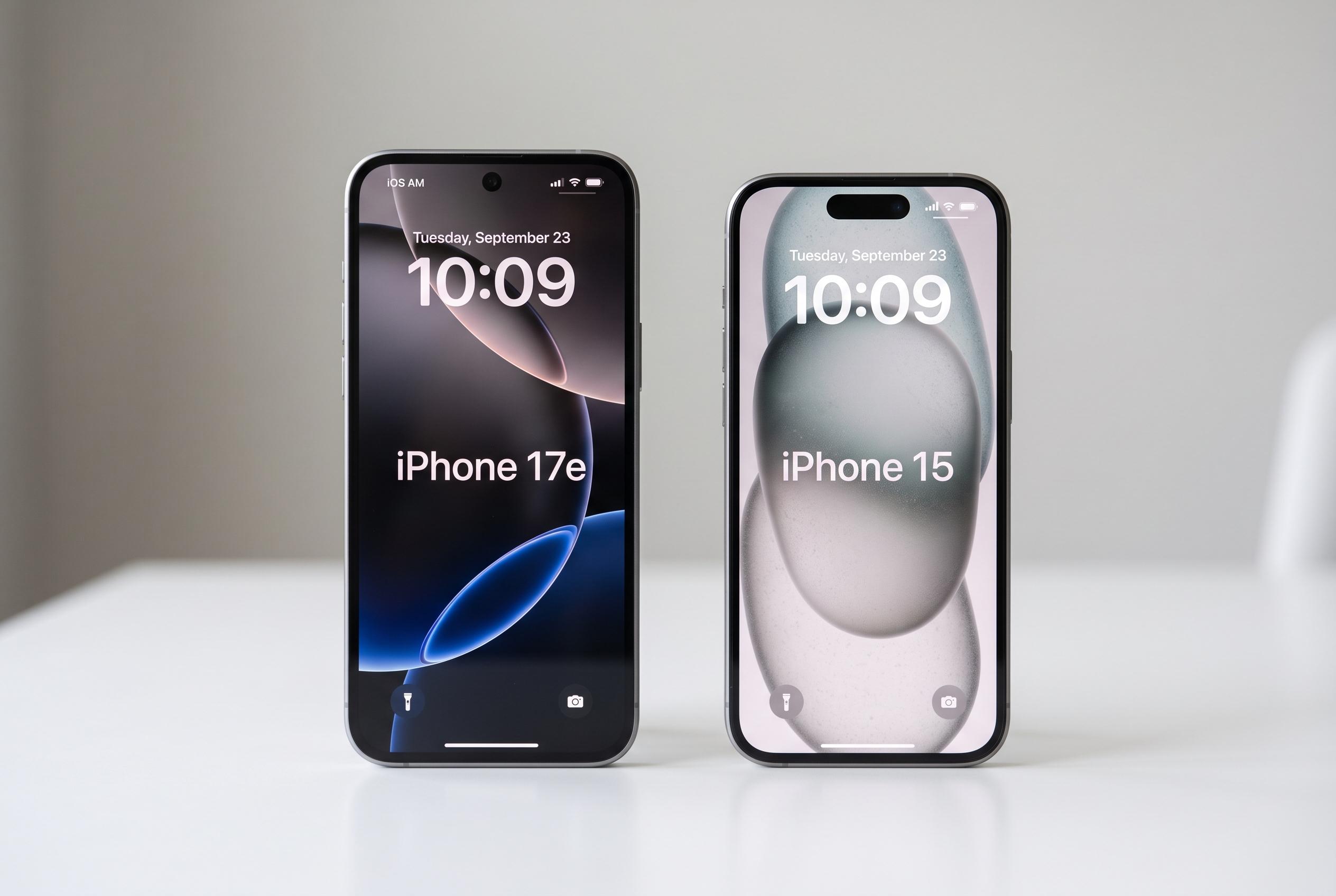

The launch of Apple’s iPhone 17e with advanced features and comparable pricing challenges the value proposition of the ageing iPhone 15, prompting consumers to reconsider their options within the Apple ecosystem.
Apple’s iPhone updates are often modest on the surface, with the biggest changes arriving through software rather than hardware. That makes older models easier to justify, especially when Apple says iOS 27 will still support devices as far back as the iPhone 11 and second-generation iPhone SE. On paper, that longevity keeps the iPhone 15 in the conversation as a practical buy for shoppers who want a cheaper entry point into Apple’s ecosystem.
But the case for the iPhone 15 has weakened. It is now two generations old and approaching three, yet it remains on sale through some retailers and carriers, often at a discount. Apple’s own line-up now gives buyers a stronger alternative in the iPhone 17e, which the company unveiled in March with an A19 chip, a 48MP Fusion camera, Ceramic Shield 2, MagSafe charging and a starting price of $599 for 256GB. In other words, the older handset no longer looks like the obvious value choice.
Apple’s official specifications show the iPhone 17e is built around a 6.1-inch Super Retina XDR display, USB-C, dual eSIM support and 5G connectivity. It also begins at 256GB storage, which is important because that makes direct price comparisons with ageing base models less favourable than they first appear. Apple’s store listing and product materials position it as an affordable but fully current model, with financing, trade-in offers and multiple colour options aimed at mainstream buyers.
The iPhone 15 still has one meaningful advantage: a dual-camera system, compared with the 17e’s single rear camera. For users who take more than casual social-media images, that may still matter. But TechRadar’s comparison of the 17e with the iPhone 17 suggests Apple’s new entry model otherwise covers the basics well, offering the same A19 chip, strong battery life and long software support, while accepting some trade-offs such as a 60Hz display and slower charging. That makes the 17e a more sensible recommendation for most buyers than a discounted iPhone 15.
For consumers choosing purely on value, the iPhone 15 now sits in an awkward position. It is still a capable phone, but its remaining strengths are narrow and its price is harder to defend when a newer model from Apple costs about the same, or in some cases less. Unless the dual-camera setup is essential, the better purchase is increasingly the iPhone 17e.
Disclaimer: This content is intended for informational purposes only. Readers are advised to exercise their own judgement, conduct due diligence, or consult a qualified expert before acting on any information provided.