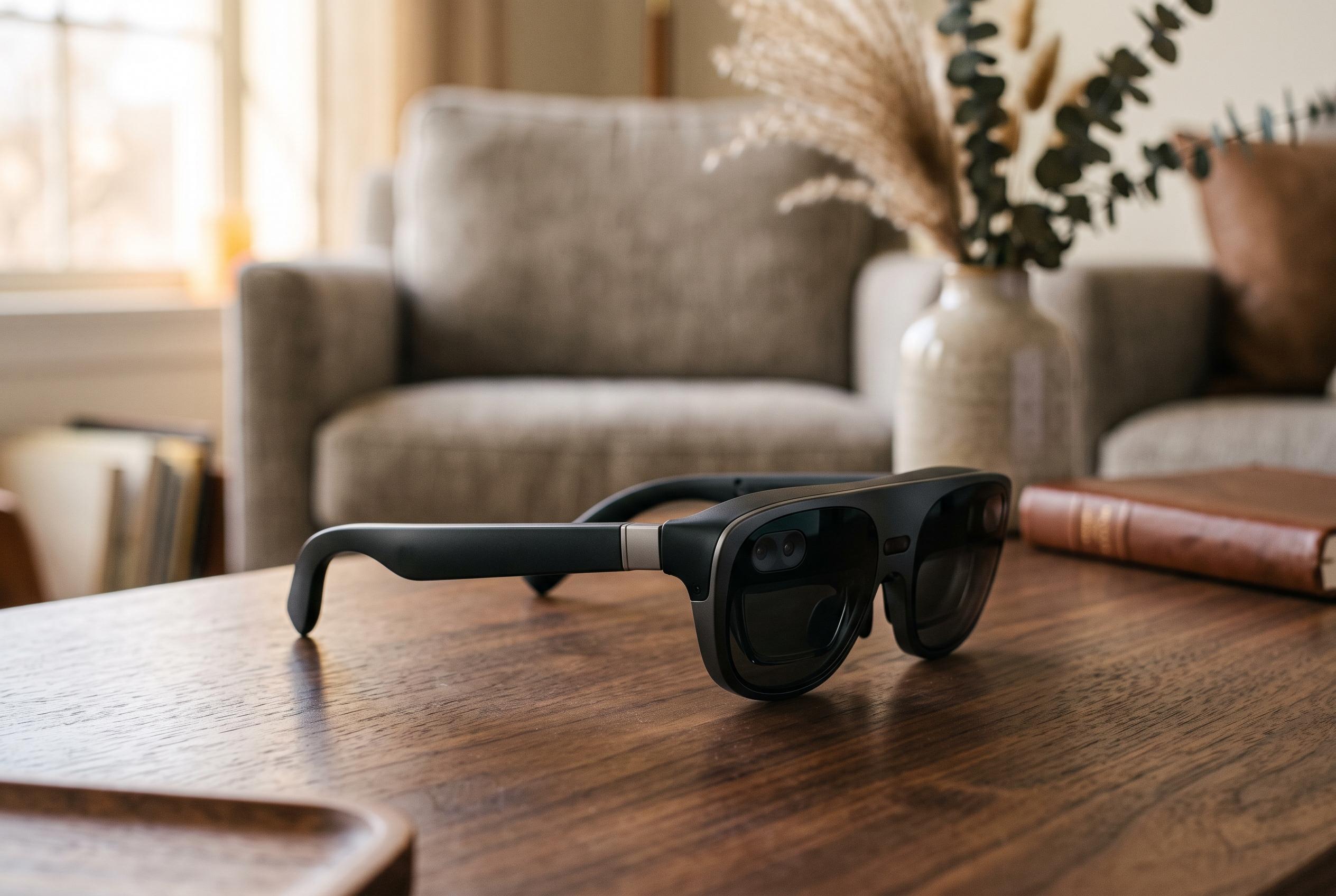

As Xreal and Viture join RayNeo in the affordable AR glasses segment, consumers face a choice between comfort-focused designs and stylish, entertainment-oriented options amid increasing competition and patent disputes.
Budget smart glasses are becoming a far tighter contest. Tom’s Guide notes that RayNeo has recently held the value end of the market with its $299 Air 4 Pro, but Xreal and Viture have now joined that tier with the X by Xreal a01+ and the Viture Pro 2. Both pairs sit at the same entry price, and both aim to deliver a wearable virtual screen rather than a fully fledged mixed-reality system. On paper, they are close enough that the decision comes down to design, fit and how each company balances comfort against visual tuning.
Viture’s strongest case is practical usability. According to Tom’s Guide’s review, the Pro 2 is lighter than its predecessor and far more adjustable, with multiple nose-pad positions, movable arms and two diopter wheels for per-lens focus correction. It uses Sony micro-OLED panels, offers a 1080p image and reaches up to 1,600 nits of perceived brightness, while the 50-degree field of view helps it feel more immersive for film and games. The trade-off is that it is still not ideal for long reading or desktop work, and the built-in audio remains a weak point, but for travel and media it is the more refined of the two.
Xreal takes a different route with the a01+. Tom’s Guide says the glasses lean into style and simplicity, with a lighter frame, a more playful design and features such as HDR10 support and swappable front panels. The display also runs at 1080p with a 120Hz refresh rate and claimed 1,600 nits of peak perceived brightness, making it a strong fit for gaming and streaming. But the cheaper build is more obvious, there is no IPD adjustment, and text clarity is not its strength, which makes it less convincing for productivity tasks. That leaves it as the more expressive option, rather than the most adaptable one.
Taken together, the two products show how quickly the budget AR segment is maturing. Tom’s Guide’s broader coverage suggests that Xreal still has more ambitious hardware in its higher-end line, while Viture has pushed hardest on comfort and fitting options in its lower-cost model. The competitive picture is also complicated by the companies’ legal dispute: Tom’s Guide reported that Xreal has sued Viture in the US over alleged patent infringement, and Viture has since responded with a counter-claim in China. For buyers, though, the immediate choice is simpler. If flexibility and a more polished fit matter most, the Viture Pro 2 appears the safer purchase. If style and a more entertaining design matter more, the X by Xreal a01+ is the livelier pick.
Disclaimer: This content is intended for informational purposes only. Readers are advised to exercise their own judgement, conduct due diligence, or consult a qualified expert before acting on any information provided.