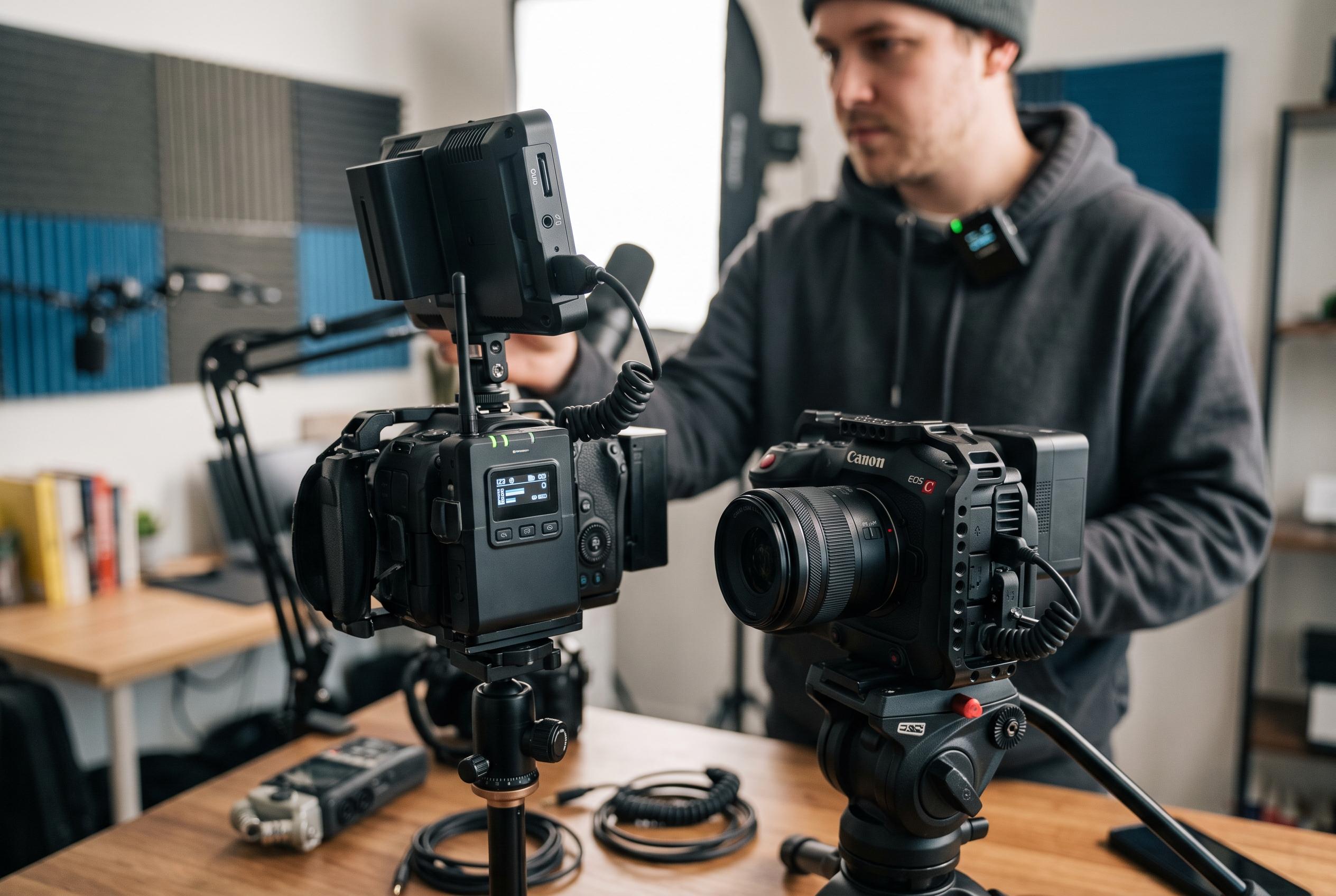

Advancements in compact wireless audio kits in 2026 mean DIY filmmakers can access high-quality sound solutions without breaking the bank, challenging traditional professional standards.
For filmmakers working on tight budgets, wireless audio has become far more capable than it was only a few years ago. In 2026, compact microphone systems can deliver clean dialogue, useful range and practical battery life without moving into professional price territory. That matters because good video often fails on sound, and the cheapest fix is no longer to accept poor audio.
Among the strongest options, the DJI Mic Mini stands out for its 10g transmitter, stable transmission and two-stage noise cancellation. In testing, it was the most convincing all-round choice for run-and-gun filming and short drama work, particularly where a small, discreet microphone was important. Its longer range and automatic limiting also make it more forgiving in uncontrolled environments, although it sits at the upper end of the budget category and lacks onboard backup recording.
For crews recording interviews or two-person dialogue, the Hollyland Lark A1 offers the most useful balance of price and capability. Its dual-channel setup, 48kHz/24-bit capture and long total battery life make it especially attractive for documentary work and short films with multiple speakers. The BOYA mini 2 is another strong contender for solo creators, with a notably light design, charging case and AI-based noise reduction that is unusually effective for the price. At the very bottom of the market, ultra-cheap kits such as the Labstandard and MAYBESTA models can still serve beginners, but they trade away build quality, range and tonal richness.
The larger trend is clear: budget wireless microphones now cover much of the ground once reserved for far dearer kits. Real-world performance still depends on the use case, however. Connector compatibility, battery life, noise handling and transmission stability matter more than headline range claims. For videographers, the best purchase is the model that matches the way they actually shoot, not the one with the most ambitious specification sheet.
Disclaimer: This content is intended for informational purposes only. Readers are advised to exercise their own judgement, conduct due diligence, or consult a qualified expert before acting on any information provided.