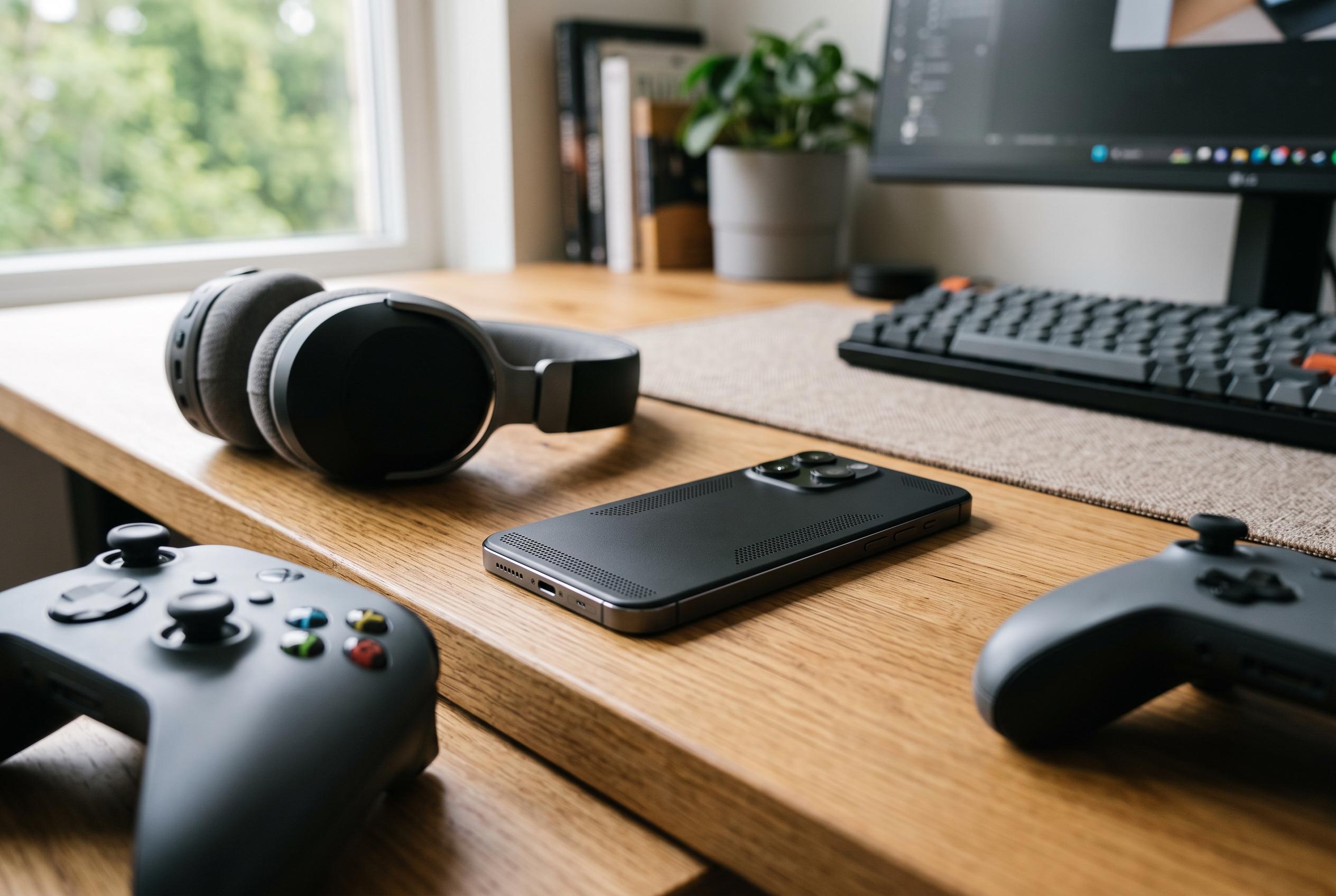

A new wave of fan-cooled smartphones promises sustained gaming performance without an external clip, but dust, noise, heat and camera compromises mean the technology is not for everyone.
In October, the smartphone market has filled up quickly with handsets that rely on active cooling, and the message from manufacturers is much the same: an internal fan can remove the need for an external cooling clip in everyday use. That claim has momentum because the latest wave of devices is not confined to one brand or one price band. According to the supplied material, models already on sale or about to launch include Red Magic 12 Pro+, REDMI K90 Max, iQOO Neo12, OnePlus Ace 7 Pro and Honor’s WIN2 series, with several of them promoted around the idea that a built-in fan makes a separate back-mounted cooler unnecessary.
The case for the fan is real, at least on the numbers that brands have chosen to publish. Reports cited in the source material say REDMI K90 Max uses one of the largest cooling fans in the phone industry and that a 3DMark stress test showed the device peaking at 44.8C with the fan off and 36.3C with it on. Other material describes iQOO 15 Ultra keeping temperatures around 30C in a 144fps game test where comparable phones without active cooling were closer to 36C. The underlying reason is straightforward: passive systems such as vapour chambers can move heat only so fast, while a fan gives the handset a way to expel heat more directly during sustained load. That is why manufacturers that once leaned on external accessories are now building the cooling system into the phone itself.
Even so, an internal fan is not the same thing as a semiconductor cooling clip. The fan improves airflow and helps the handset dump heat more quickly, but it still works with ambient air. On a hot day, it can only move in air that is already warm. A semiconductor clip, by contrast, can actively pump heat away and push the cold side below room temperature, which is a different and more aggressive form of cooling. Honor’s own pre-launch material for the WIN2 acknowledged that most everyday gaming sessions would not need an external clip, but it also said such accessories could still matter for extreme long-form streaming and use in high-temperature conditions. That distinction matters because it defines the boundary between a phone that is good enough for most players and one that is built for the most demanding edge cases.
The trade-offs are equally clear. A fan requires an opening in the chassis, and that raises questions over dust, durability and noise. The devices are often rated IP68 or IP69 for water resistance, yet the fan assembly itself is usually covered only by IPX8 or IPX9 classifications, which do not address dust protection in the same way. Fan makers add filters, but filters are not a perfect defence against fine particles, especially if the phone is carried in pockets full of lint or used outdoors in dusty conditions. Noise is another concern. The K90 Max is described in the source material as producing around 32dB of fan noise, which may be acceptable in isolation but is still audible in a quiet room and can be picked up by a microphone. There is also a design cost: making room for the fan can force compromises elsewhere, as seen in the reported loss of a telephoto camera on one wind-cooled Huawei model. Weight is another practical issue, especially on phones that already combine a large battery with dual fans.
For buyers, that means the decision should be based on use case rather than the presence of a fan alone. Heavy mobile gamers who regularly run titles at high frame rates are the clearest match for these devices, particularly if they want to stop carrying a separate cooling clip. Casual players who rarely game, or users who already own a clip and only need it occasionally, are unlikely to gain enough from switching phones. Creators and livestreamers need to think harder, because a fan may help sustained performance but can also add noise to recordings. Buyers who work in dusty environments, or who prioritise cameras above all else, should be especially cautious. In other words, active cooling is no longer a gimmick, but it is not a universal replacement for every other cooling strategy. It solves one problem very well, while introducing a different set of compromises that are easy to overlook in a launch video.
Disclaimer: This content is intended for informational purposes only. Readers are advised to exercise their own judgement, conduct due diligence, or consult a qualified expert before acting on any information provided.