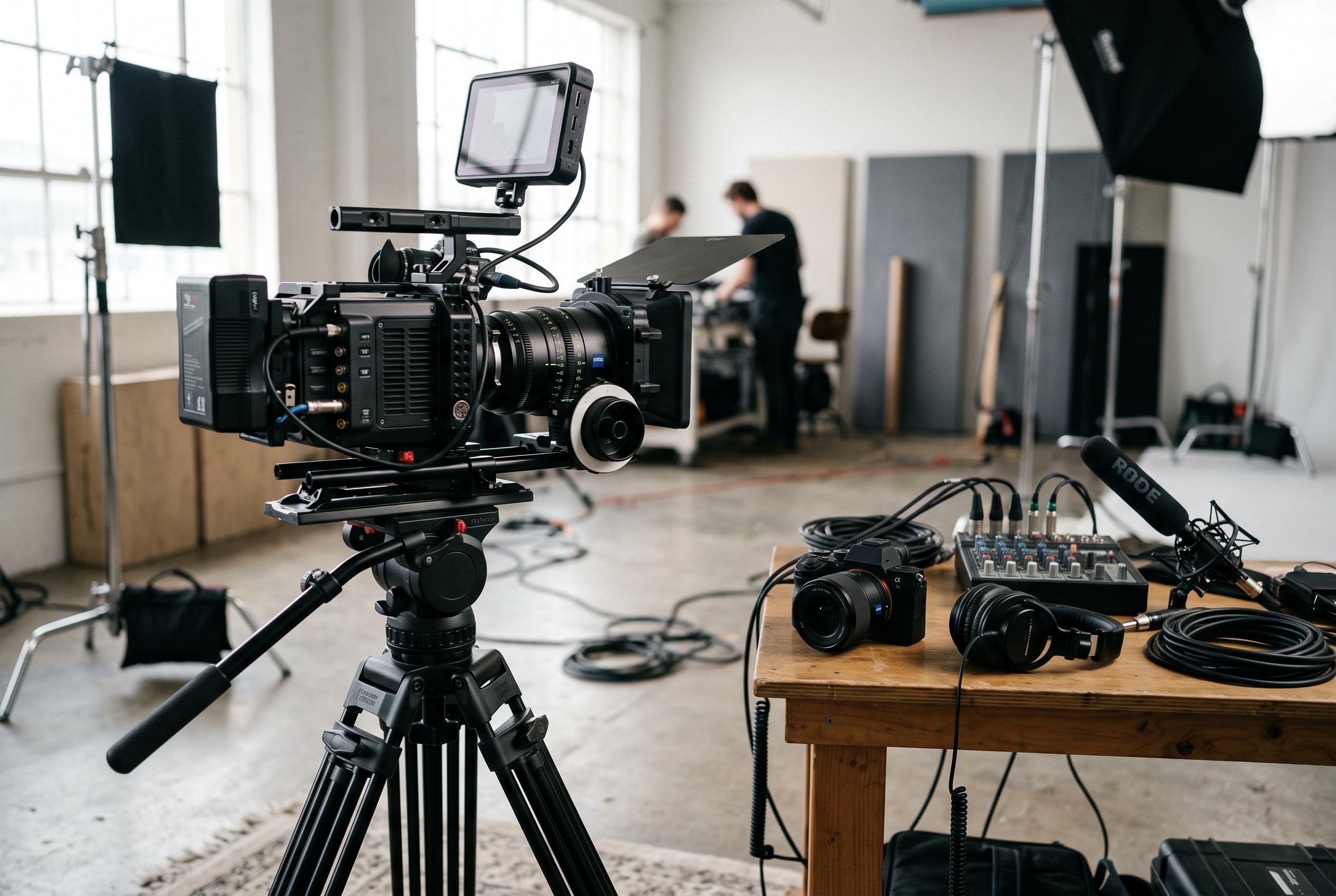

Canon’s EOS C50 and EOS R6 V produce remarkably similar images from the same 32.5-megapixel 7K sensor, but their cooling, audio and rigging options make them suited to different filming workflows.
Canon’s EOS C50 and EOS R6 V sit unusually close together in output, but they are built for different kinds of work. Both are compact full-frame bodies centred on Canon’s 32.5-megapixel 7K sensor, and both can shoot 3:2 open gate, record raw internally, and deliver oversampled 4K up to 60 frames a second, plus 4K at 120fps. In a side-by-side test, Josh Sattin found that the image quality from each camera is so closely matched that, in practical use, the choice is less about the picture itself and more about how each body handles heat, sound, stabilisation and rigging. One of the few immediate differences he noted was white balance: the daylight preset lands at roughly 5,200K on the R6 V and 5,600K on the C50, which means careless pairing can complicate matching before grading even begins.
That close similarity extends into colour and noise behaviour. Sattin’s Canon Log 2 footage from the two models graded almost interchangeably, with only minor differences once he applied the same treatment. Dynamic range is where the C50 begins to edge ahead: when he exposed for highlights and then pushed the shadows hard at 200% magnification, the cinema camera retained a little more detail in the darker areas, both in raw and in compressed recording modes. The gap is not dramatic, but it is visible in a deliberately severe test. High-ISO performance is also nearer than the specification sheets suggest. Canon lists dual base ISOs of 800 and 6,400 for the C50 in Canon Log 2 and raw, while the mirrorless R6 V does not carry the same formal second-base-ISO wording. Even so, Sattin’s raw tests indicated a similar benefit when moving from ISO 5,000 to 6,400, with the noise pattern cleaning up noticeably at the higher setting.
The more decisive separation is in operational design. The C50 arrives with a top handle that adds XLR inputs, level controls, a record button, a lock, a zoom rocker, a cold shoe, a switchable tally light and extra mounting points, and it fixes to the body securely without requiring a cage. By contrast, the R6 V needs Canon’s Tascam CA-XLR2d-C accessory for comparable audio input, and although Sattin praised its sound quality, he regarded the single shoe-mounted arrangement as less solid. Heat management also favours the C50. Canon publishes recording limits in its specifications, and Sattin says his own tests have generally borne those figures out. On the R6 V, rated at 73 degrees Fahrenheit, raw 4K at 60fps and oversampled 4K at 60fps are listed at 120 minutes or more, while some other modes have no stated limit; he expects those figures to contract in warm, humid conditions, particularly at higher frame rates and in raw. The C50’s larger body houses a more substantial cooling system, and Sattin says Canon’s cinema models have not shut down on him, even in difficult weather. His broader point is that, once the sensor becomes a shared baseline, buyers are really choosing between operating systems, thermal headroom and the accessory ecosystem that fits their workflow.
Disclaimer: This content is intended for informational purposes only. Readers are advised to exercise their own judgement, conduct due diligence, or consult a qualified expert before acting on any information provided.