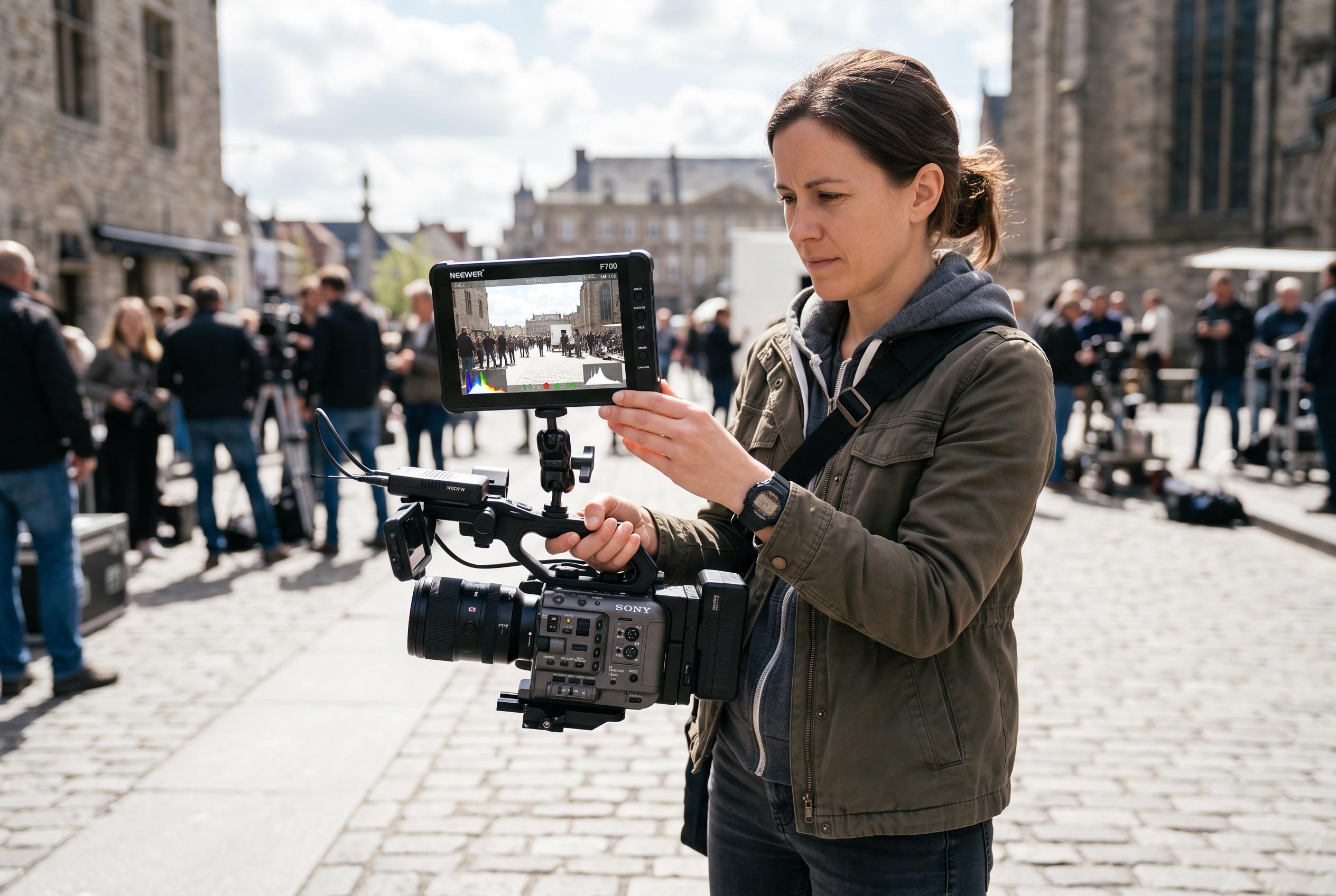

In the evolving landscape of solo documentary filmmaking, selecting a field monitor that balances brightness, portability, and workflow integration is crucial. Recent testing highlights the importance of tailored choices over long-spec sheets, with models like the NEEWER F700 leading the way for outdoor shoots and control versatility.
Solo documentary shooting places unusual demands on a field monitor. The screen has to stay visible outdoors, remain light enough for a handheld or gimbal rig and provide reliable exposure tools when there is no assistant to watch levels or pull focus. In that context, the latest round of monitor testing points to a simple conclusion: the best choice is the one that fits the way you work, not the one with the longest spec sheet. A bright display, accurate scopes and sensible power options matter more than brand prestige.
The strongest all-round pick in the guide is the NEEWER F700, which combines 2000-nit brightness with a 7-inch touchscreen, waveform, vectorscope and false colour tools. That makes it especially suitable for daylight documentary work where built-in camera screens quickly become unreadable. The kit also includes two NP-F750 batteries and 4K HDMI loop-through, giving it an edge for long location days. PhotoWorkout’s separate monitor guide also puts the Atomos Shinobi II near the top for its HDR display and USB-C camera control, reinforcing the view that solo operators benefit most from monitors that reduce the need to touch the camera itself.
For lighter rigs, the FEELWORLD F5 Prox and the Portkeys PT5 II represent the more portable end of the market. The FEELWORLD model is the better fit for gimbal use, thanks to its compact 5.5-inch form factor and 1600-nit panel, while Portkeys offers exceptional sharpness in a very small body. Filmlocal’s broader field-monitor roundup makes a similar point: the practical monitor is the one that matches the role, with brightness, durability and a usable ecosystem mattering more than chasing the most expensive option. That advice aligns closely with the documentary test results, where balance and handling often proved as important as image quality.
Battery strategy is another dividing line. The FEELWORLD P6XL takes a different route with a built-in 3300mAh battery, which reduces clutter but removes the option to hot-swap during a shoot. VILTROX’s DC-550 and FEELWORLD S55 V3 lean more towards the traditional swappable-battery model, while the Atomos Shinobi II adds a higher-capacity battery and USB-C control for more advanced workflows. That reflects a wider industry trend: monitors are no longer just external screens, but control hubs that can streamline exposure, framing and camera settings on solo shoots.
Brightness remains the clearest technical threshold when buying for documentary work. The guide’s testing suggests 1,000 nits should be the minimum for regular outdoor use, with 1,500 nits or more preferable for direct sunlight. Below that, monitors become far more dependent on hoods and shade. For indoor interviews, the FEELWORLD S55 V3 is more than adequate, but its lower brightness makes it a weaker choice once the shoot moves outside. For filmmakers choosing a monitor in 2026, the practical answer is clear: buy for the light you shoot in, the rig you carry and the tools you will actually use on set.
Disclaimer: This content is intended for informational purposes only. Readers are advised to exercise their own judgement, conduct due diligence, or consult a qualified expert before acting on any information provided.