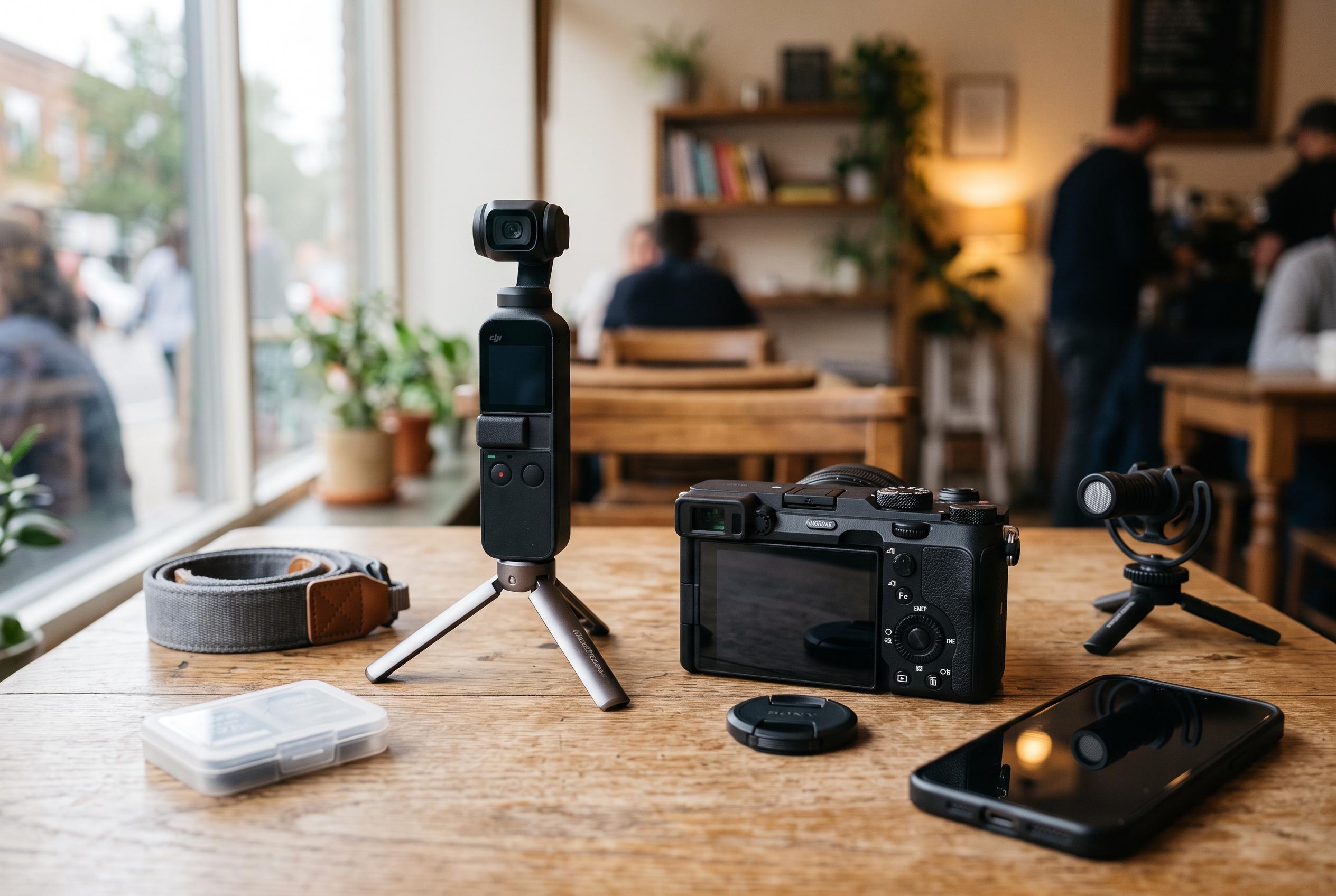

The DJI Osmo Pocket 4P and Sony ZV-E10 Mark II serve contrasting needs in the compact camera market, with innovations and features reshaping what portable and flexible video creation can mean for users.
The DJI Osmo Pocket 4P and Sony ZV-E10 Mark II sit at opposite ends of the compact video market. The Pocket 4P, which DJI officially launched on 29 June 2026, is built around a dual-camera design and a mechanical gimbal, making it a self-contained tool for mobile shooting. The Sony, by contrast, is a more conventional interchangeable-lens camera built for creators who want greater control, larger-sensor image quality and room to expand their kit over time.
The clearest divide is portability versus flexibility. According to recent reviews, the Pocket 4P combines a 1-inch stacked wide-angle sensor with a true 60 mm telephoto module, giving it unusual versatility for a pocket-sized device. It also supports 4K capture, 10-bit D-Log 2 and live streaming in Full HD, while DJI says it works with Mic 2 and Mic 3 accessories. That makes it attractive for quick filming, travel and single-person setups. The Sony ZV-E10 Mark II is less self-contained, but its APS-C sensor, interchangeable lenses and stronger connectivity make it better suited to more deliberate production work.
Video performance also separates the two. The Pocket 4P is geared towards smooth, high-frame-rate shooting, with 4K recording up to 240fps in promotional material and strong stabilisation built in. Notebookcheck and SlashGear both describe it as a major step forward for DJI’s pocket line, helped by the new dual-lens system and a dynamic range figure quoted at up to 17 stops. Sony’s ZV-E10 Mark II does not chase the same extreme frame rates, but RTINGS and DPReview note that it delivers full-width 4K at up to 30p, 4K at 60p with a crop, 10-bit recording and S-Log3 support. In practice, that gives Sony the edge for grading, controlled lighting and more demanding post-production.
Image quality for stills and low light remains firmly in Sony’s favour. The ZV-E10 Mark II uses a 26MP APS-C BSI sensor, which is substantially larger than the sensors in the Pocket 4P. That brings better detail retention, cleaner low-light results and more scope for depth of field control, especially when paired with the right lens. TechRadar and DPReview also point to Sony’s improved battery life, colour profiles and autofocus system, all of which make the camera more credible for serious hybrid use. The Pocket 4P can take stills, but it is clearly designed first and foremost as a video camera.
Price and availability may decide the matter for many buyers. Geeky Gadgets pegs the Pocket 4P at about $575 internationally, though it is not officially sold in the United States, which can complicate import costs and supply. Sony’s ZV-E10 Mark II is broadly available in the US at about $998 body-only, or around $1,099 with the revised 16-50mm kit lens, according to RTINGS and DPReview. That makes the DJI the cheaper and more convenient carry-everywhere option, while the Sony is the more serious long-term investment for creators who value image quality, lens choice and workflow control.
Disclaimer: This content is intended for informational purposes only. Readers are advised to exercise their own judgement, conduct due diligence, or consult a qualified expert before acting on any information provided.